

Watch the full video review:
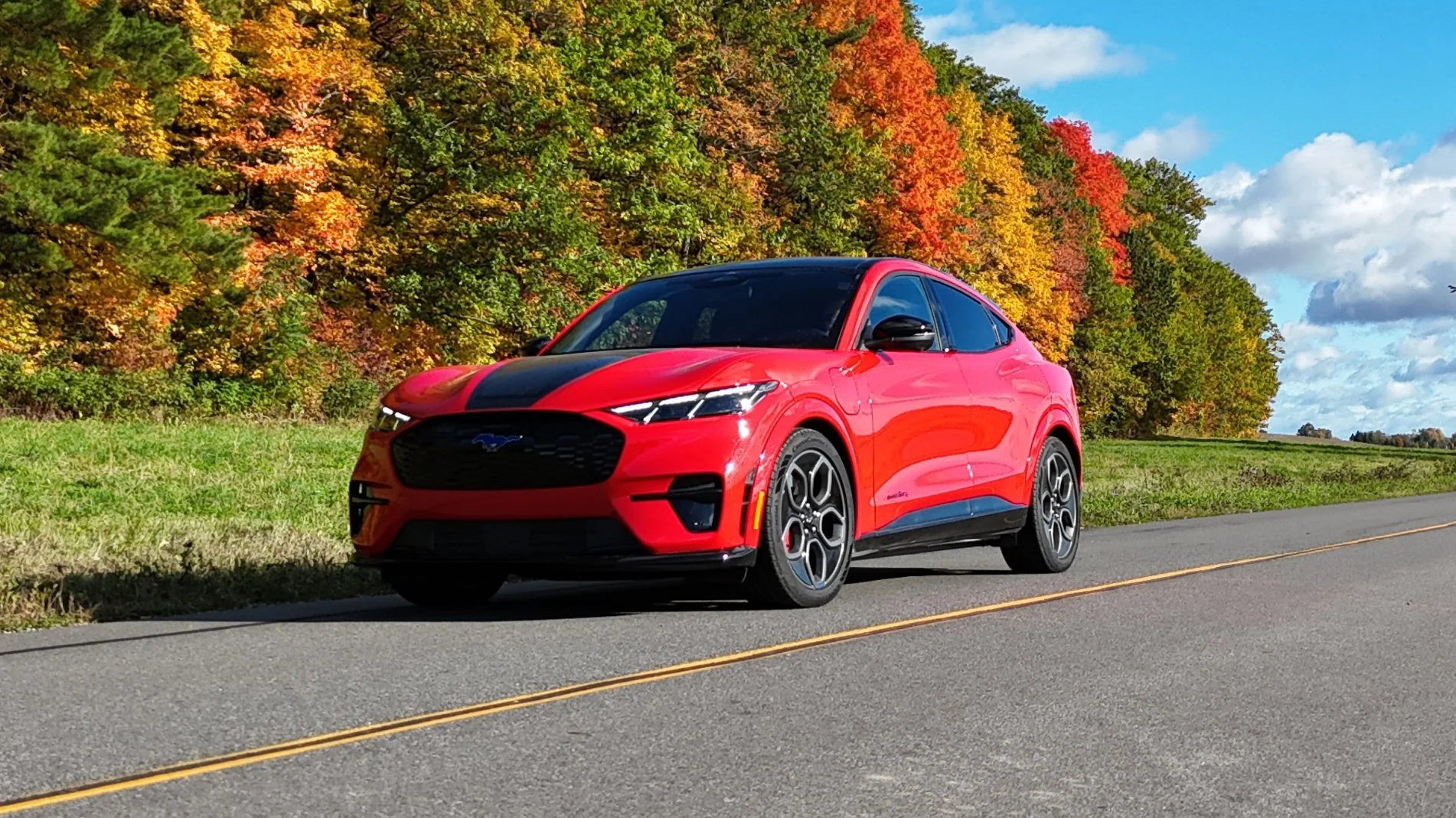
Is the 2026 Ford Mustang Mach-E GT California Special the best Mach-E yet? After a week with it in the Quebec City area, in 5°C fall weather, my answer is yes — with two real caveats. This is a driver's car: 480 horsepower, 700 lb-ft of torque, MagneRide suspension, and a California Special package that actually looks the part. But for a top trim, two missing features are hard to ignore.
This review was filmed with my friend Luc behind the camera. Luc owns a 2026 Mach-E Premium himself, so a second part with his ownership experience is coming — including the California Special vs Premium comparison.
Specs
- Motors: Dual-motor all-wheel drive
- Power: 480 hp, 700 lb-ft of torque (with GT Performance Upgrade)
- 0–60 mph: 3.3 seconds (Ford claim); 0–100 km/h: 3.5 seconds
- Battery: 91 kWh usable, extended range
- Range: 451 km / 280 miles EPA; 414 km / 257 miles observed at ~5°C
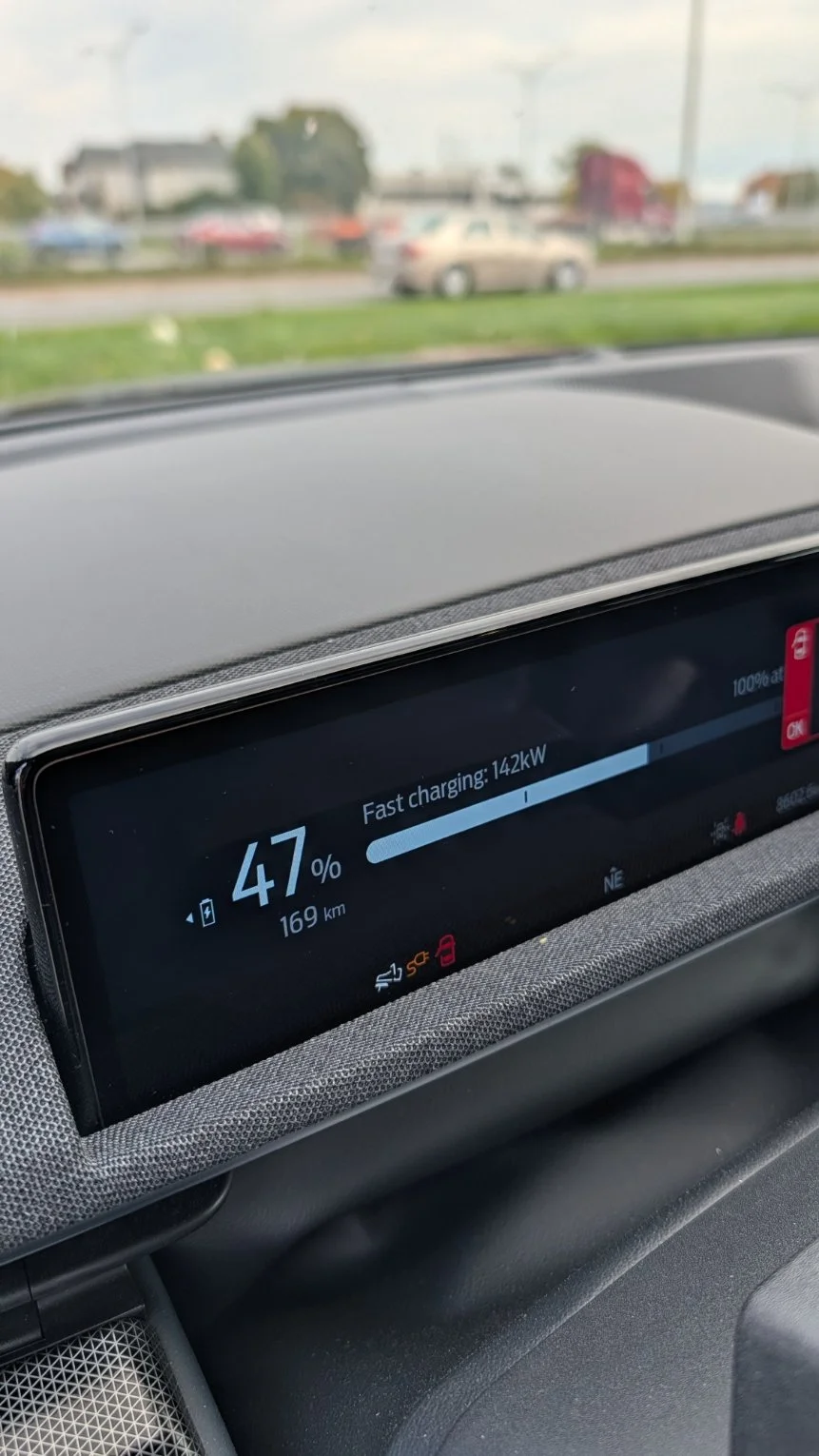
- Peak charging: 150 kW (10–80% in ~32–36 minutes, Ford estimate); 155 kW observed
- Suspension: MagneRide damping system
- Wheels/tires: Continental 245/45R20, Brembo brakes, GT/CS wheel details
- Cargo: 29 cu ft behind the rear seats, 59 cu ft with seats folded
- Rear legroom: 38.1 inches
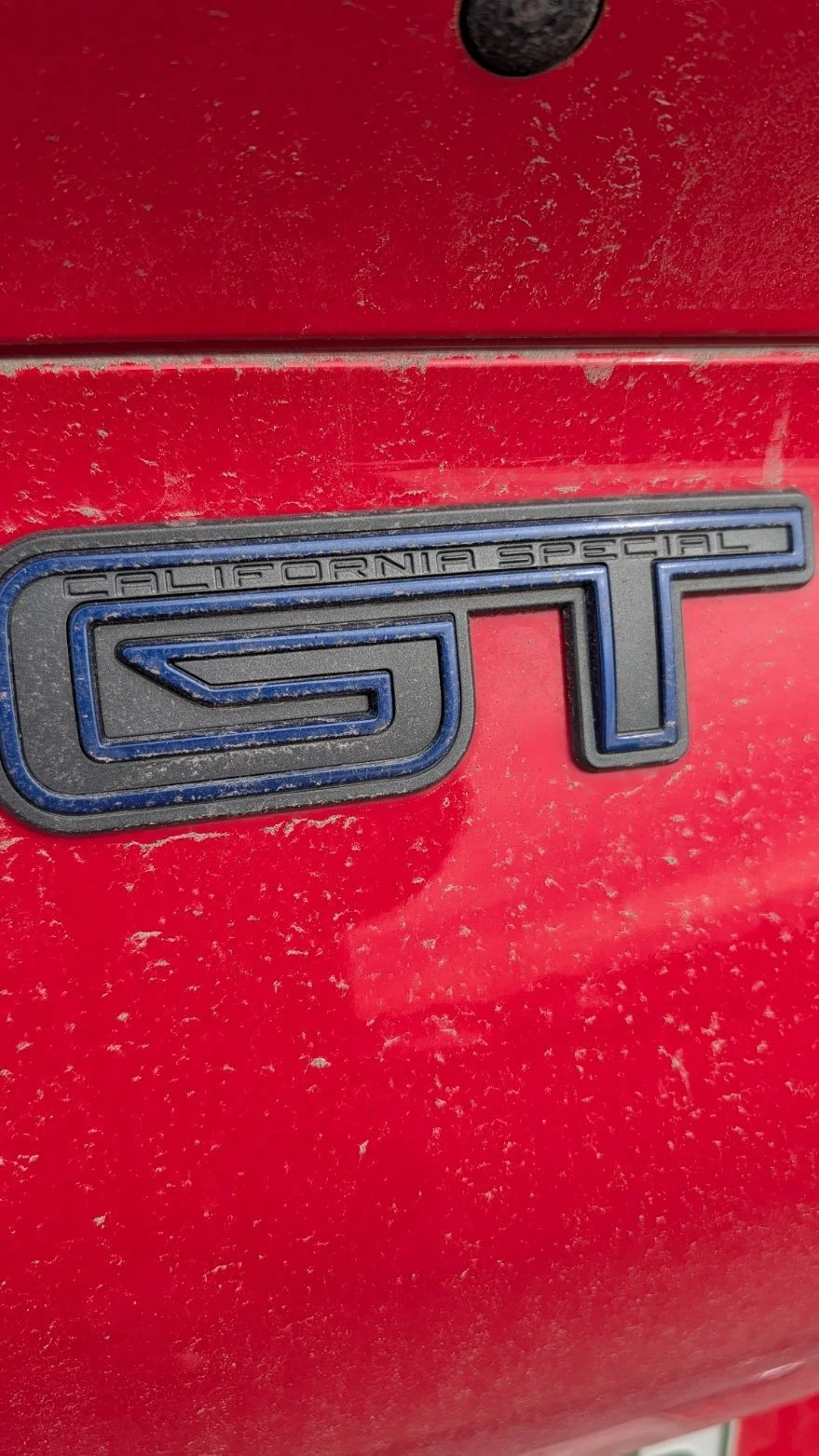
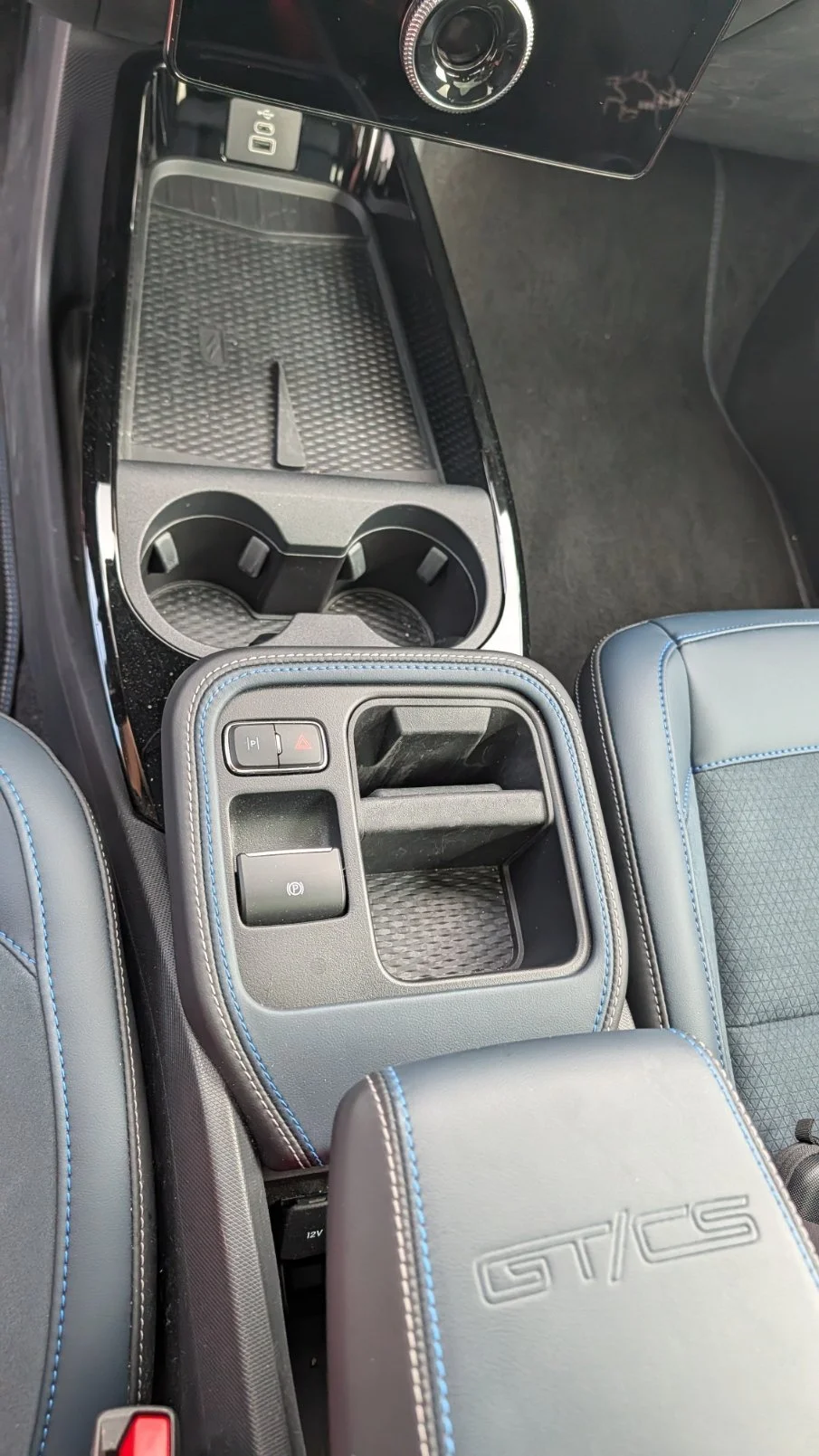
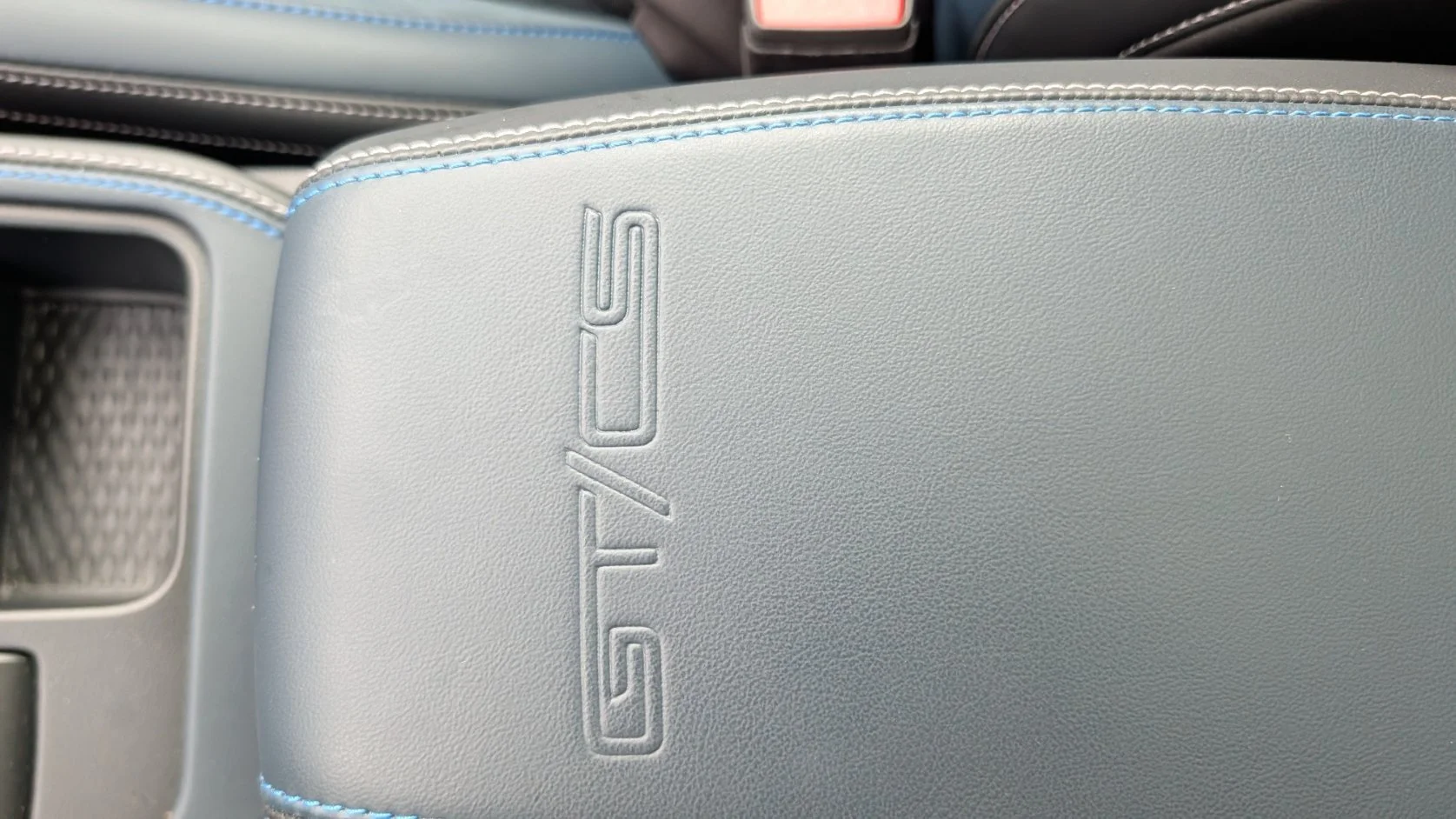
- California Special package: $2,495 US on the GT — Rave Blue accents, illuminated front pony, blue-over-black hood stripe, GT/CS wheel and console details, Navy Pier interior
What the California Special adds
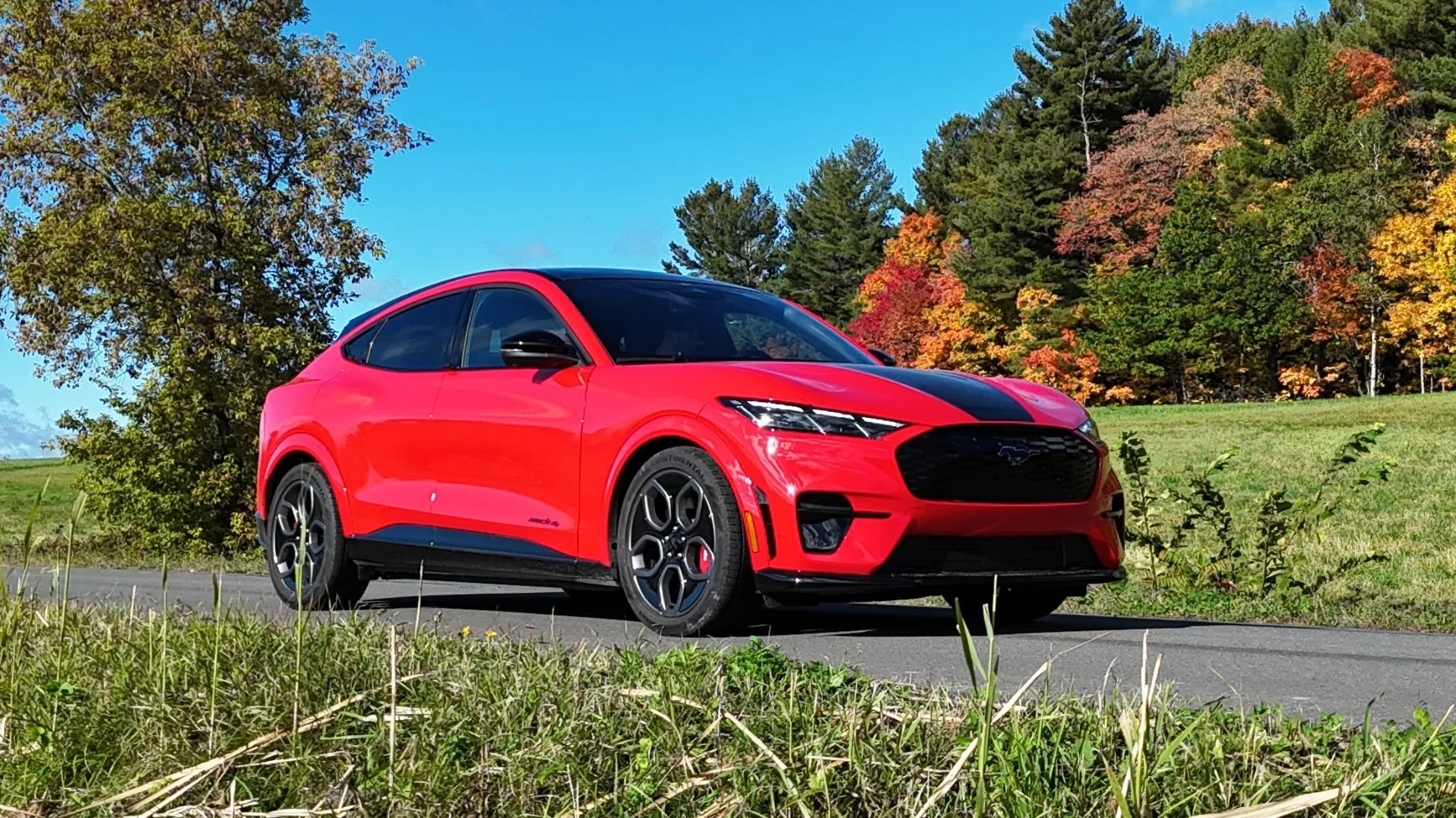
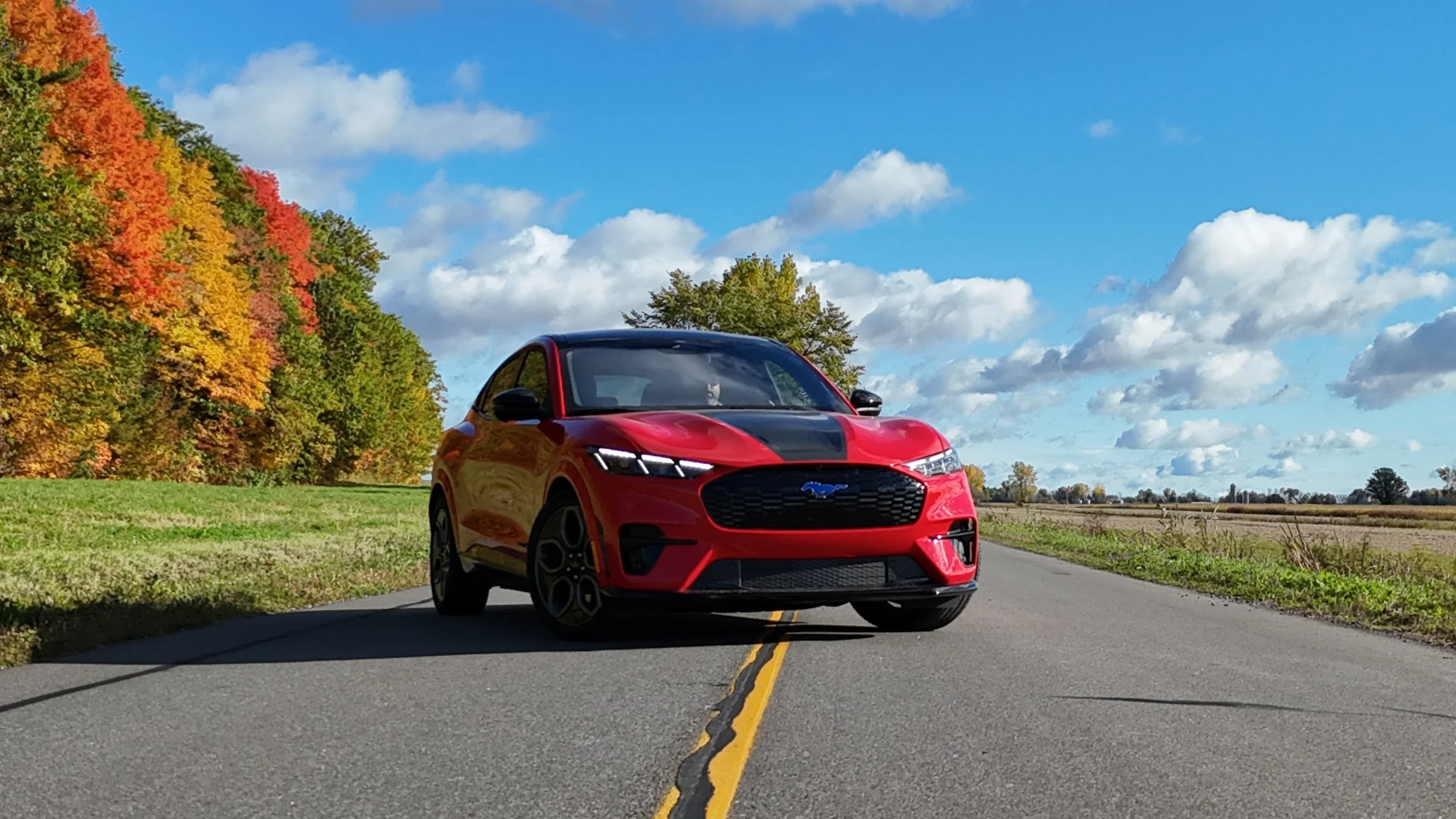
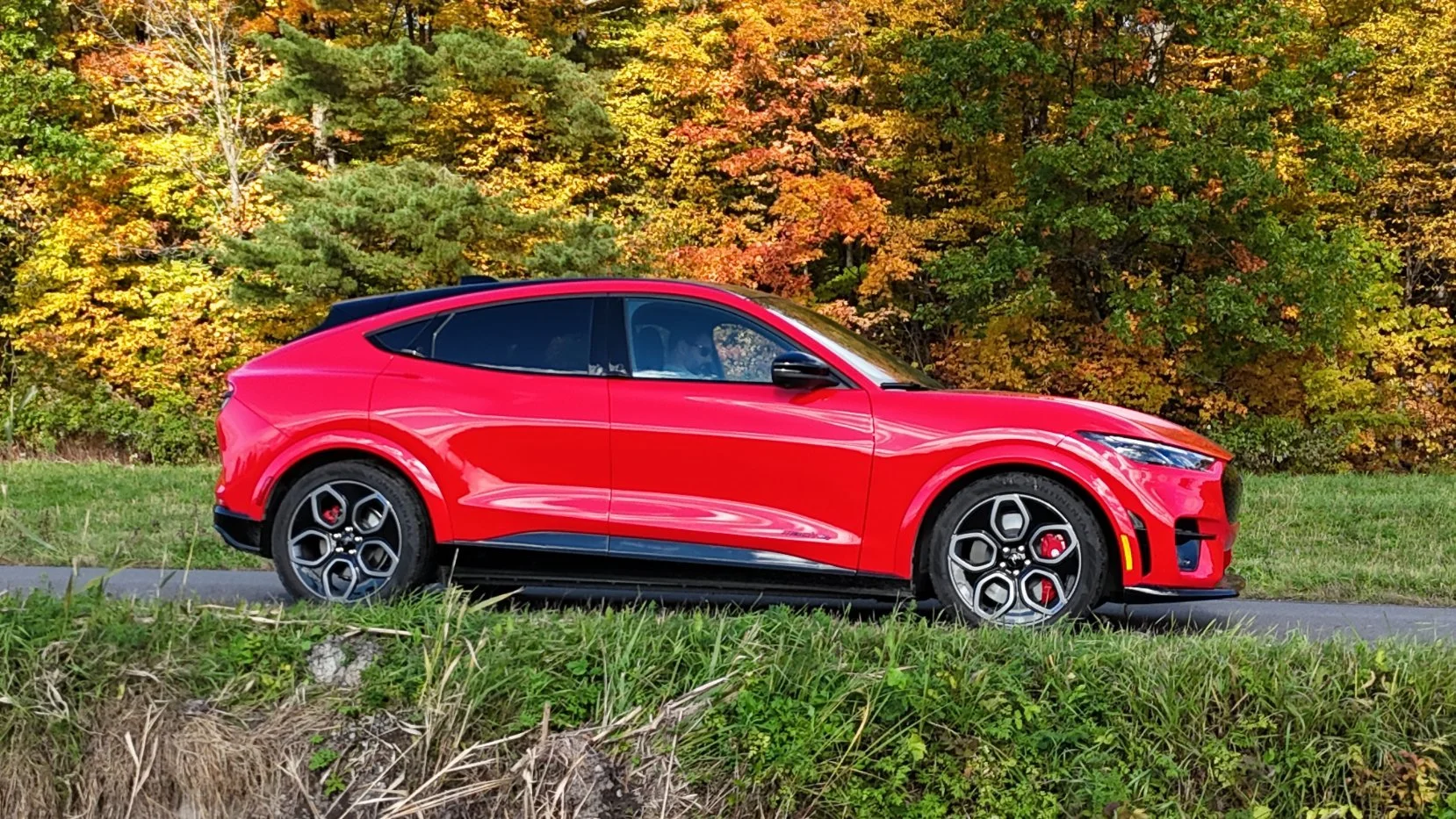
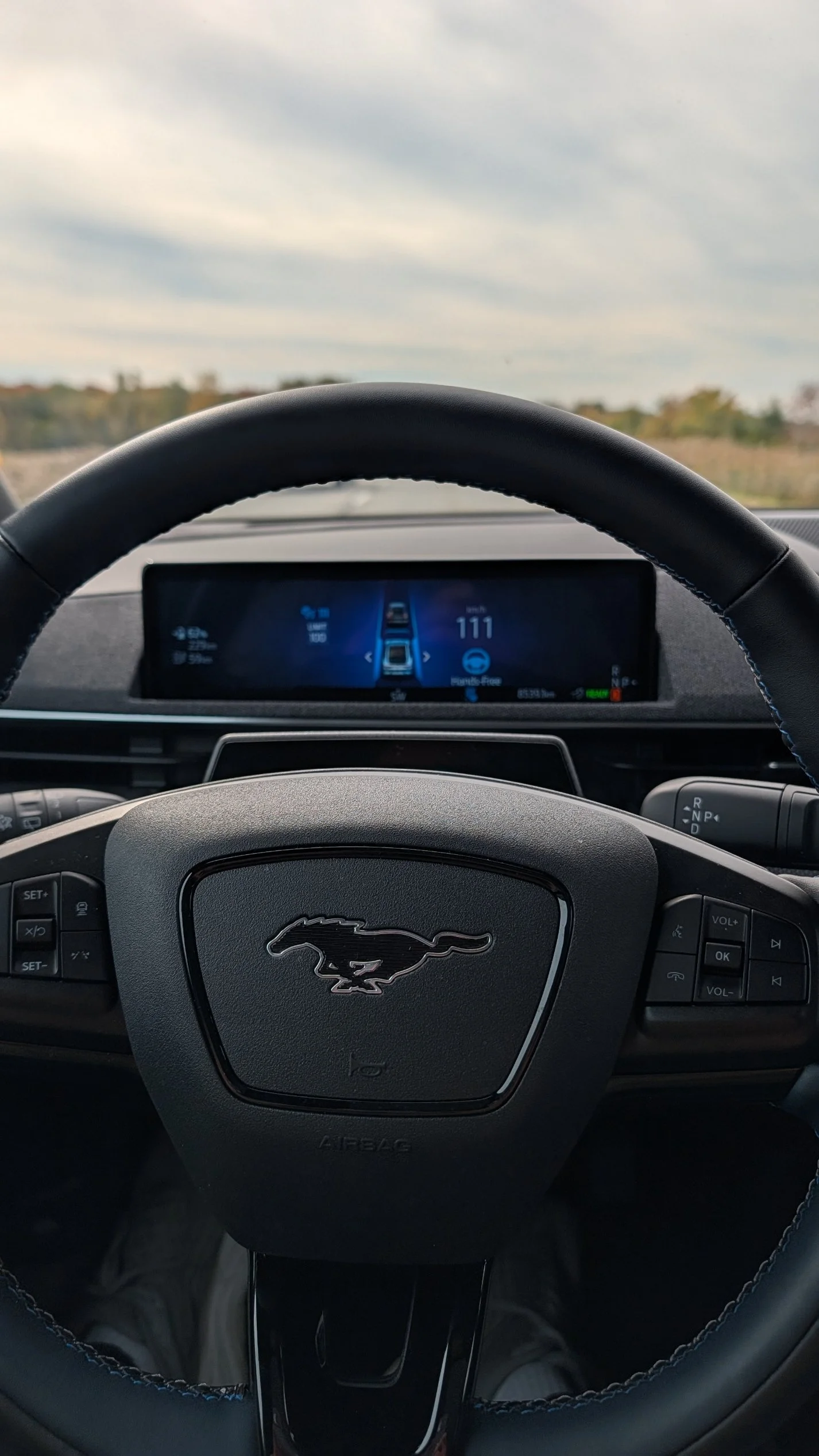
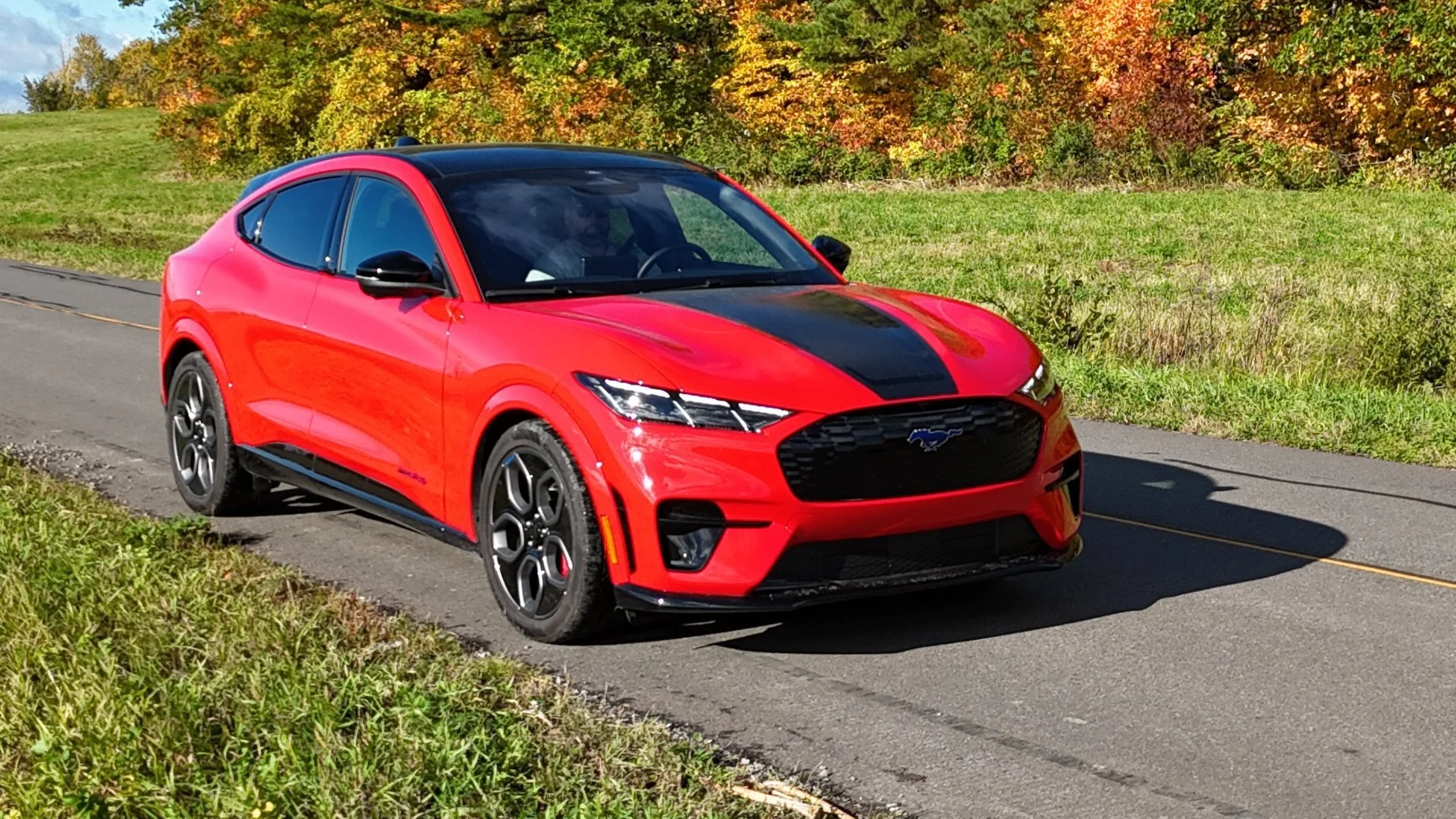
The GT already looks aggressive — a diamond-pattern front grille, a more aggressive front overhang, and Brembo brakes behind California Special wheels that reminded me of Alfa Romeo's circular pattern right away. The California Special treatment follows through in blue: blue accents, blue stitching, blue suede seat inserts, and California Special badging. The red paint against the blue works. One small wish: the pony on the steering wheel isn't blue, and it would have tied the whole theme together.
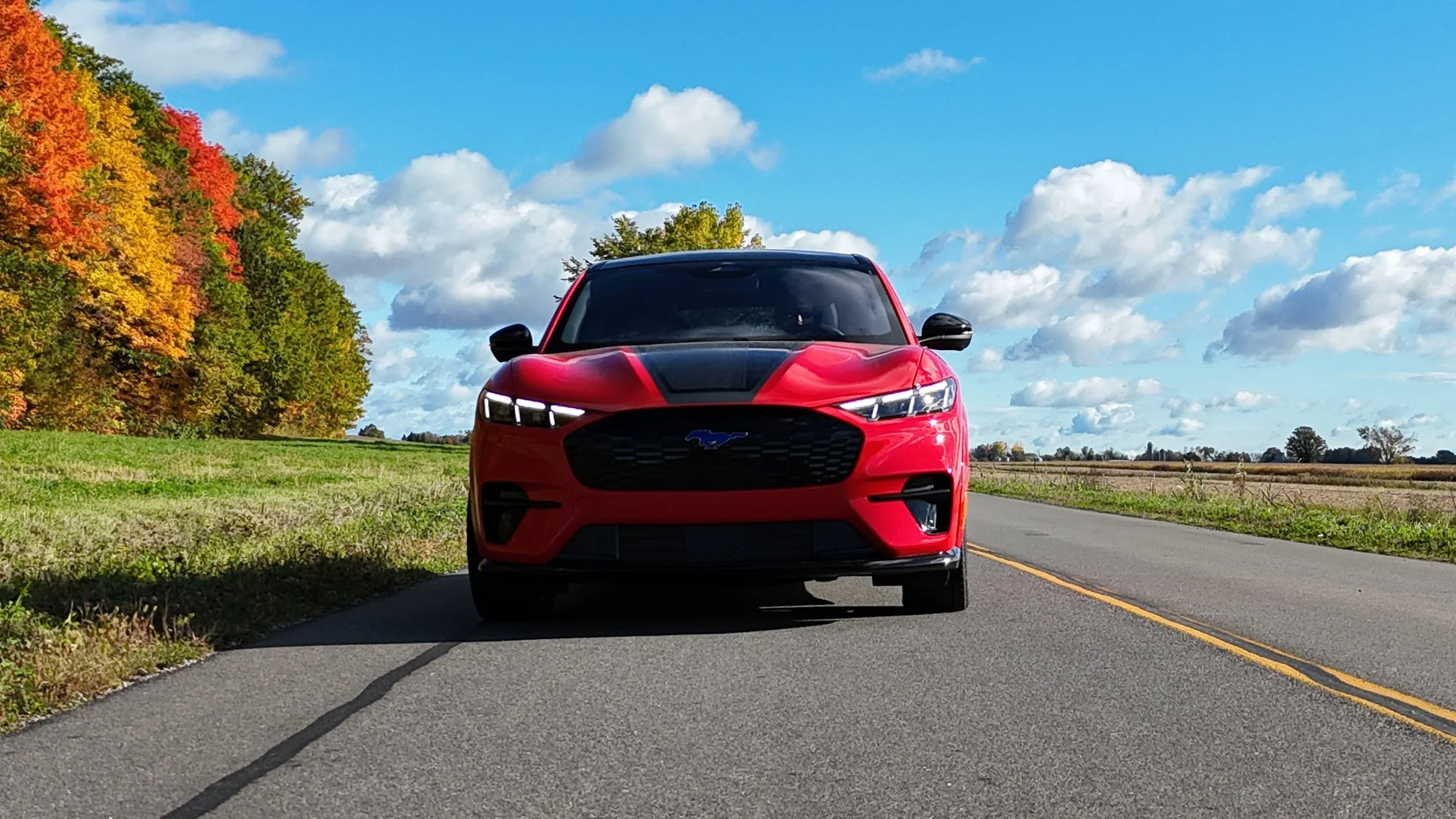
One genuinely good change over the 2025: the door handles. It's still a push button, but there's now a small pull handle next to it. On the 2025 you pressed the button and had to shove your hand into the door shut — try explaining that to a kid you're teaching where to put their hands and where not to. There's also an anti-slam mechanism now. As a father, I appreciate that a lot.
Performance: it's the torque, not the horsepower
On paper, 480 horsepower isn't chart-topping next to a Kia EV6 GT or a Hyundai Ioniq 5 N. But this car isn't about the horsepower number. It's about 700 lb-ft of torque, and you feel all of it off the line. In Unbridled mode, from a dead stop, this thing is crazy quick — and I'd say quicker than fast, because top speed is where horsepower matters more, and how many of us are doing 200 km/h? What matters is that there's still plenty of torque left above 100 km/h, and that's all you need.
MagneRide: the reviews calling it firm are wrong
I've seen reviews call this a firm ride. I don't agree. I drove it on rough, mountainous Quebec roads full of bumps and gravel, and the MagneRide does a phenomenal job — planted, level, no body roll in corners. For a performance vehicle, I would not call this a rough ride. The 20-inch tire size is right for this car; 21s would be overkill here (my Equinox EV RS rides rougher on its 21s). Ford says MagneRide scans the road a thousand times a second, and whatever the number, the result is a car that stays composed where other performance SUVs get unsettled. Handling is A++ in my books.
Two small driving notes: the steering is fairly light with not a lot of feedback, but it's well calibrated and responds well. And unlike some vehicles I've driven, this one stays in the drive mode you left it in when you turn it off and back on — it doesn't default back to eco. I like that.
Drive modes live on the touchscreen (Whisper, Engage, Unbridled — eco, normal, sport in plain language), which isn't my favorite; I'd rather have a button. The new column shifter (down for drive, up for reverse) is good, and one-pedal driving is very well tuned. The fake propulsion sound? I'd turn it off if it were mine — it's an EV, and it's great at being that — but it's not overly obnoxious, and I left it on in the video so you can judge for yourself.
BlueCruise, set up my way
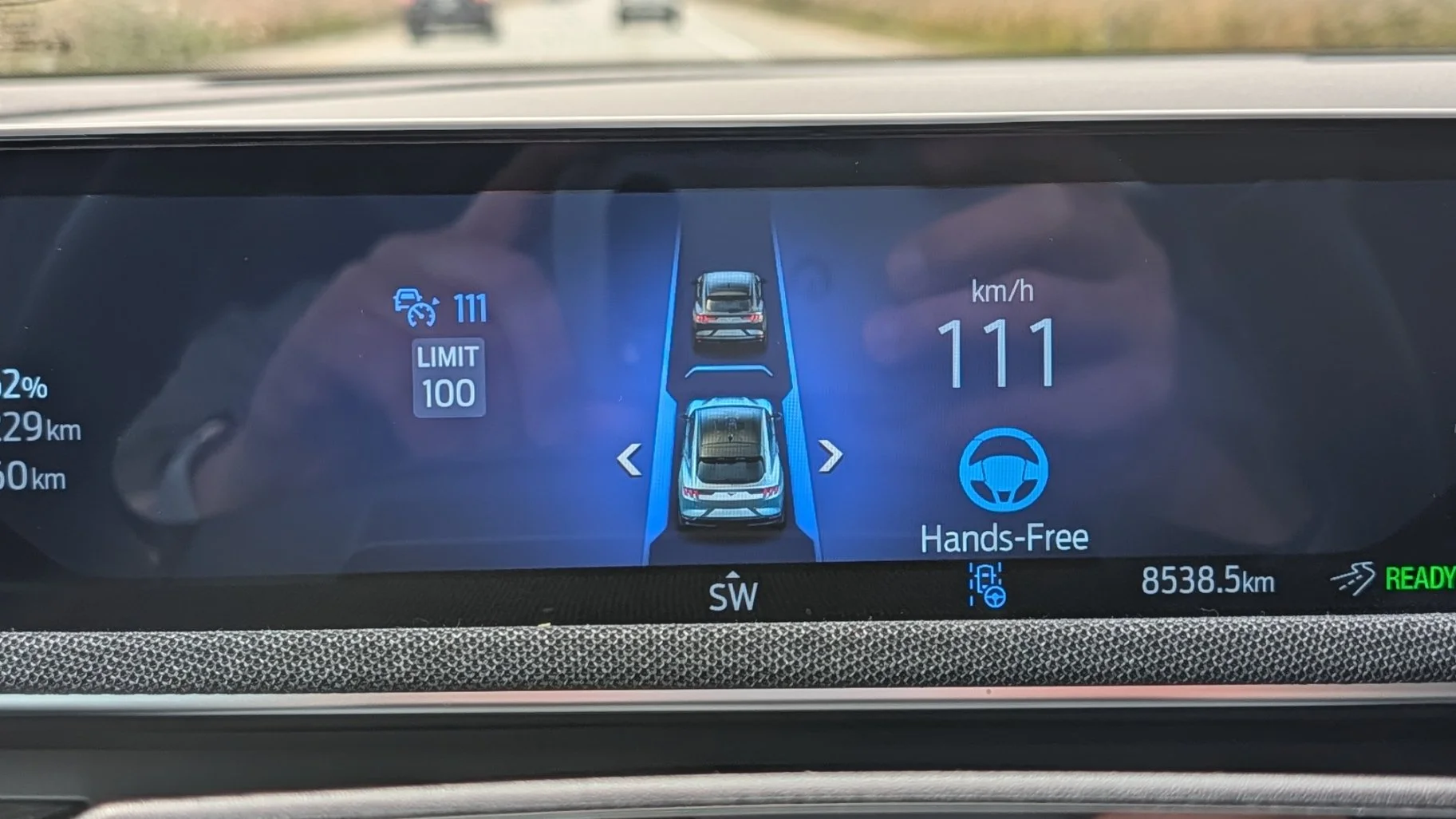
On the highway, BlueCruise is hands-free and I absolutely love it. I did change two things: I turned off auto lane change, because it switched lanes without anticipating merges or being courteous to merging traffic — I prefer triggering lane changes myself with the turn signal, which works without touching the wheel. I also turned off predictive speed zones, because I want to choose my speed, not have the system change it after I've set it. Set up that way, it's a combination of being somewhat in charge while it drives for you, and that suits highway cruising at 110–115 km/h just fine.
Charging: it beat Ford's own peak
Peak charging is rated at 150 kW, good for roughly 10–80% in 32–36 minutes. I actually saw 155 kW at one point, so it delivers on those charging speeds and then some. It uses CCS, not NACS, which suits me fine — CCS is more available in Quebec — and the included adapter lets you charge at Tesla V2 and V3 Superchargers (not the older V1s).
Real-world range in the cold
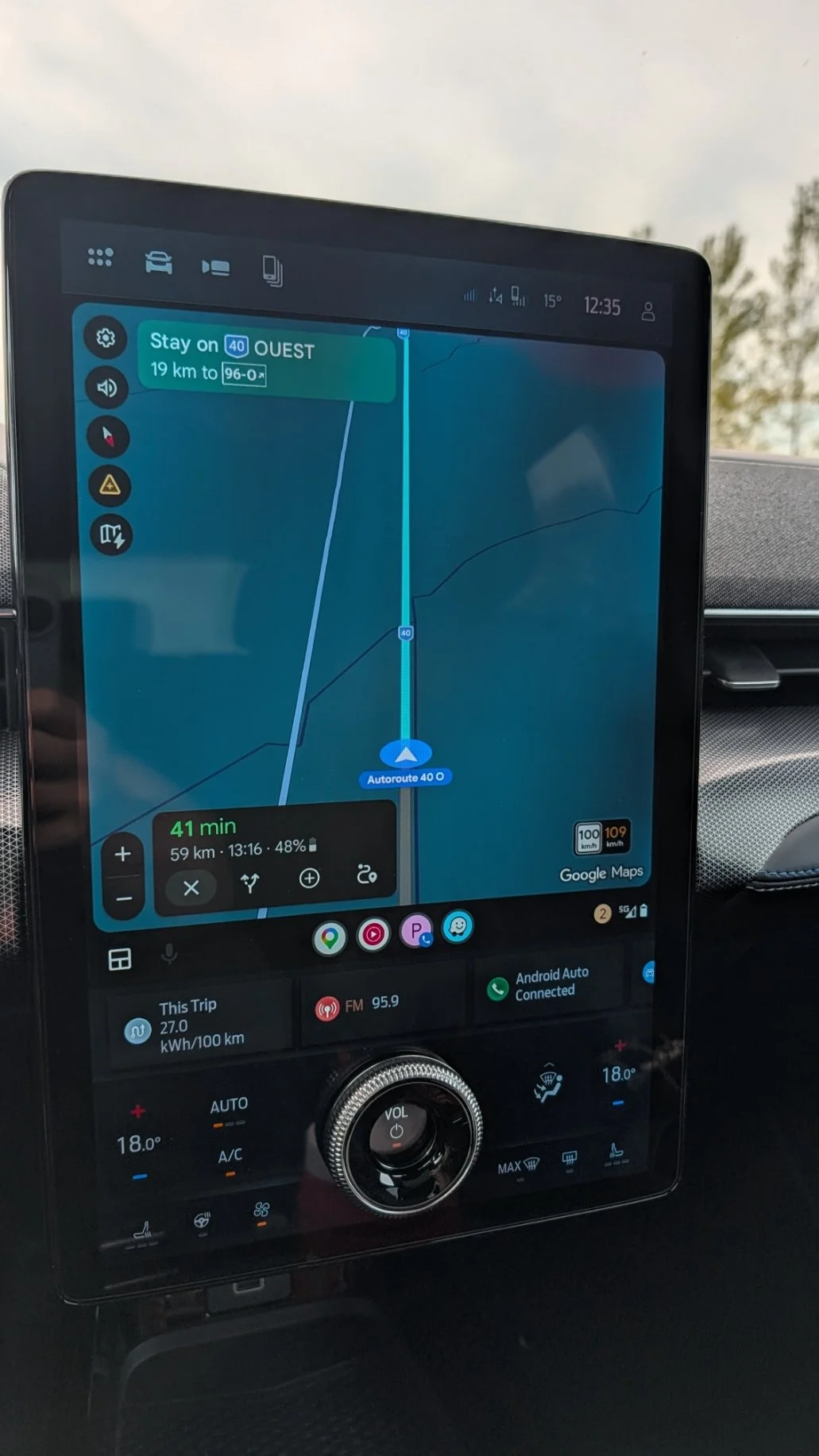
Over 854 km of driving at an average of about 5°C, I averaged 22 kWh/100 km. That works out to a realistic 414 km (257 miles) in cold fall weather, versus the 451 km (280 miles) EPA figure. The car has a heat pump, which helps. If you drive one of these in a Quebec winter, 414 km in the cold is the honest number to plan around.
Interior and practicality
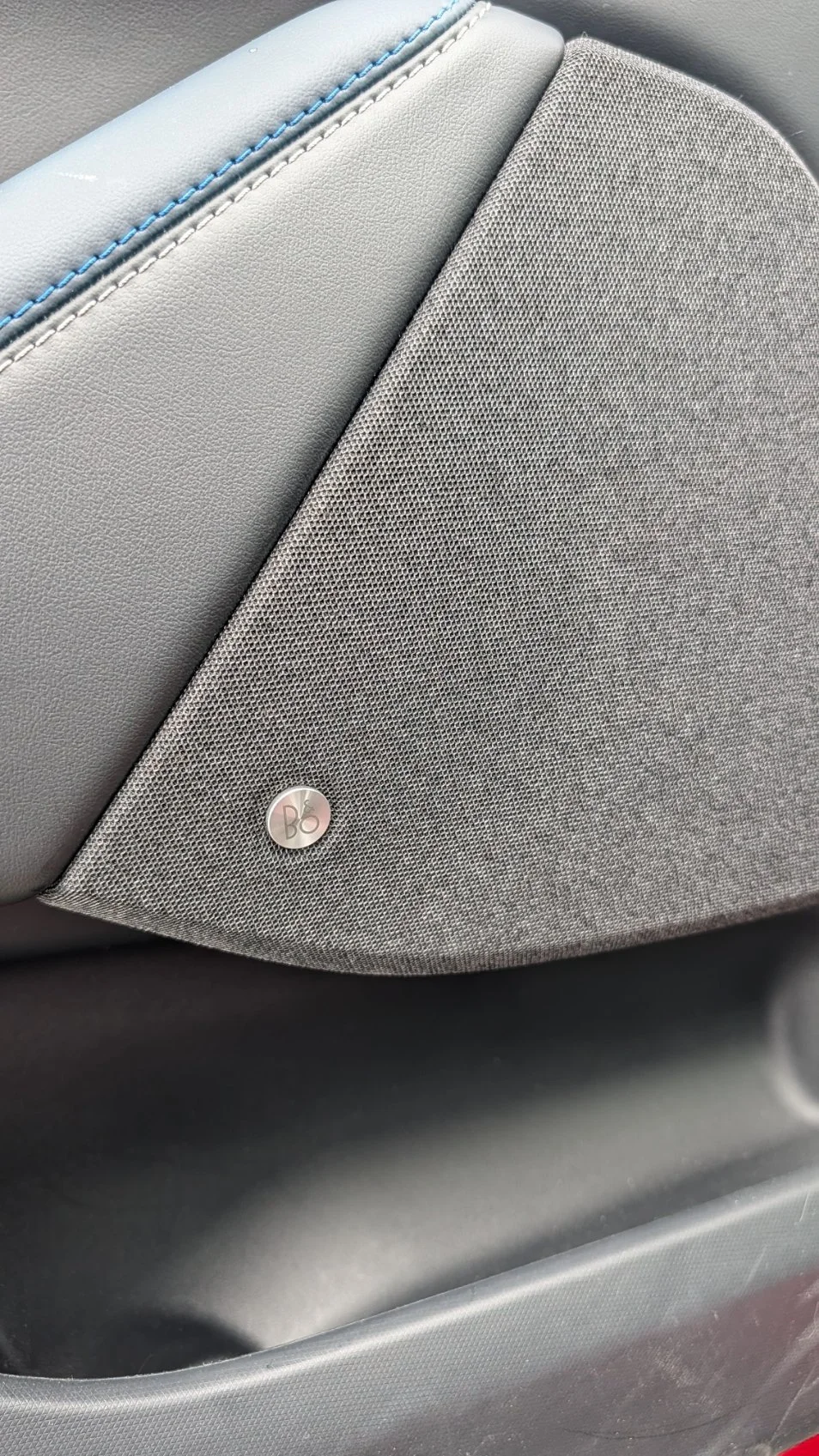
Inside, the blue stitching and blue suede carry the California Special theme, the B&O sound system sounds amazing, and the 360-degree camera quality is very good, as Ford cameras usually are. The screen's dedicated HVAC section doesn't bother me even though I'm usually a buttons guy, and the three levels of auto fan control are a nice touch. There's a volume knob, wireless charging, USB-A and USB-C, and a clever phone slot with cable routing that Luc showed me — worth knowing, because wireless chargers often can't keep up on a long road trip while your phone runs maps over wireless CarPlay or Android Auto.
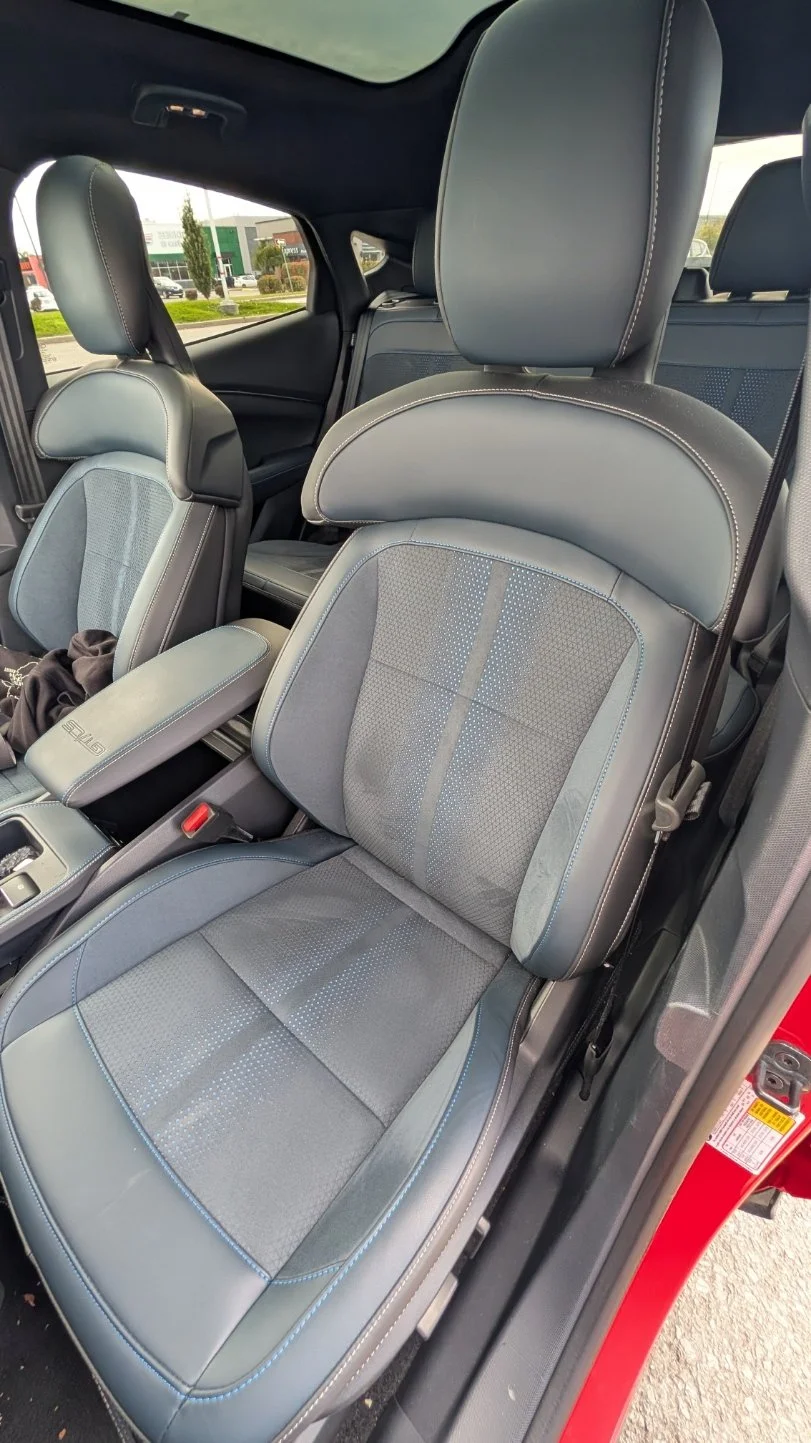
The seats have power adjustment, but the firm shoulder bolstering doesn't fit my shoulders — I'm built like a linebacker, so that's on me as much as the seat. Your backside gets used to any seat eventually. Rear passengers get 38.1 inches of legroom, good headroom (I'm 5'9" and had 2+ inches to spare under the fixed glass roof), two USB-C ports, ventilation, and cup holders — but the rear seats don't recline, and my feet didn't fit under the front seats at my driving position.
Cargo is genuinely usable: 29 cubic feet behind the rear seats, 59 with them folded nearly flat, plus a power tailgate (which Luc's Premium doesn't have, much to his jealousy), a 12V outlet, a tire repair kit, and a home charger that plugs into 120V or 240V. Height is slightly cut off compared to some SUVs, but it's good to go.
The two cons
1. No ventilated seats on the GT. Heated seats and a heated steering wheel, yes. Ventilated, no — and you have to drop down to the Premium to get them. For a top trim, that's strange. It wasn't a problem for me at 5°C all week, but it's a real omission at this price point.
2. No manual battery preconditioning, and no indicator. Preconditioning only happens through navigation — the built-in Ford maps, or Google Maps through wireless Android Auto/CarPlay, which reads battery state and pre-selects chargers on your route (a Toronto route plotted three charging stops and added about two hours to an eight-hour drive, with no subscription required). But as far as I could tell, there's no way to just open a menu and precondition the battery yourself, and there's no icon telling you preconditioning is even happening. I prefer Waze for situational awareness and accuracy in my area, and Waze doesn't trigger preconditioning at all. Give me a button and an indicator — that's all I'm asking.
Verdict
The 2026 Mustang Mach-E GT California Special is a driver's car that happens to be electric, and the California Special package makes it look as special as it drives. The MagneRide suspension is superb, the torque is the whole story, charging beat Ford's own rating, and cold-weather range is honest at 414 km. The missing ventilated seats and the lack of manual preconditioning are genuine frustrations, but they're small next to what this car does right.
So, is it the best Mach-E yet? On driving alone, yes. And if you disagree, the comments are open — would the missing ventilated seats stop you, or does 700 lb-ft make up for it?
Have you driven the Mach-E GT California Special? Let me know what you think in the comments, and watch for part two with Luc's 2026 Premium ownership experience.
