


The 2027 Ram 1500 SRT TRX, all 777 horsepower of it, fully airborne on the jump course.
In October, Ram Canada invited me to their Full Lineup Experience in Ontario — my first-ever OEM drive event — and I spent one full day driving ten Ram trucks back-to-back. Towing. Hauling. Baja runs. Full-send jumps. No scripts, no corporate talking points, and Ram didn't pay for this review or tell me what to say. Every opinion here is mine.
Some quick background, because it matters to how I judge a truck. I spent 19 years in the Canadian Armed Forces — infantry, paratrooper, a stint in the MPs, and time as a special close protection operator. In that world, your kit either works every single time you need it, or it gets somebody hurt. That's the standard I bring to a truck: not how shiny it is on day one, but whether it does the job, every job, without drama.
So I drove the whole lineup in a day — and then I went home and dug into the dependability data. Because driving ten trucks for a day tells you what they're like. The data tells you what they're like to own. Here's both.
Related review: F-350 Godzilla vs. Power Stroke — gas or diesel?
First, the work: towing and payload
We started the day doing what trucks are actually for.
And the rotations that day basically ran the table on Ram powertrains. The current 1500 lineup alone gives you four engines: the 3.6L Pentastar V6 with eTorque (305 horsepower), the returning 5.7L HEMI V8 with eTorque (395), and the 3.0L Hurricane twin-turbo six in Standard Output (420) and High Output (540) — plus the TRX sitting on top of the range with its supercharged 6.2L (777). Between the towing rotations, the trails, and the fast stuff, I drove across that whole range in a single day, then stepped up to the heavy duties: the 6.4L HEMI V8 in the 2500 and the 6.7L Cummins diesel in the 3500. Same day, same conditions, back to back — there's no better way to feel where each one sits.
First up, the green Ram 1500 Big Horn with a Kawasaki side-by-side on an open trailer behind it. Clean run, everything worked, no drama — exactly what you want from the volume truck in the lineup.
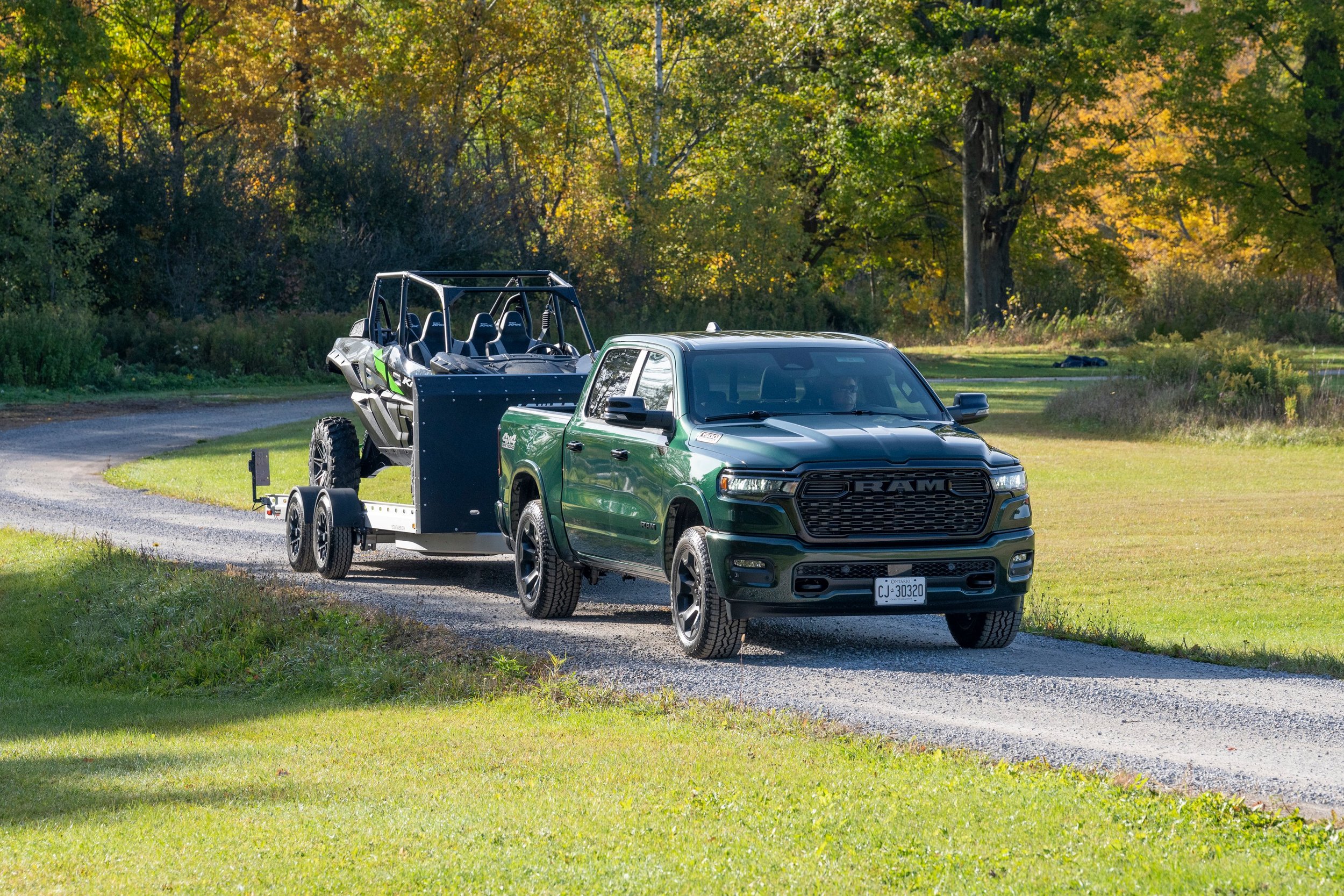
The Ram 1500 Big Horn at work, towing an open trailer with a Kawasaki KRX side-by-side.
The gray Ram 2500 Big Horn with the 6.4L HEMI V8 (410 hp, 429 lb-ft) was next, with a Kubota on the trailer behind it. One honest note from that run: the trailer brakes on the trailer I was given weren't working — that was the trailer's fault, not the truck's — and you could feel the trailer pushing the truck around a little. The 2500 controlled it anyway. That's the difference heavy-duty makes: margin. When something in the chain isn't perfect, the truck has enough in reserve to cover it.
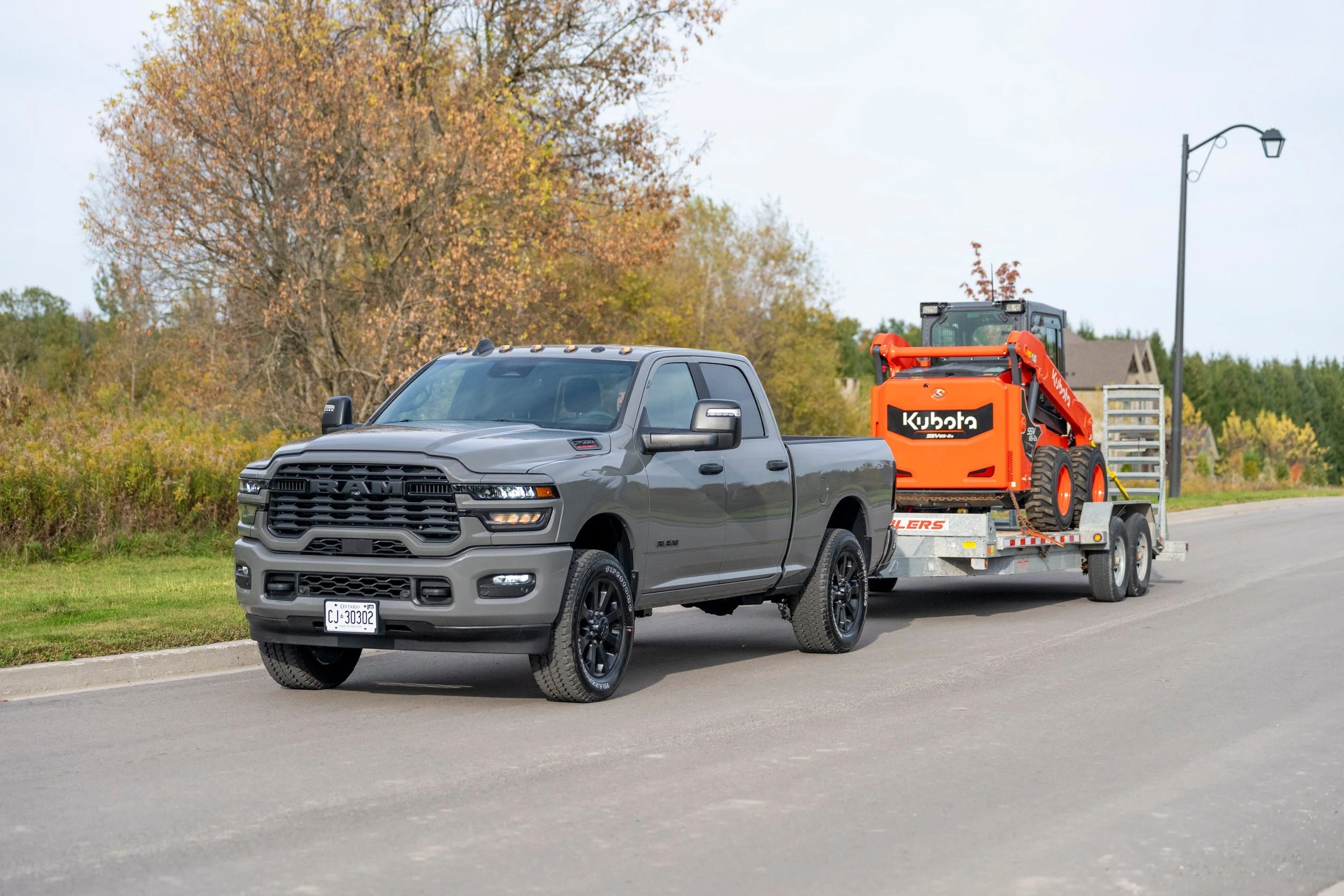
The gray Ram 2500 Big Horn (6.4L HEMI) with the Kubota skid steer on the trailer — the run where the trailer brakes quit and the truck covered for it.
Then the big rig: a Ram 3500 dually with the 6.7L Cummins High Output diesel — 430 horsepower and a frankly ridiculous 1,075 lb-ft of torque — hitched to a 36-foot fifth-wheel. Of everything I towed that day, the dually was the most stable and the most planted. Obviously — that's what it's built for. The headline numbers: up to 36,610 lb of max towing and 7,590 lb of payload on the dually. What actually surprised me wasn't the dually. It was that the 1500s weren't outclassed. Not even close.
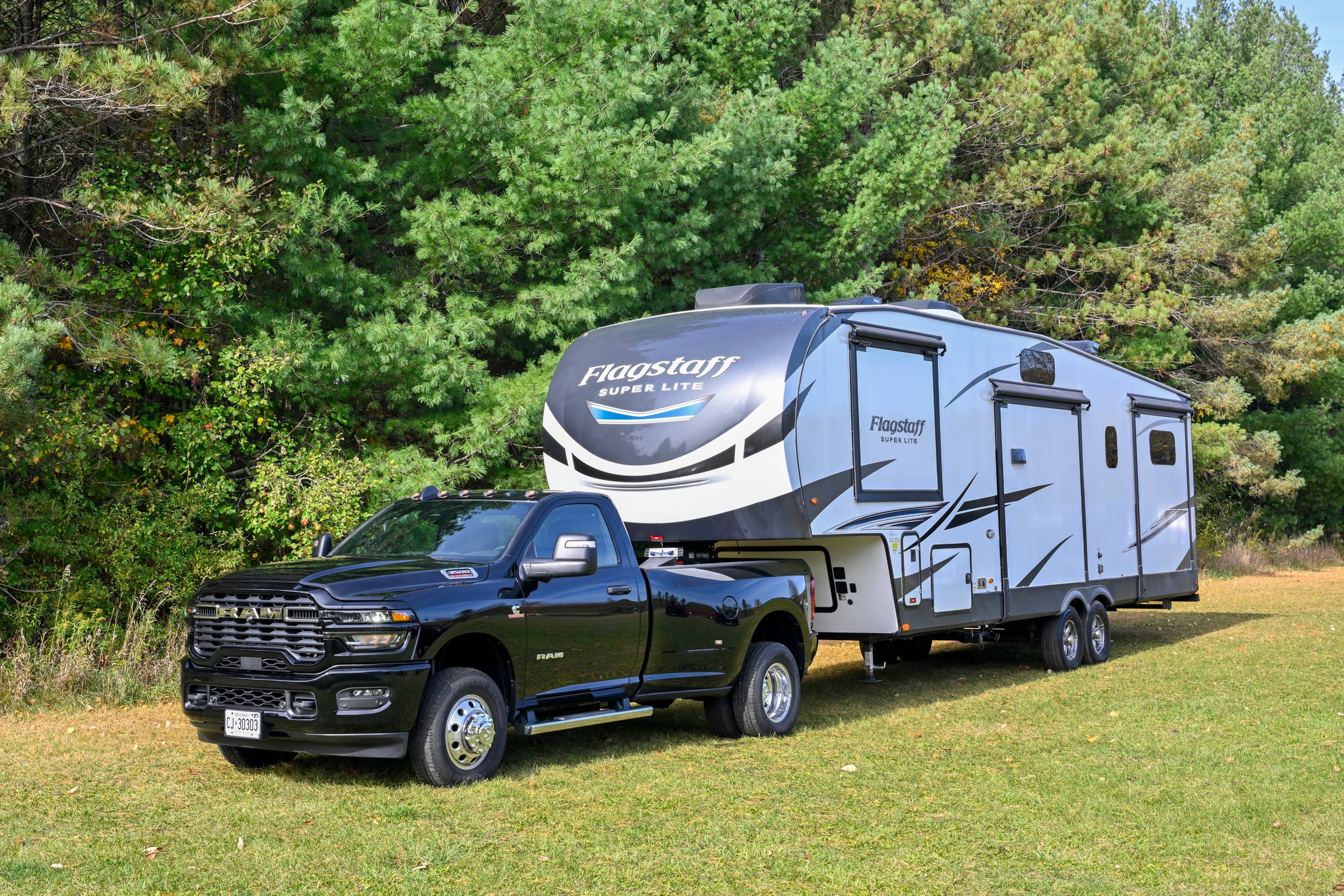
The black Ram 3500 Cummins dually hitched to a Flagstaff Super Lite fifth-wheel. This is the towing king of the lineup: 36,610 lb max.
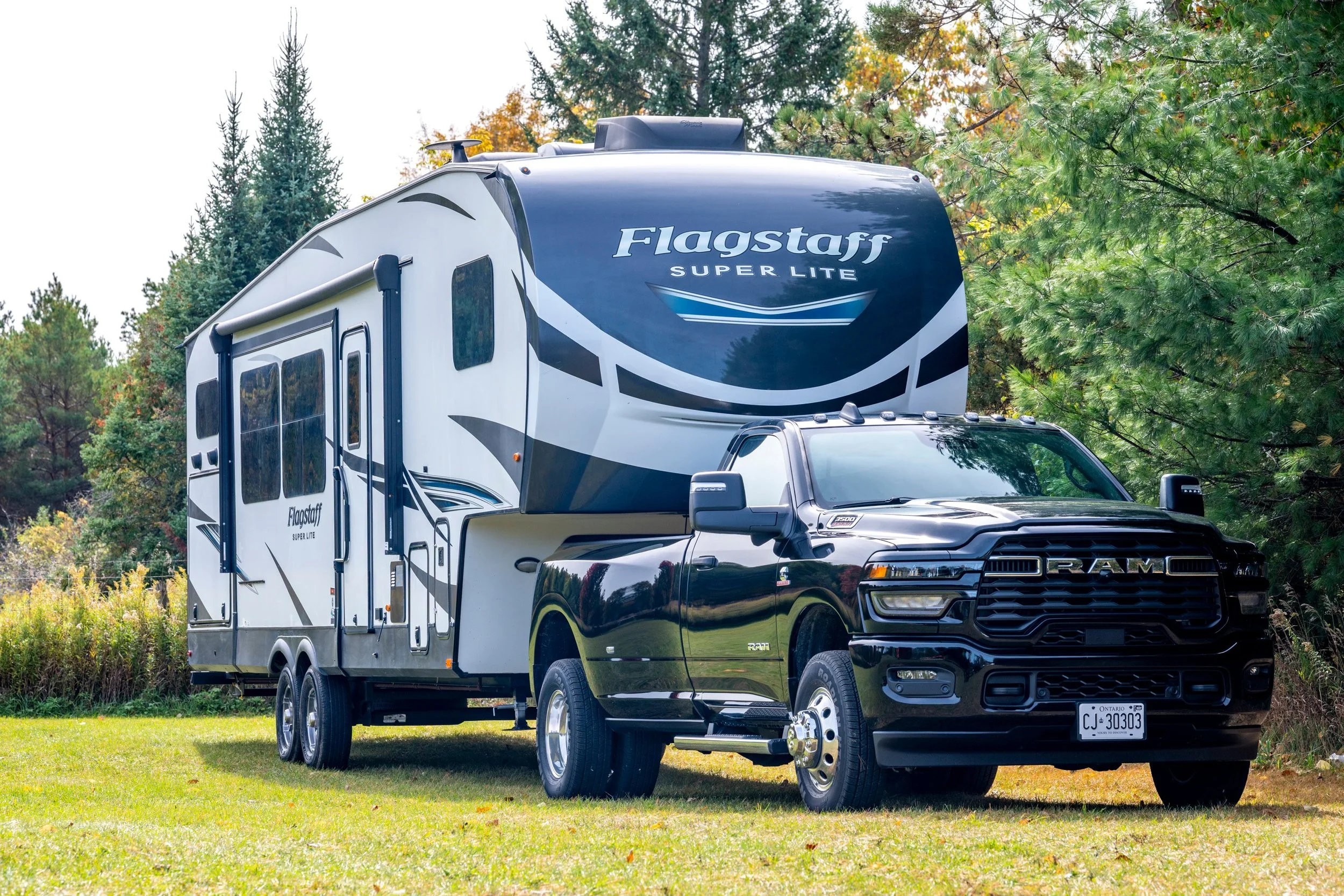
Same 3500 dually and fifth-wheel from the front — 1,075 lb-ft of Cummins torque makes this combination feel easy.
Last of the work tests: a red Ram 1500 Laramie with the 5.7L HEMI V8 eTorque (395 hp, 410 lb-ft) and a thousand pounds of payload in the bed. What stood out: with that weight in the bed, the truck sat perfectly balanced. No squat, nose level. The coil-sprung rear end soaked it up so well it honestly reminded me of driving my Silverado EV.
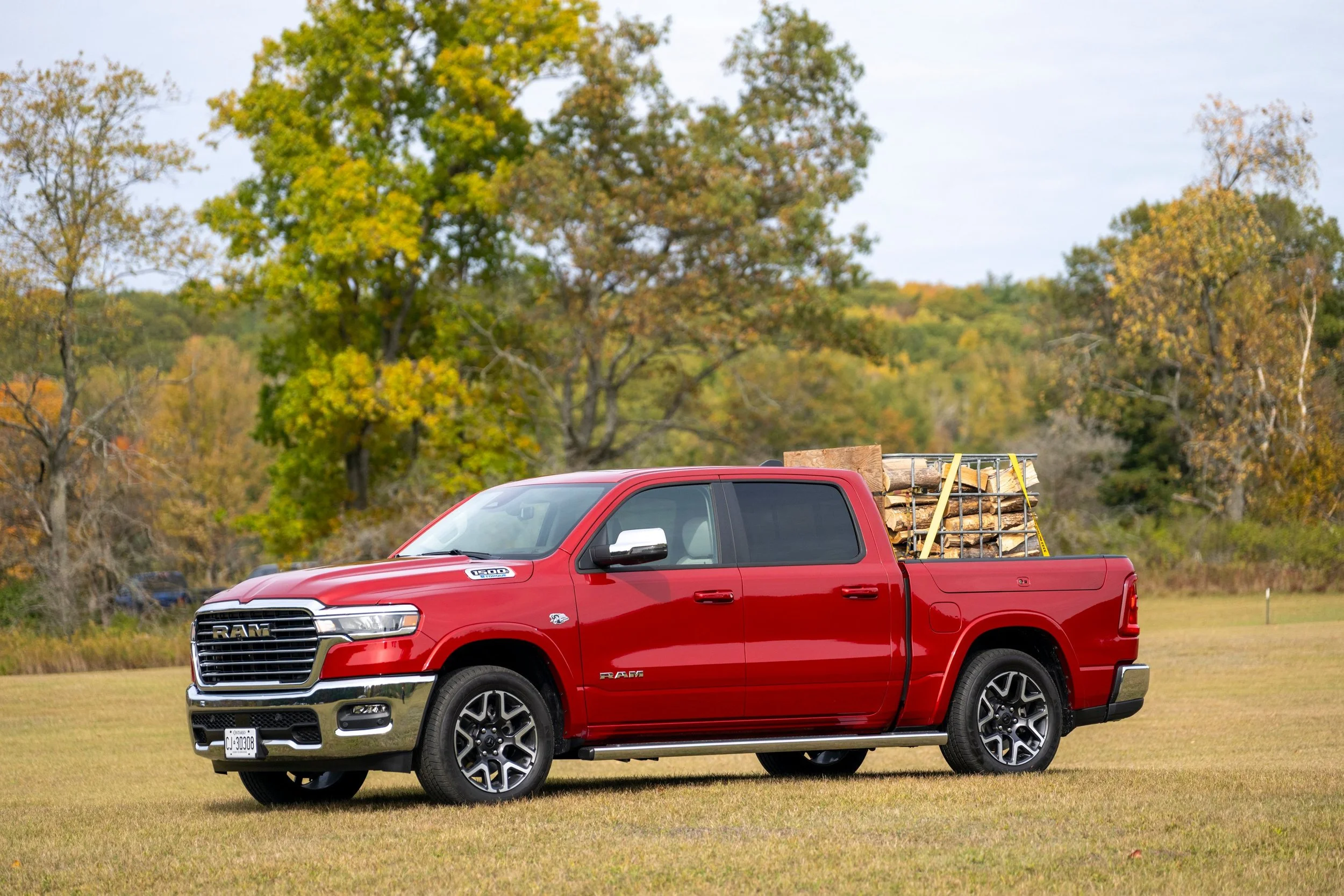
The red Ram 1500 Laramie doing the payload demo with a caged load of firewood in the bed — and sitting level doing it.
Then it got loud: RHO, TRX, and the Rebel X
The Ram 1500 RHO is the high-speed off-road weapon: the 3.0L Hurricane High Output with 540 horsepower and 521 lb-ft, 35-inch tires, and the longest-travel suspension ever fitted to a production truck — 13 inches up front, 14 in the rear, on Bilstein Black Hawk adaptive shocks. Here's the party trick an engineer told us about: the truck knows when it's airborne. The sensors detect freefall and the dampers stiffen to full firm before you land, so the suspension is already prepped while you're still in the air. Baja mode, launch control, an electronic locking rear diff — and yes, it rips. Full honesty: this is the truck I spent the most time in all day. Part of that was practical — the lineup for the TRX was huge — but mostly it's because the RHO just feels perfectly balanced. It's lighter on its nose than the TRX, it has the same hardware underneath, and it never put a wheel wrong for me.
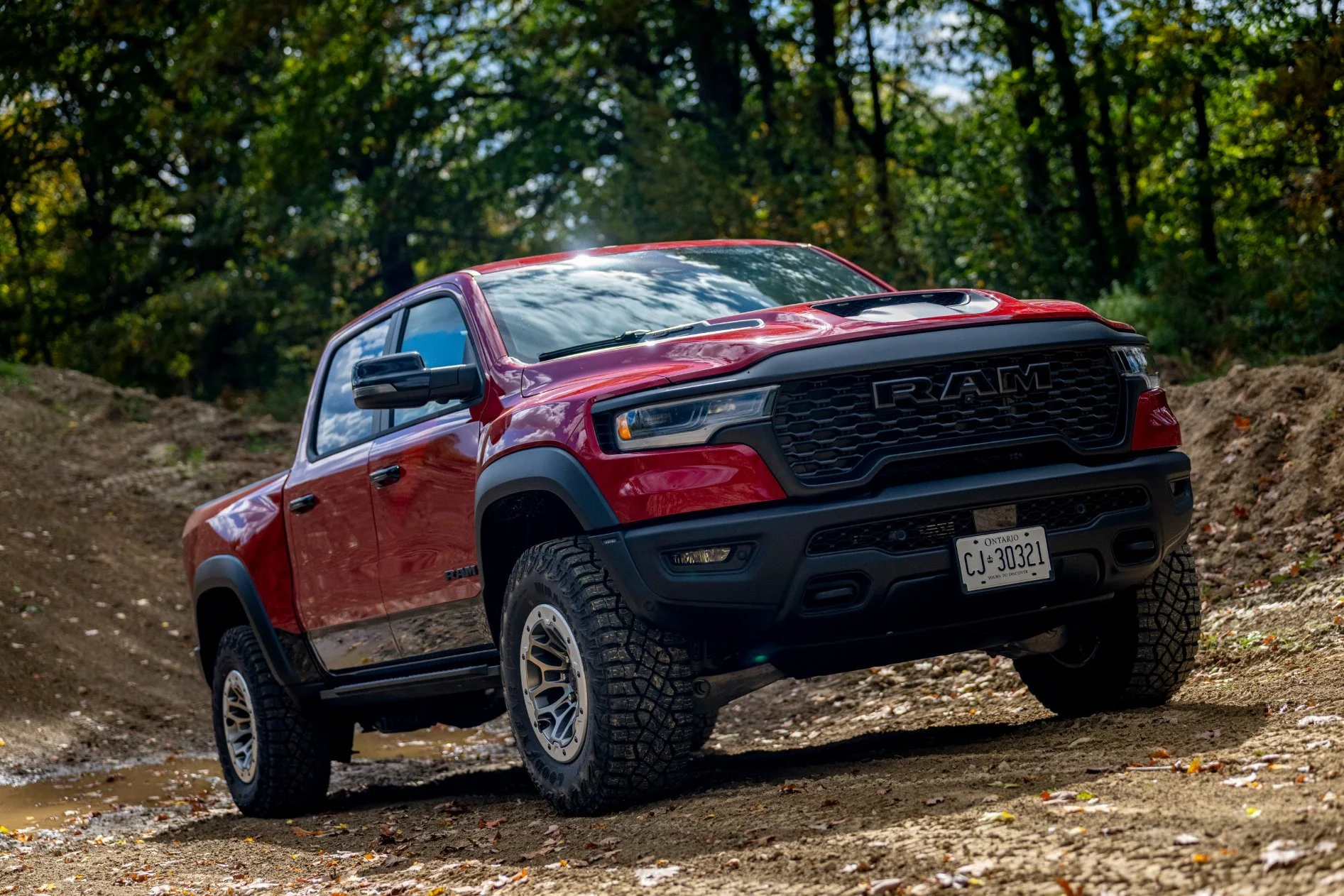
The red Ram 1500 RHO on the dirt track. Same Hurricane High Output as the luxury Tungsten — none of the manners.
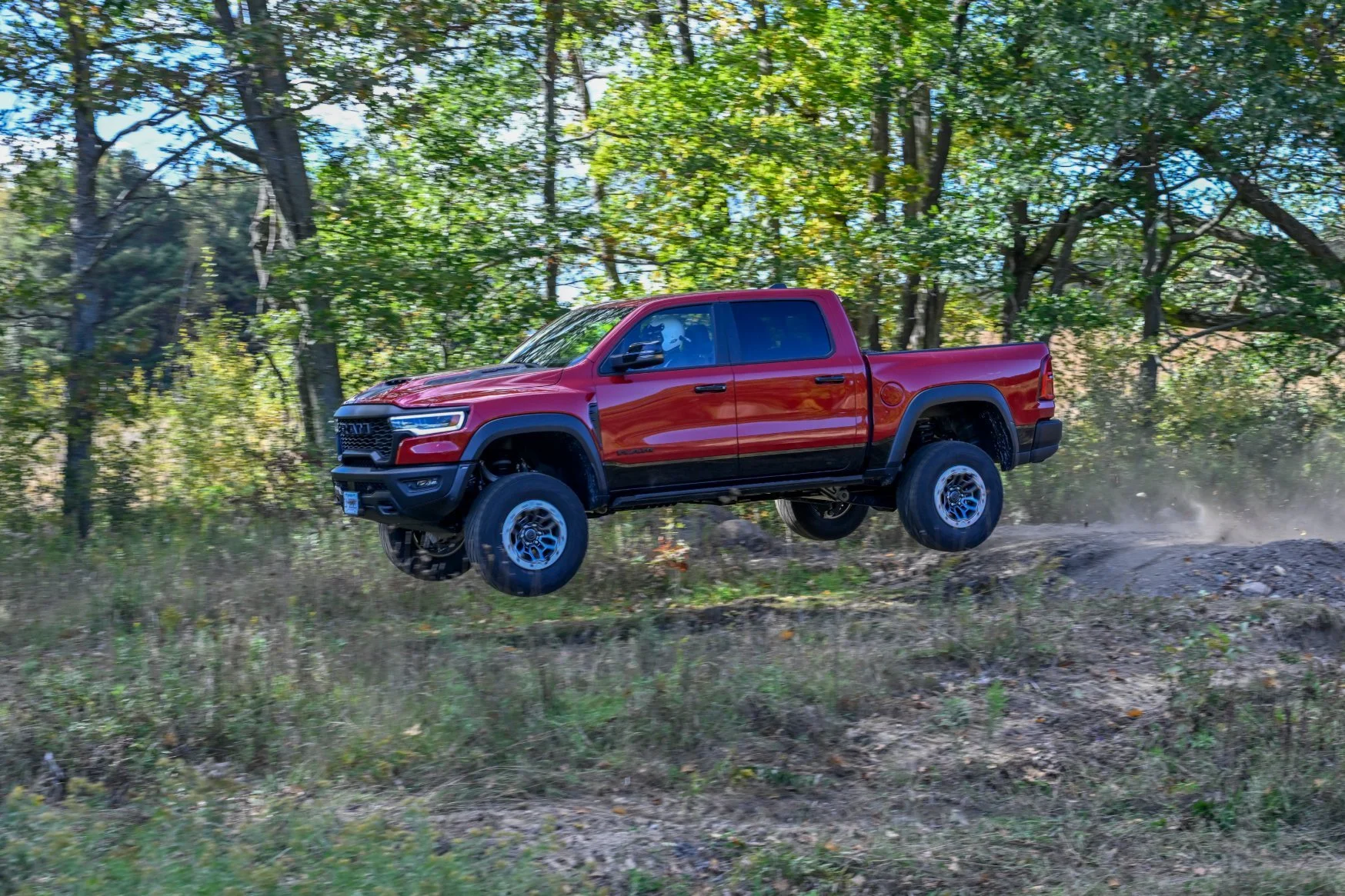
The RHO in its natural state: off the ground. The suspension literally prepares for the landing while it's airborne.
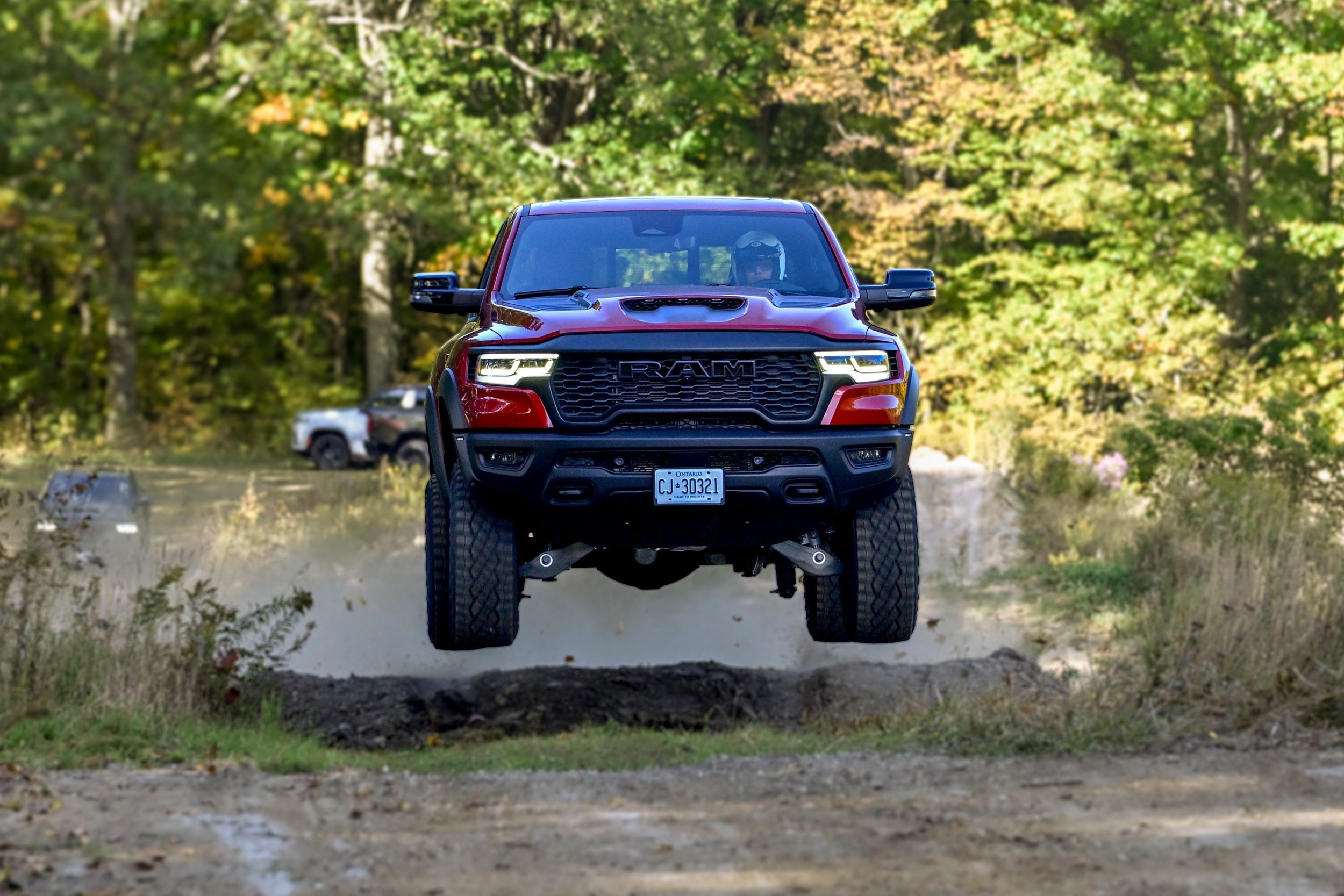
RHO, head-on, mid-flight. 540 horsepower will do that.
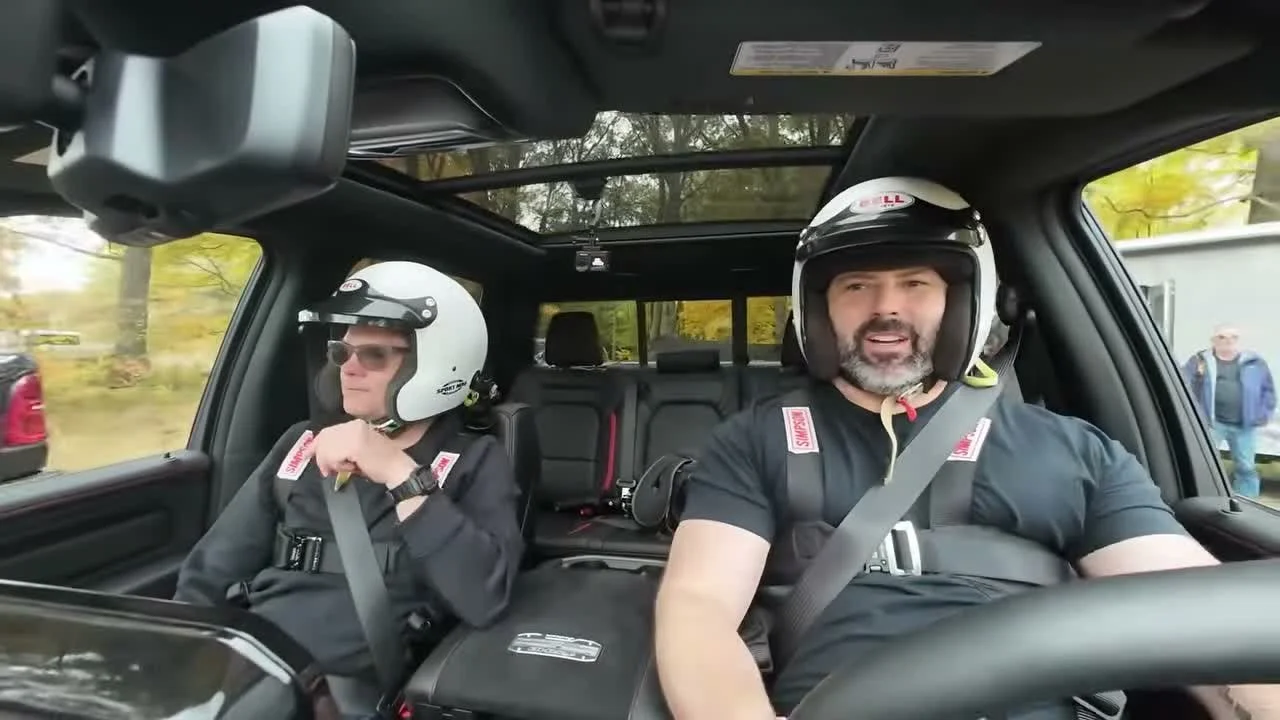
Helmet on, harnessed in — me at the wheel of the RHO between runs. (Frame from my event video.)
Then the main event. The 2027 Ram 1500 SRT TRX: a supercharged 6.2L HEMI V8 with 777 horsepower and 680 lb-ft, 0–60 in three and a half seconds — in a full-size pickup. Here's what most people won't expect: underneath, the TRX and the RHO are hardware twins. Same Bilstein Black Hawk shocks, same suspension travel, same full-floating Dana 60 rear axle, same full-time transfer case with a 2.64:1 low range. The difference is the engine — a supercharged V8 where the RHO runs a twin-turbo six — and the price: roughly $145,000 Canadian before destination. I ran it in Baja mode. I jumped it. It is completely excessive and completely glorious, and it is not a rational purchase. It's just the most fun you can have in a pickup truck.
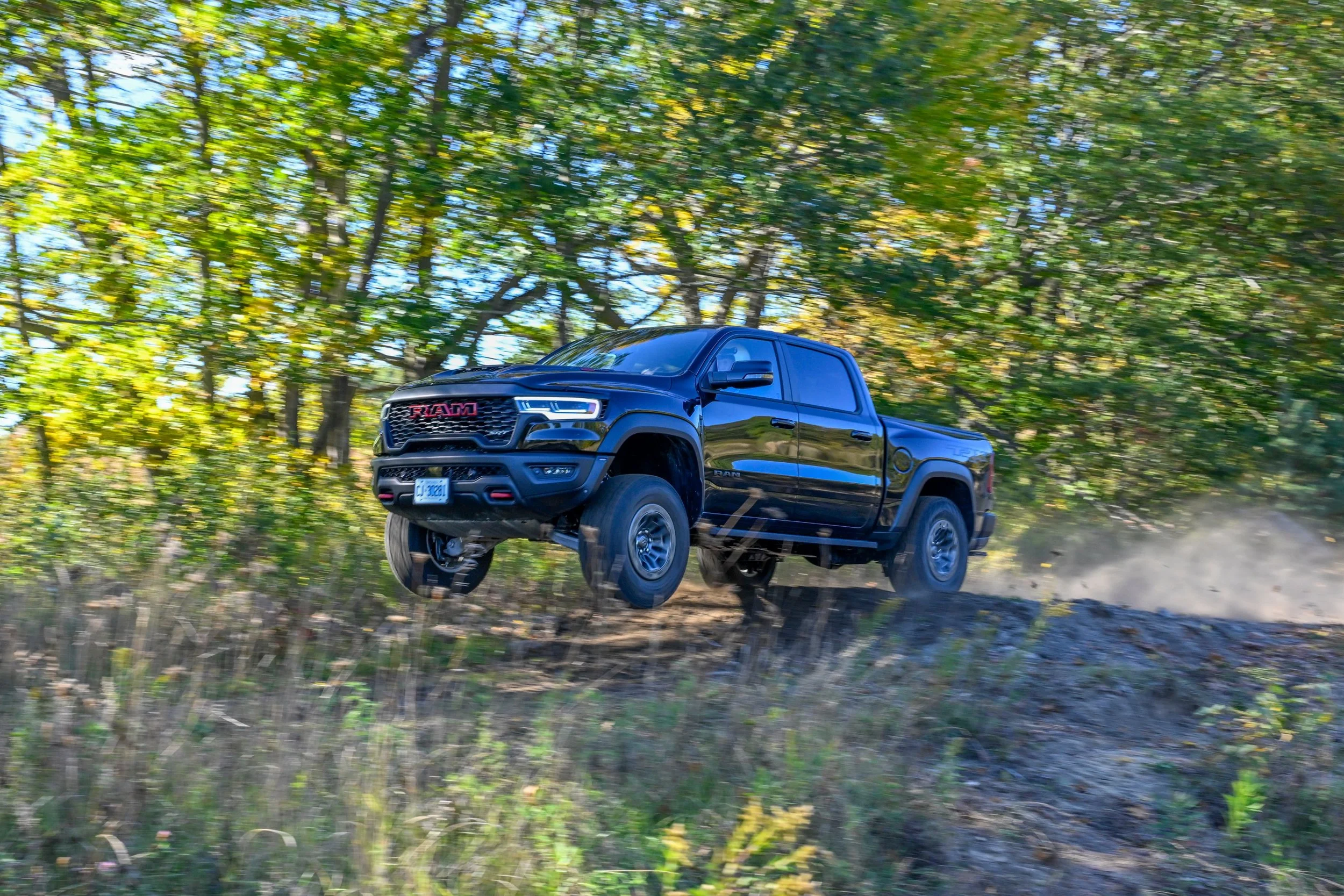
The black TRX mid-jump, side view. Excessive? Absolutely. Glorious? Also absolutely.

That grin is the whole TRX review, really. Me at the wheel, mid-run, 777 horsepower doing its thing. (Frame from my event video.)
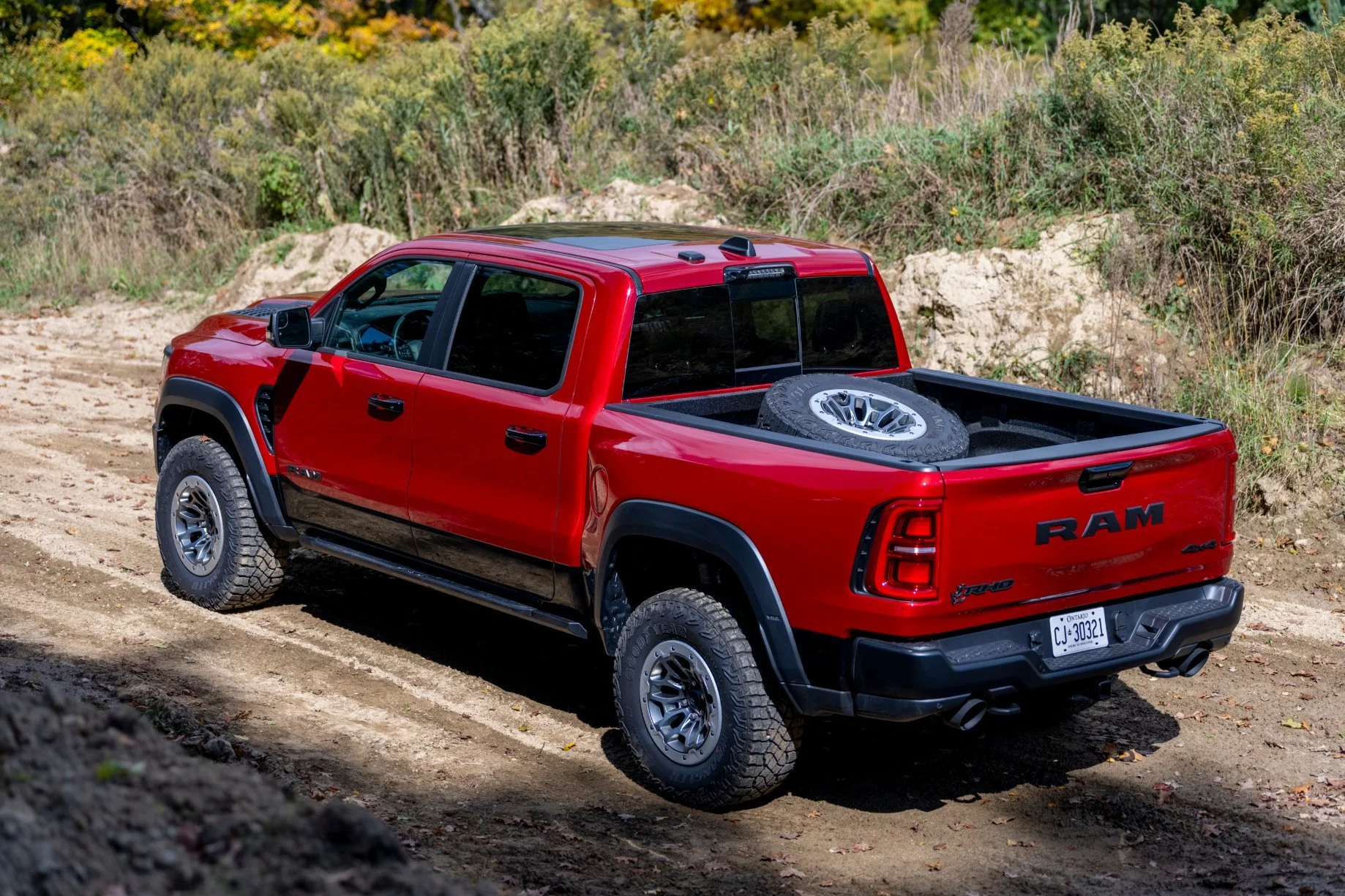
RHO from the rear, full-size spare in the bed — built to be run hard, far from pavement.
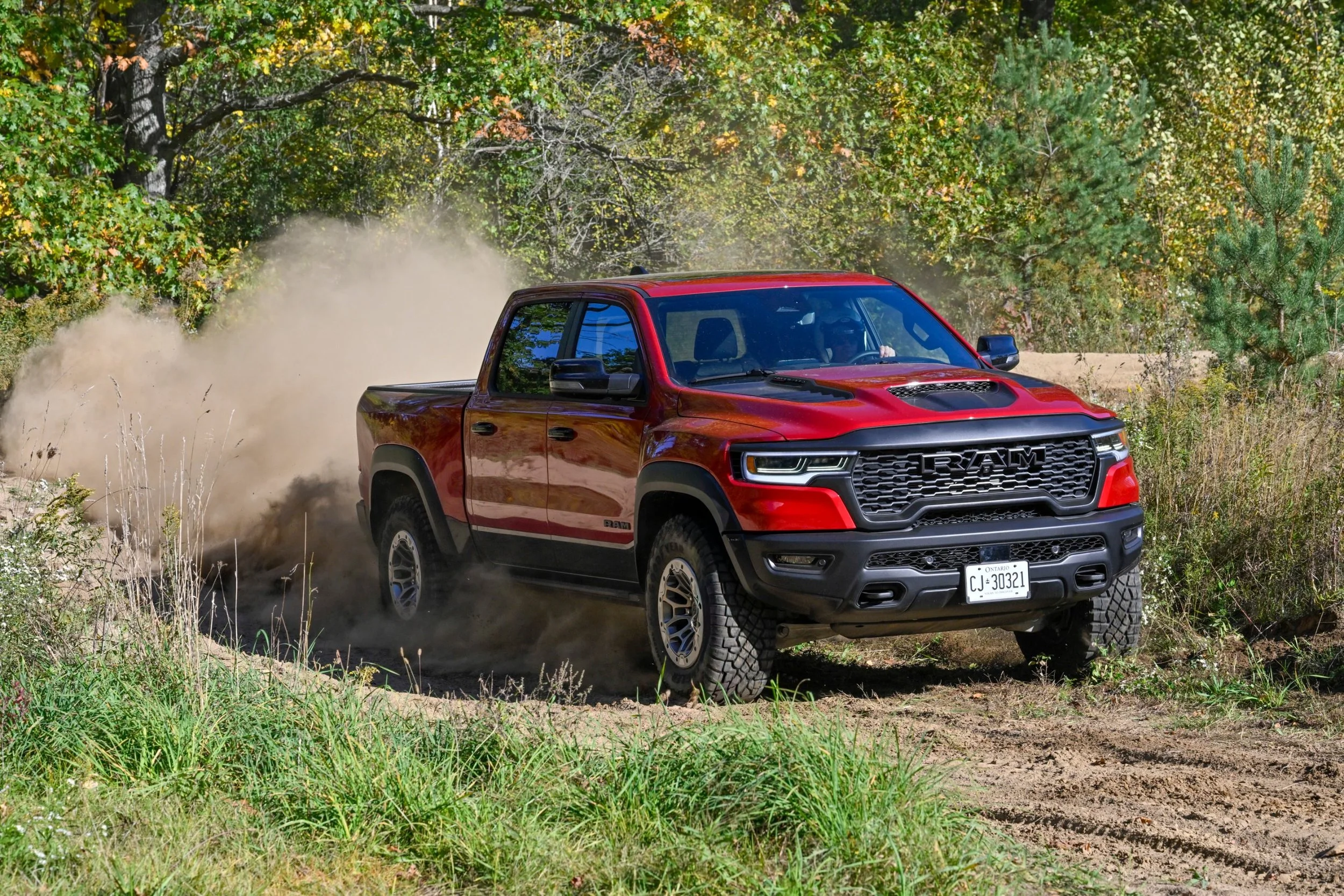
The RHO kicking up dust on the course. This is what the truck was made for.
And then there's the Ram 1500 Rebel X, in the new-for-2026 Tank green — the truck I took out on the trail loop, right before the Power Wagon. It runs the Hurricane Standard Output (420 hp, 469 lb-ft) with a 3.92 rear axle and electronic locker, a 1-inch factory lift, Bilstein monotube shocks, and 33-inch Goodyear Wrangler DuraTracs on 18-inch wheels. Rough Road Cruise Control is the neat trick — set it at trail speed and it crawls the truck for you. Full honesty, because that's the deal here: the Rebel X became a permanent trim for 2026 and got this great new paint, but there's no new off-road hardware this year. Same lift, same shocks, same tires as before. That's not a complaint — the hardware was already right — but you deserve to know the story is "permanent and green," not "reinvented."
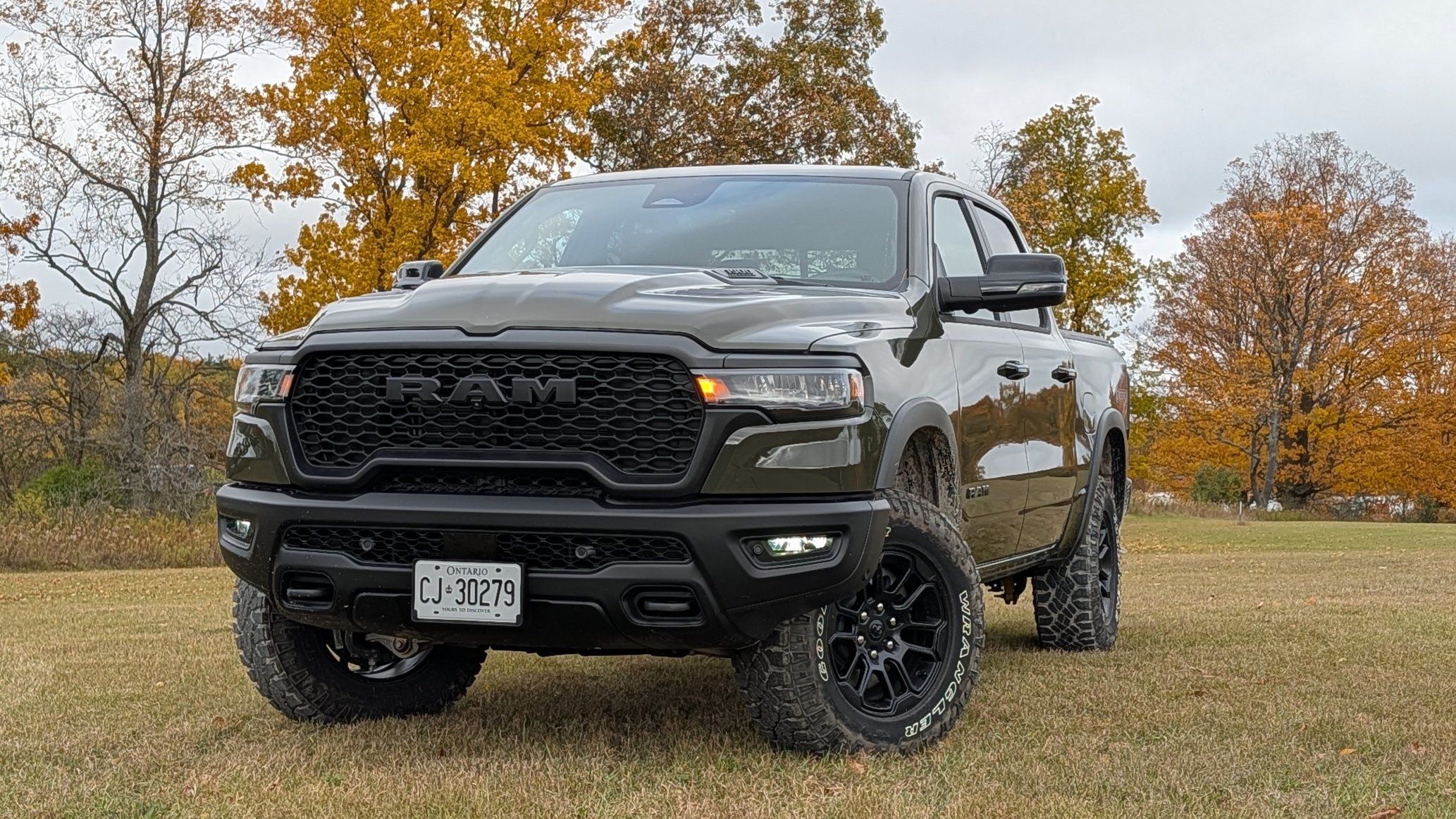
The Rebel X up close in Tank green — my own shot. That colour in person is even better than it photographs.
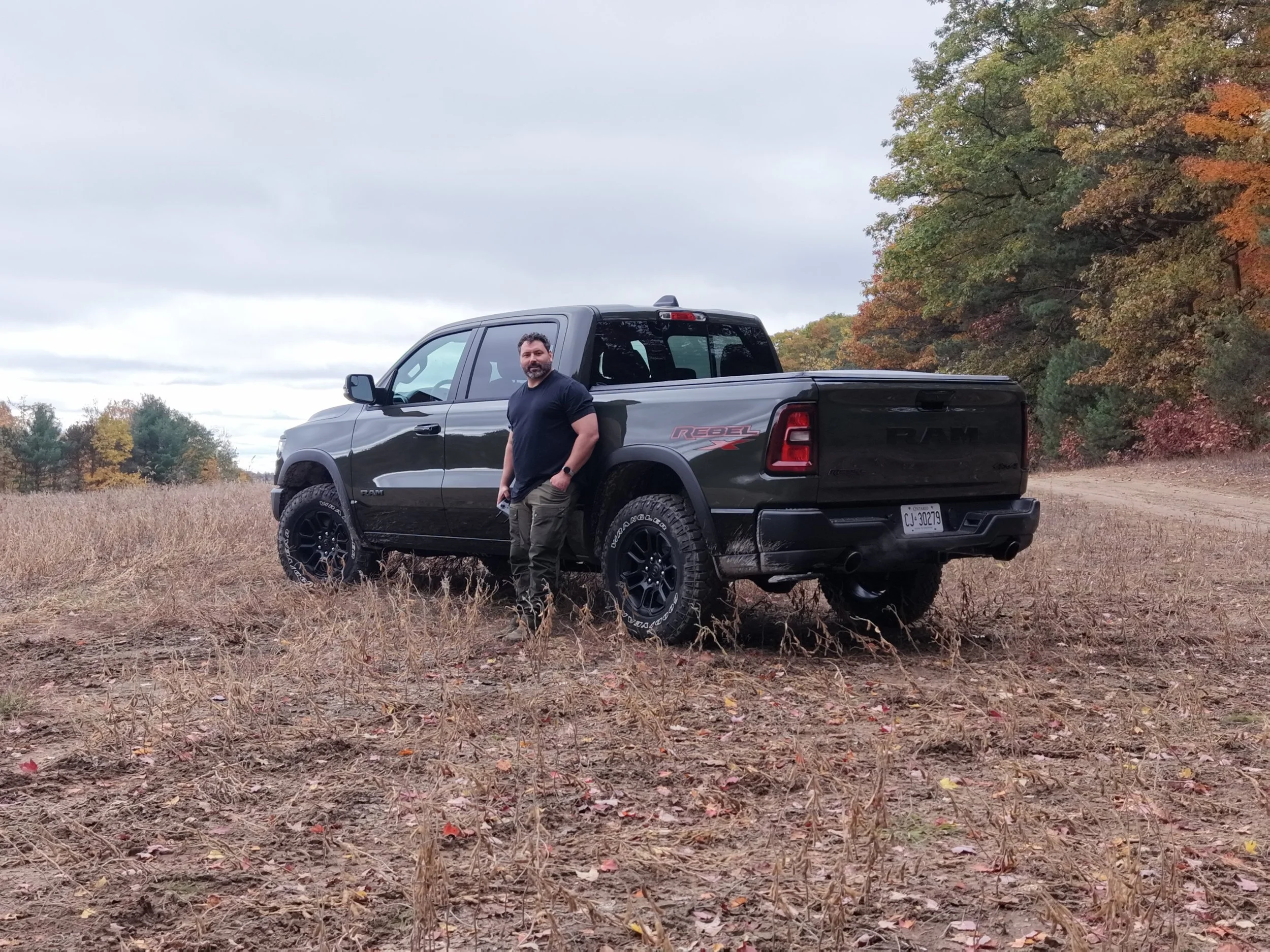
Me with the Ram 1500 Rebel X in Tank green — my trail run, right before the Power Wagon.
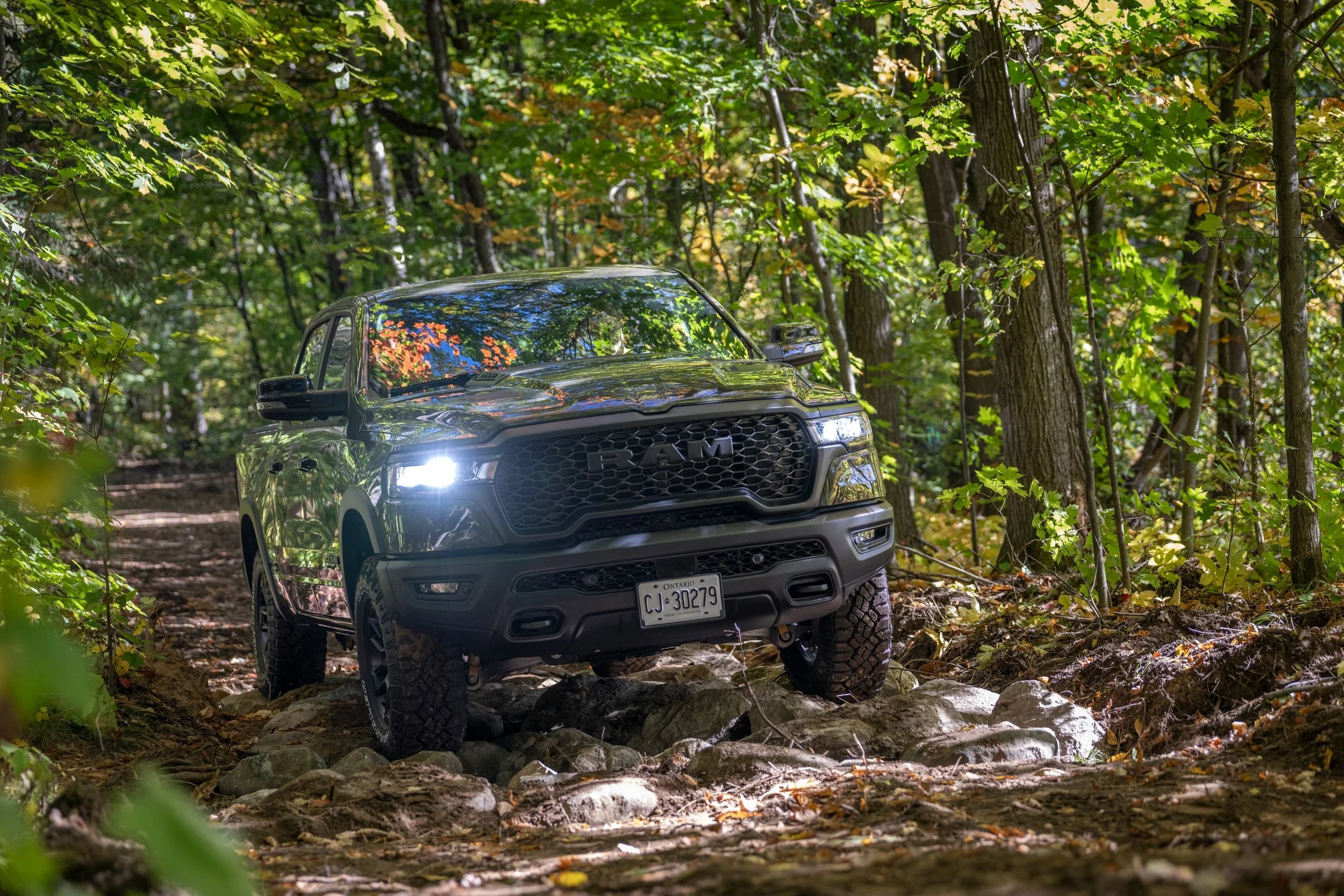
The Rebel X crawling rocks on the forest trail. The 3.92 e-locker and DuraTracs earn their keep here.
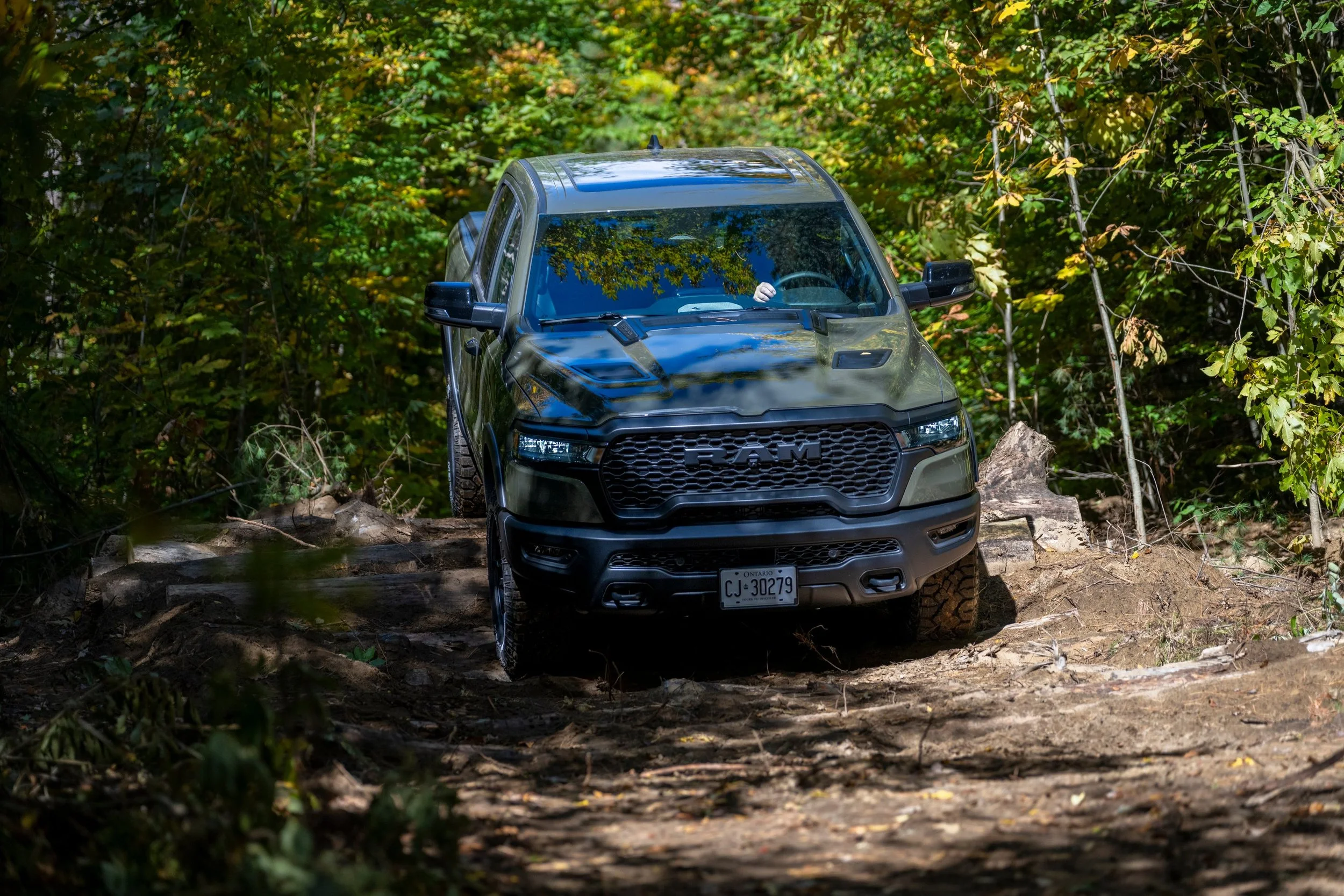
Rebel X descending a rutted trail section — Rough Road Cruise Control doing the careful work.
One truck left, and honestly, it's the one that impressed me the most: the Ram 2500 Power Wagon. Full disclosure up front — I drove it, but I didn't film it, so there's no video of this one. It still needs saying.
After driving the Rebel X, the Power Wagon surprised me by being the smoother truck. A three-quarter-ton on off-road suspension has no business riding that well. And the hardware list reads like an aftermarket wish list, except it's all factory, all warrantied: Tru-Lok locking differentials front AND rear, an electronic disconnecting front sway bar, a 12,000-lb Warn winch tucked into the front bumper, Ram's Articulink suspension, Bilstein shocks, 33-inch all-terrains, and skid plates. Power comes from the 6.4L HEMI — 410 horsepower, 429 lb-ft. The honest trade-offs: towing tops out around 10,610 lb and payload is roughly 1,500 lb, because that soft, articulating suspension is built for traction, not max loads.
Now the value case, because this is the part that stuck with me. The 2026 Power Wagon starts at $87,395 in Canada. The TRX and the Rumble Bee SRT ($125,995) are the halo trucks, and they're spectacular — I jumped one. But dollar for dollar, the Power Wagon is the ultimate value point in the lineup: real work-truck bones, the most complete factory off-road package on any heavy-duty truck, and tens of thousands less than the halos. Workhorse on weekdays, play horse on weekends. Of everything I drove that day, it's the one that impressed me the most.
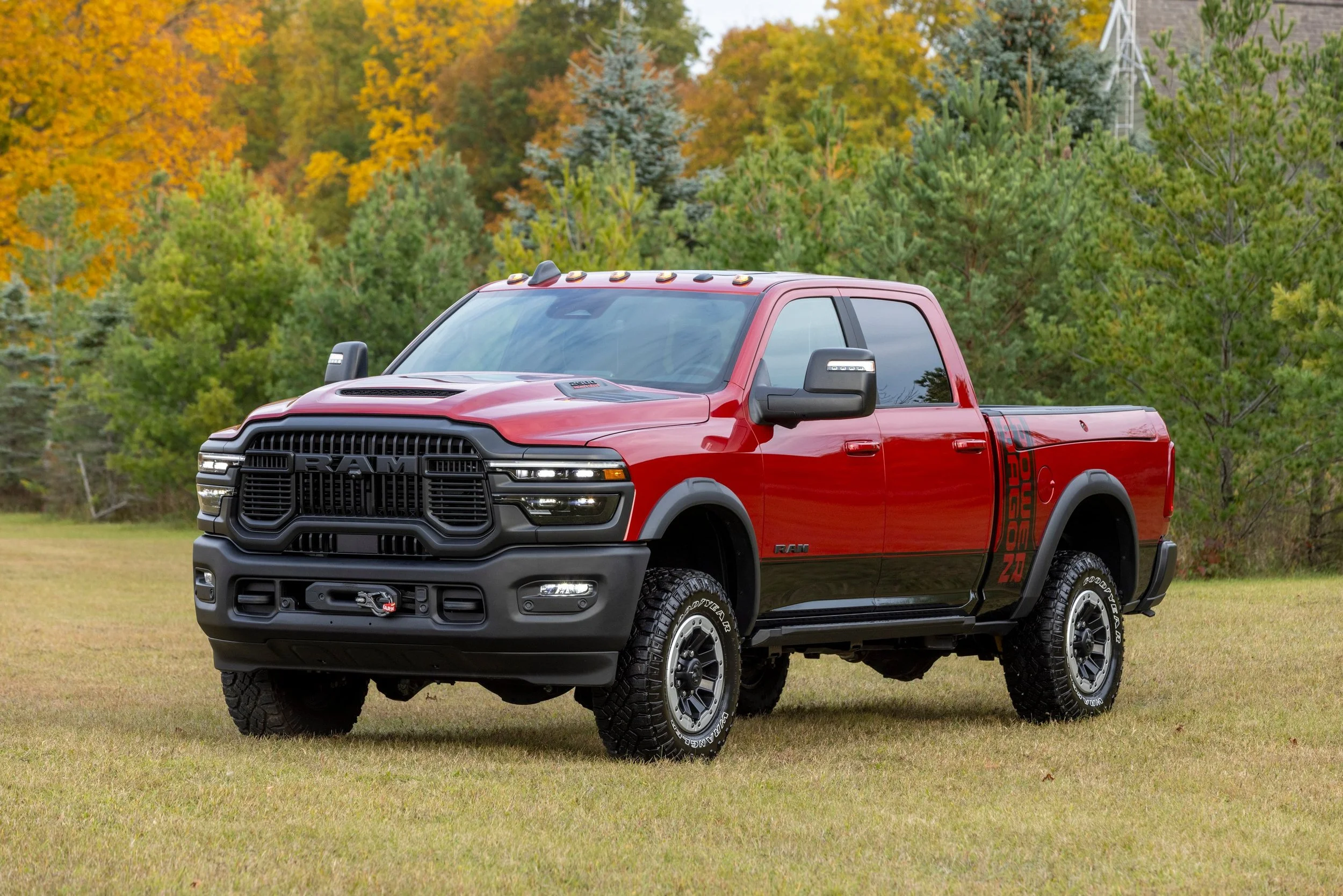
The 2500 Power Wagon — driven, not filmed, and the truck that impressed me most at the event.
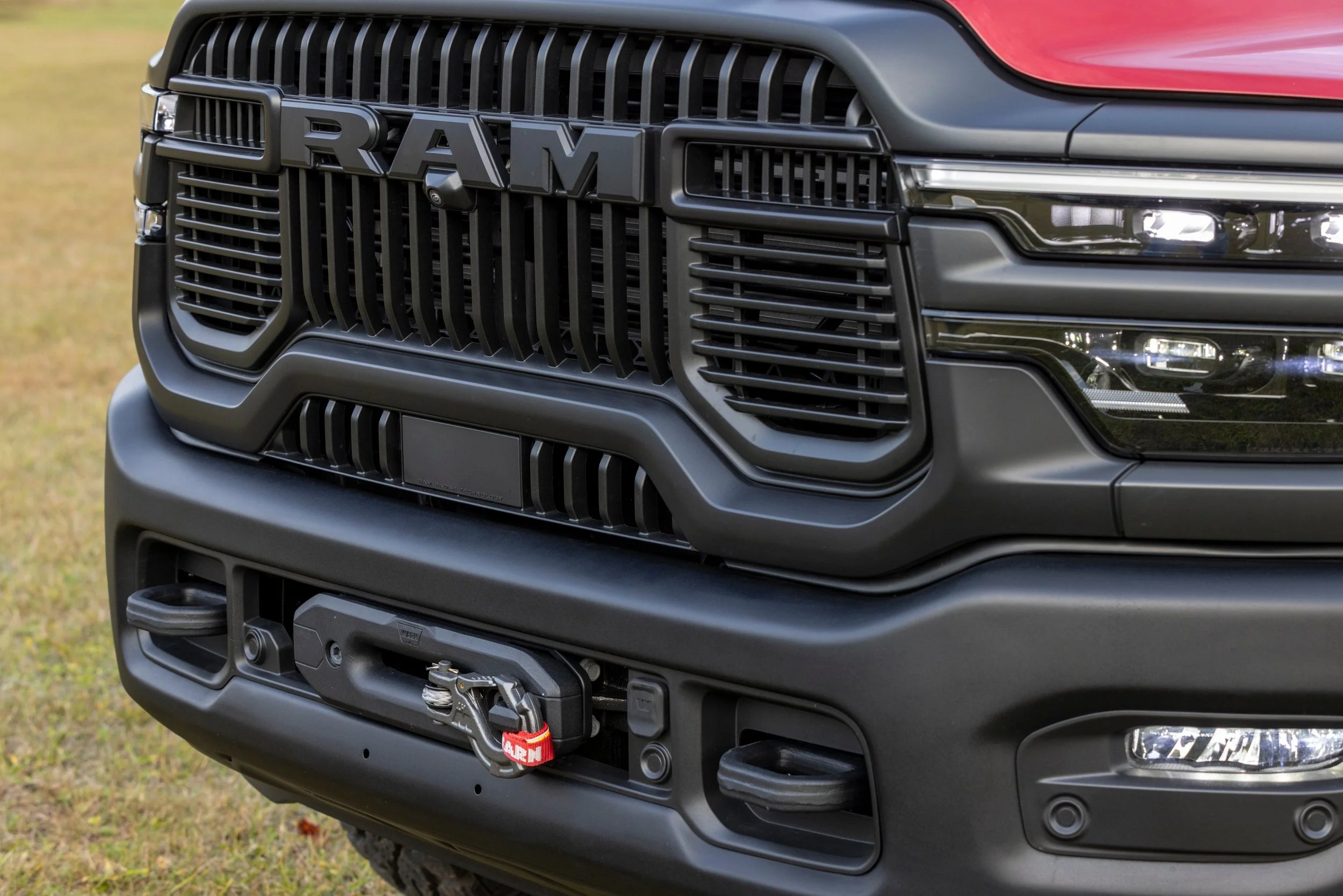
Power Wagon hardware: factory Warn winch behind the bumper, heavy tow hooks, front camera in the grille.
One more note for the full picture: the lineup that day also included the Tungsten, Ram's luxury flagship; I didn't spend time with it, but its existence makes the point — this lineup runs from work truck to luxury truck to desert racer without leaving the brand. And the Rumble Bee is back for 2027 — I saw it as a static first look, no drive. Canadian pricing before destination: the 5.7L at $78,995, the 392 at $89,995, the 392 Track Pack at $100,995, and the SRT at $125,995. The 392 is a 6.4L making 470 horsepower; the SRT is supercharged, with 777 horsepower and a 0–100 km/h run of 3.4 seconds. A street truck doing supercar numbers, from the factory.
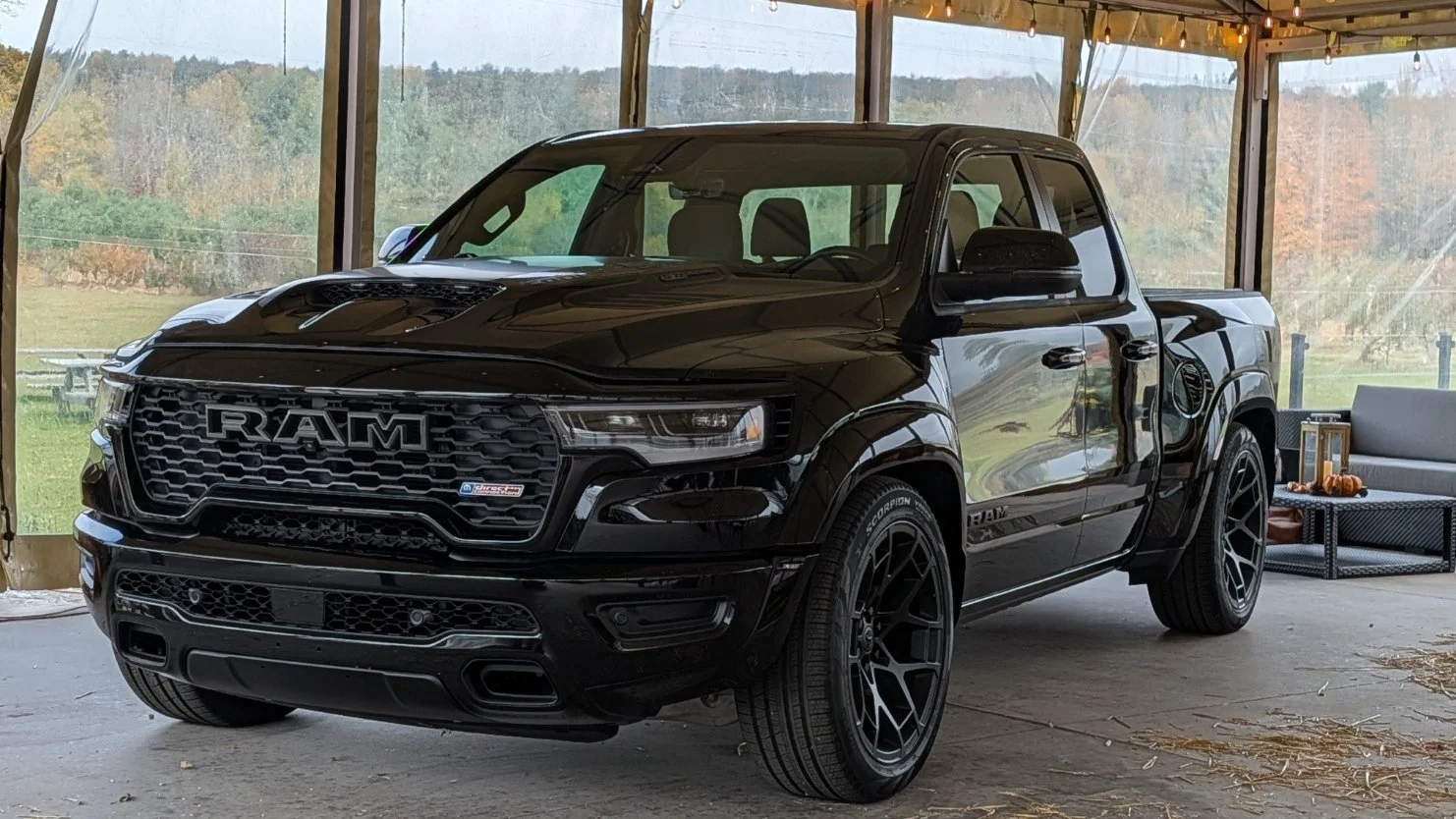
The 2027 Rumble Bee SRT on static display — black on black, Direct Connection badging on the grille.
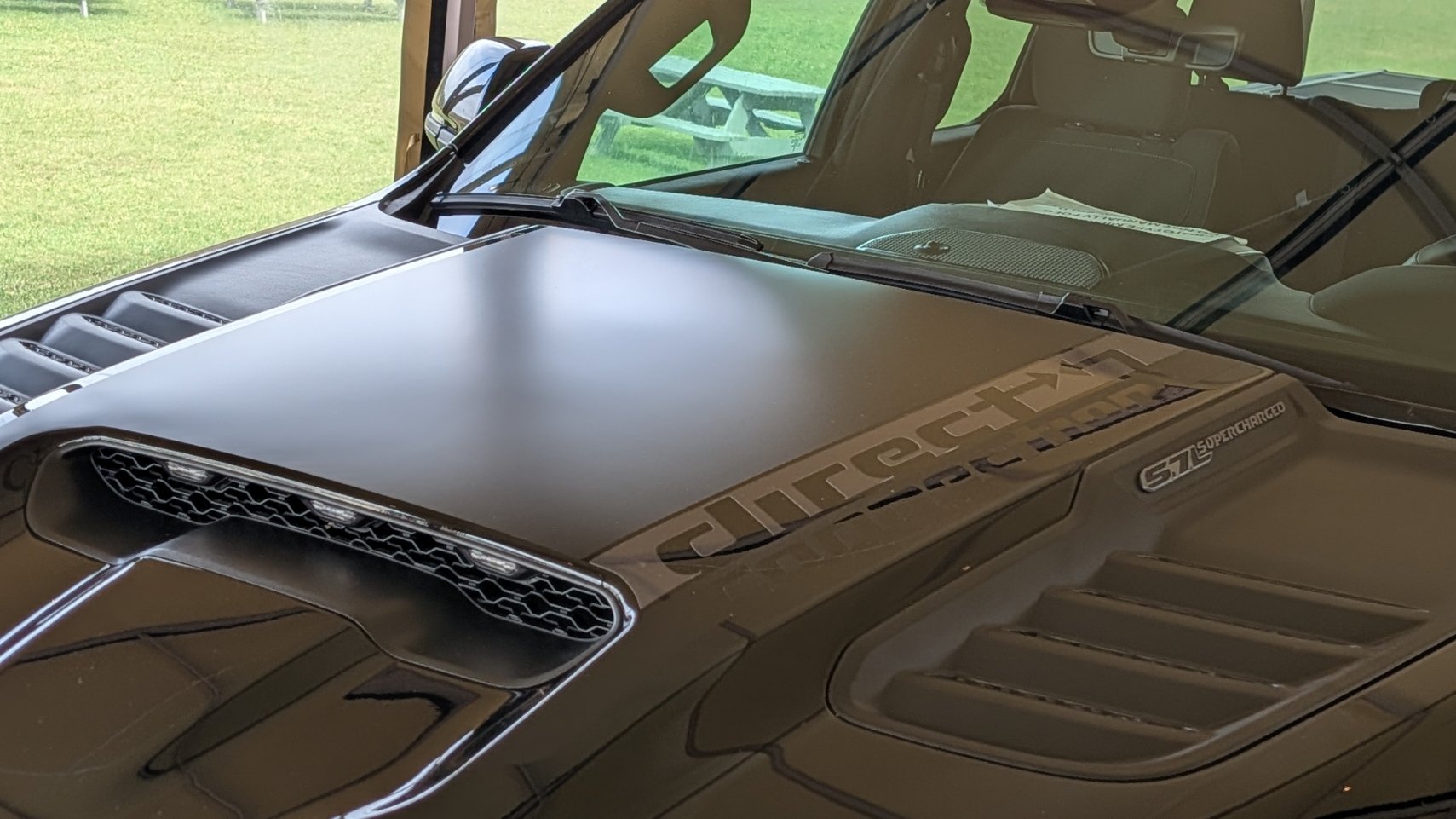
The hood tells the story: Direct Connection lettering and a “6.2L SUPERCHARGED” badge. That’s the 777-horsepower SRT.
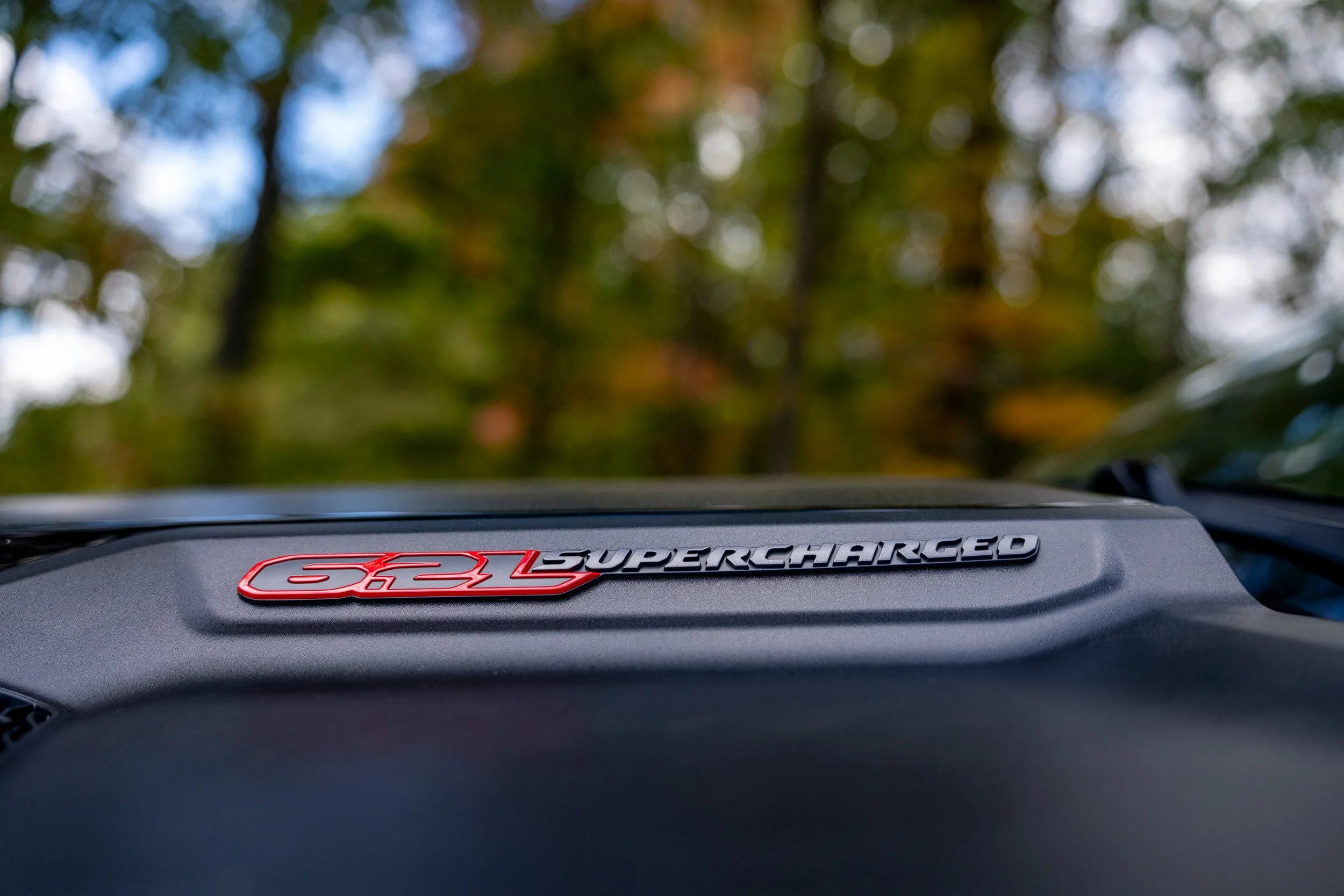
Tight on the badge: 6.2L SUPERCHARGED, in red. The SRT’s whole personality in one emblem.
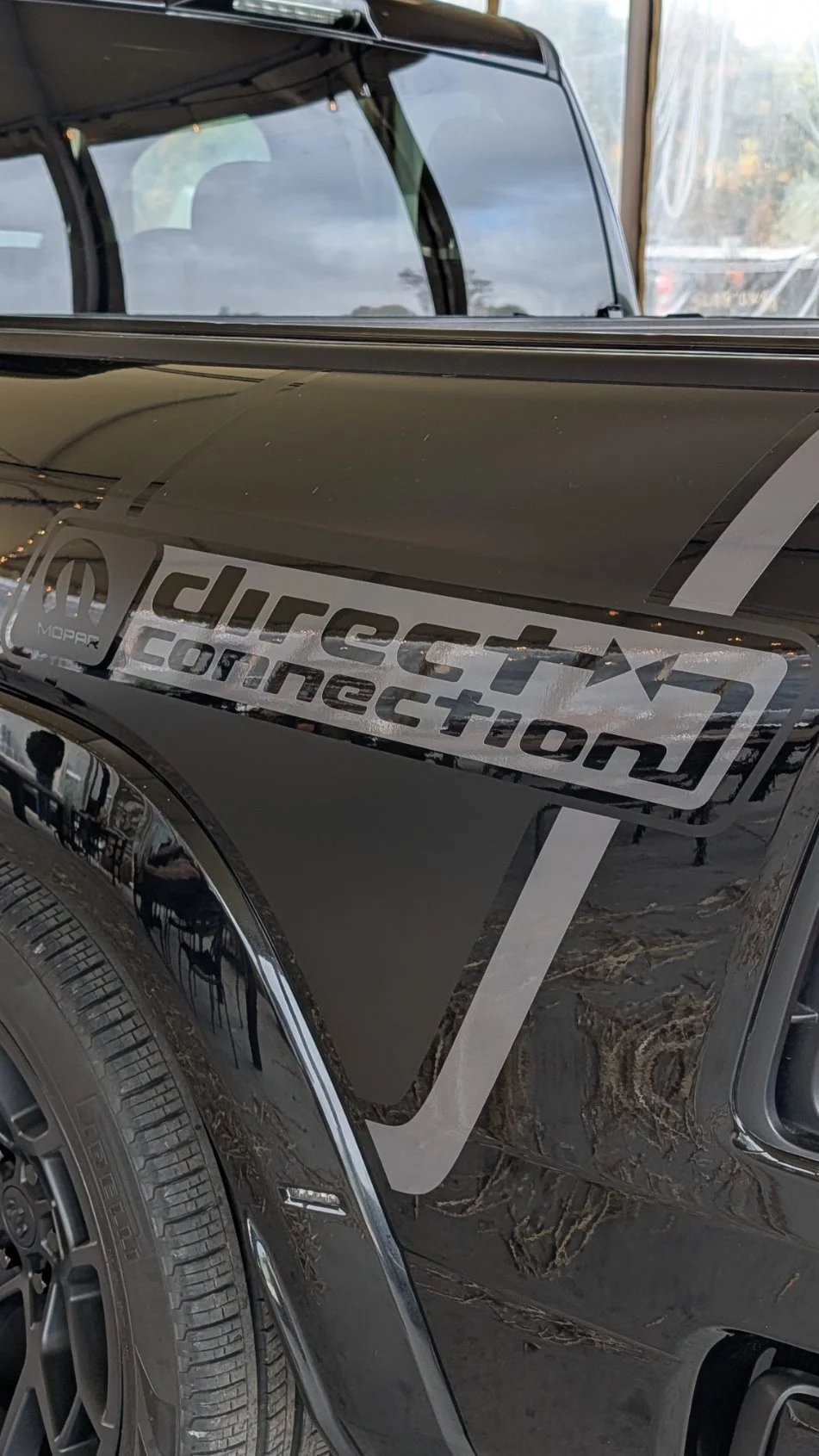
Mopar Direct Connection graphics on the bedside — the factory performance-parts program is baked right into this truck’s identity.
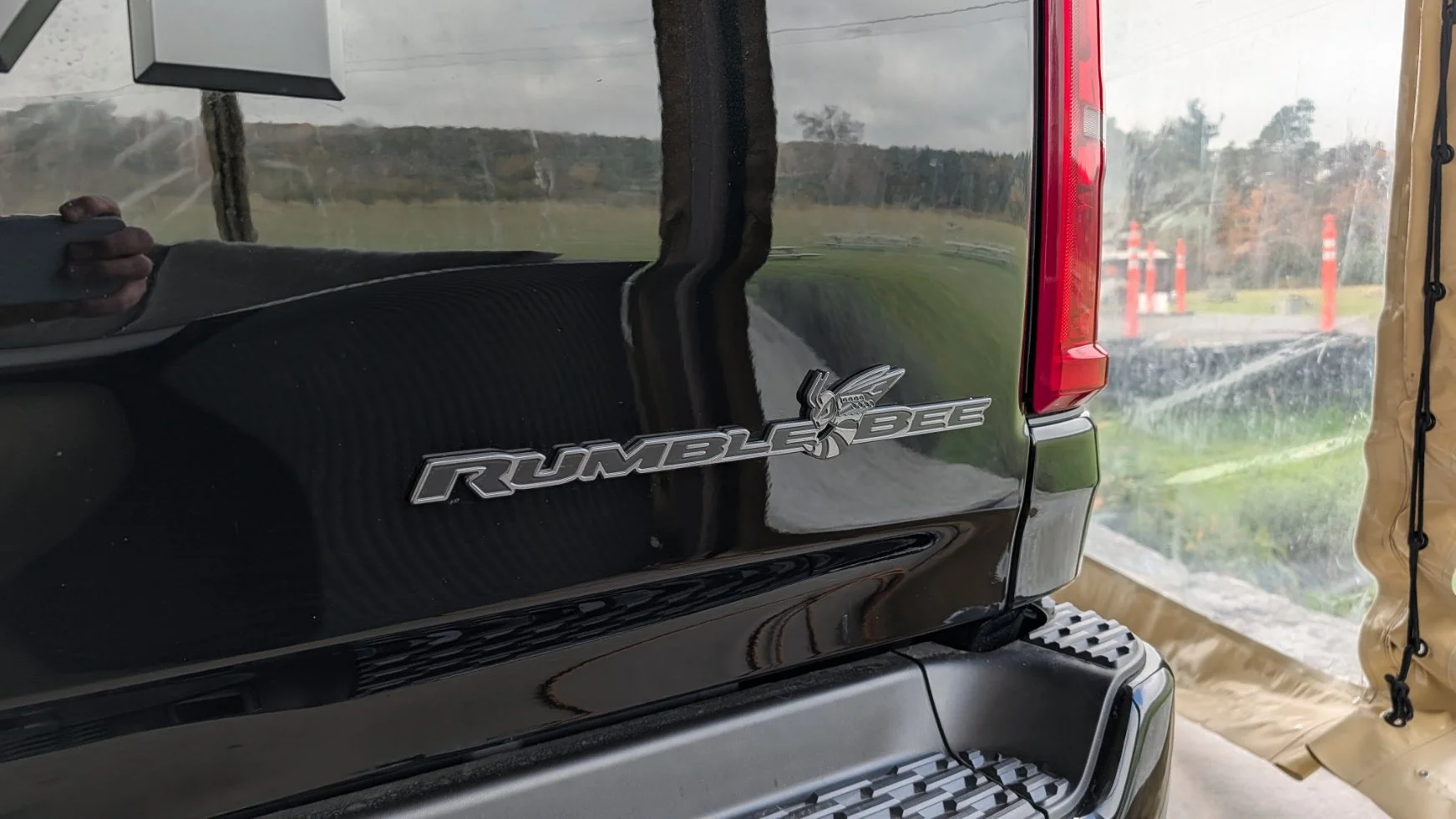
The bee is back — Rumble Bee tailgate badge, first production run since 2005.
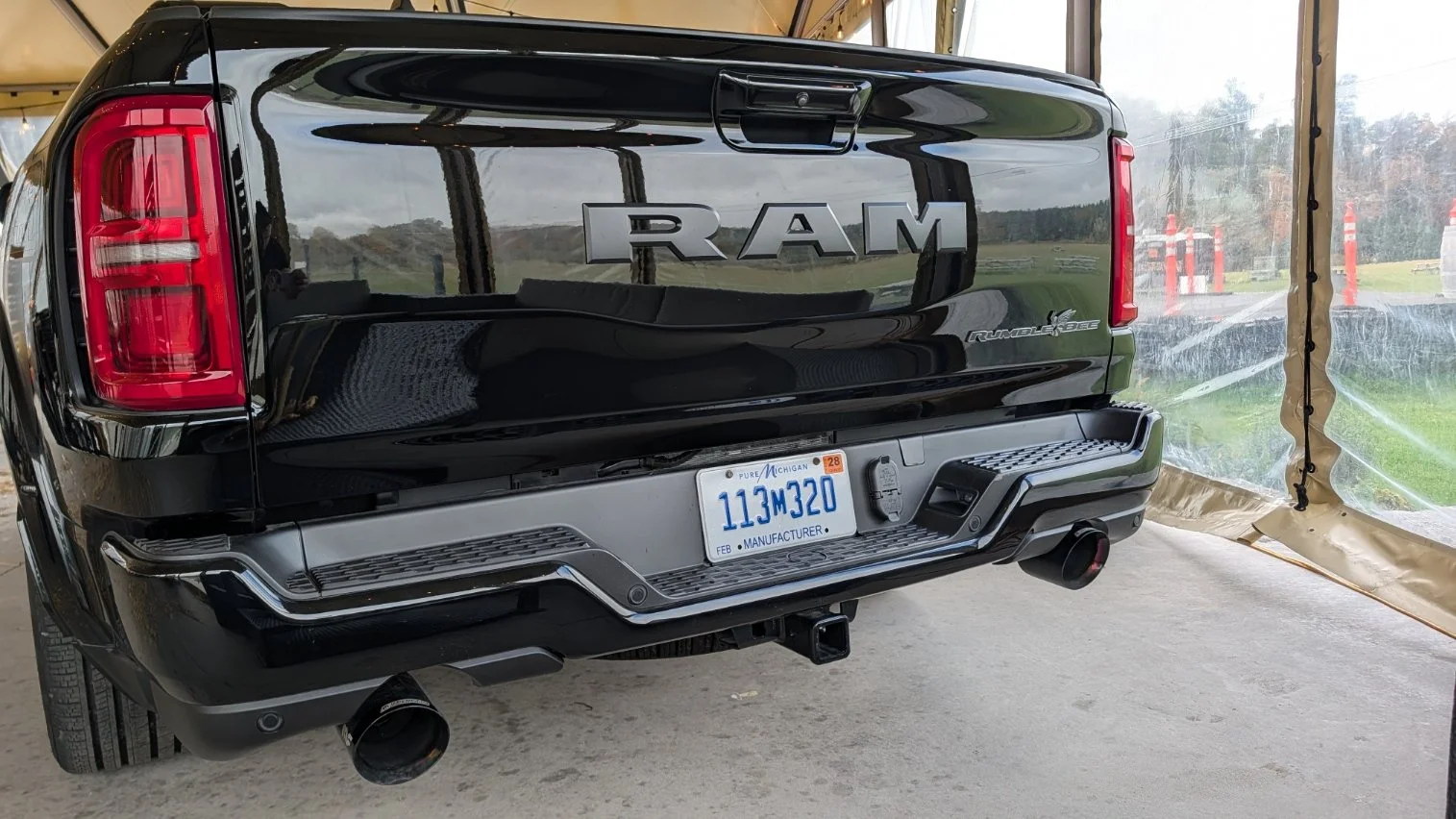
Rear view: big RAM lettering, the Rumble Bee badge, and proper dual exhaust tips.
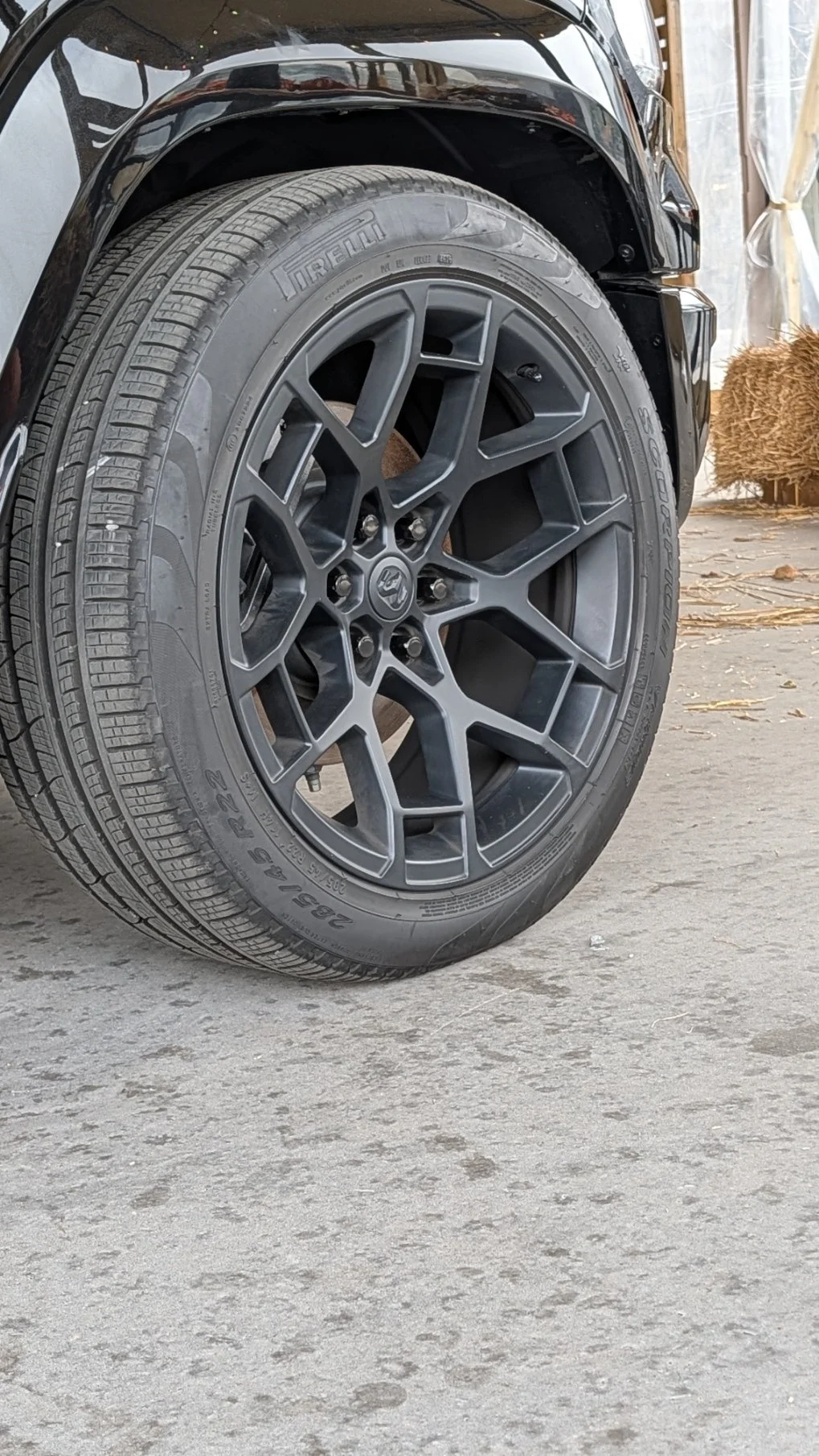
Street-truck rubber: 285/45 R22 Pirelli Scorpions on black 22s. No all-terrains here — this one's built for pavement.
So — is Ram actually the most reliable?
Here's where the day on the dirt meets the data. While I was out jumping Ram's trucks, the other guys' headlines looked like this:
Ford set an all-time record in 2025 with 153 recalls — in a single year. That's on top of a $165 million NHTSA fine in November 2024 over how it handled an earlier recall. Recalls happen to everyone, but a record-breaking year plus a nine-figure fine is a pattern, not bad luck.
GM recalled roughly 597,600 trucks and SUVs with the 6.2L L87 V8 (recall 25V-274) for crankshaft defects — and the fix, for many trucks, was an inspection and thicker oil rather than new parts. Engines kept failing, and NHTSA escalated its probe to a full Engineering Analysis (EA26005) covering nearly a million vehicles. When the safety regulator opens a deeper investigation after your fix, the fix isn't working.
Toyota — the brand people buy specifically for reliability — recalled roughly 272,000 Tundras across three separate waves for machining debris left inside the engines, and ended up replacing tens of thousands of engines outright. Three waves means the first fix didn't catch the problem either.
Against that backdrop, the Ram 1500 just took No. 1 in the J.D. Power 2026 U.S. Vehicle Dependability Study for Large Light Duty Pickup, ahead of the Silverado and the F-150, and MotorTrend named the Ram 1500 its 2025 Truck of the Year. And here's why that particular award carries weight with me: the Dependability Study isn't a prediction. J.D. Power goes to the people who actually bought those trucks and asks what has actually gone wrong over three years of ownership. It's a measured track record, not a forecast. Compare that with predicted reliability — Consumer Reports and others rating a brand-new truck on where they think its reliability is headed, based on the brand's history. That's an educated guess, and I'll take it for what it's worth. But I'll weight a proven track record over a prediction every time, because when it's your money, what matters is what's already been demonstrated — not somebody's opinion of the future. Now — the honest caveat, because you deserve it straight: that track record is on 2023 model-year trucks. It tells you Ram's recent trucks have held up better than the competition's. It cannot tell you how a 2027 truck will be doing in 2030. Nobody's data can. The Hurricane six-cylinder also doesn't have a decade of history behind it yet, and Ram's own trucks have had their growing pains — a class action over 2025 Hurricane trucks exists, and pretending otherwise would make me a fanboy instead of a reviewer.
What dependability data can do is show direction. And right now every indicator — the dependability crown, the awards, the rivals' engine recalls — points the same way.
The Verdict
Is Ram the most reliable truck you can buy right now, and the top dog in trucks? Based on everything I can measure — yes. I drove ten of them in one day and the lineup has no weak hole: the work trucks tow and haul like they mean it, the Rebel X is the honest off-roader most people should actually buy, the RHO and TRX are world-class toys, and the dependability data says the Ram 1500 is holding up better than anything Ford, GM, or Toyota is selling. The HEMI is back, the TRX is back, and the fundamentals underneath it all are the strongest in the business right now.
With one outsider's footnote: crowns in this industry are rented, not owned. The data that crowns Ram today is three years old by design, and the real test of the Hurricane era is still being written by owners, one oil change at a time. But if you're buying a truck right now and reliability is the mission — Ram is where I'd put my money. Mission before self. Ram understood the mission.
For those who want the raw data, here are the numbers that matter:
Ram 1500 engine lineup — max towing / max payload (lb):
- 3.6L Pentastar V6 eTorque: 8,100 / 2,340 — 305 hp / 269 lb-ft
- 3.0L Hurricane (Standard Output): 11,530 / 1,880 — 420 hp / 469 lb-ft
- 5.7L HEMI V8: 11,470 / 1,760 — 395 hp / 410 lb-ft
- 3.0L Hurricane High Output: 9,480 / 1,530 — 540 hp / 521 lb-ft
Ram Heavy Duty (Cummins High Output):
- Engine: 6.7L Cummins turbo-diesel — 430 hp / 1,075 lb-ft
- Max towing: 36,610 lb
- Max payload: 7,590 lb (dually)
The fast stuff:
- Ram 1500 RHO: Hurricane HO, 540 hp / 521 lb-ft, Bilstein Black Hawk adaptive shocks, 13 in front / 14 in rear suspension travel, 35-inch tires, full-floating Dana 60 rear axle, full-time transfer case with 2.64:1 low range
- Ram 1500 SRT TRX (2027): Supercharged 6.2L HEMI, 777 hp / 680 lb-ft, 0–60 mph in 3.5 s, Dana 60 rear axle, low-range transfer case
- Ram 1500 Rebel X: Hurricane SO, 420 hp / 469 lb-ft, 3.92 axle with e-locker, 1-inch factory lift, Bilstein monotubes, 33-inch Goodyear Wrangler DuraTrac, Rough Road Cruise Control, Crew Cab only
2027 Rumble Bee — Canadian pricing (before destination):
- 5.7L: $78,995
- 392 (6.4L, 470 hp): $89,995
- 392 Track Pack: $100,995
- SRT (supercharged, 777 hp, 0–100 km/h in 3.4 s): $125,995
Disclosure: Ram Canada invited me to the Full Lineup Experience. They didn't pay for this review and didn't tell me what to say — every opinion is my own.
