

FRAGO is military shorthand for a fragmentary order — a short update that changes or adds to an existing plan. In plain terms, this is my updated order of battle on the F-350: gas or diesel?
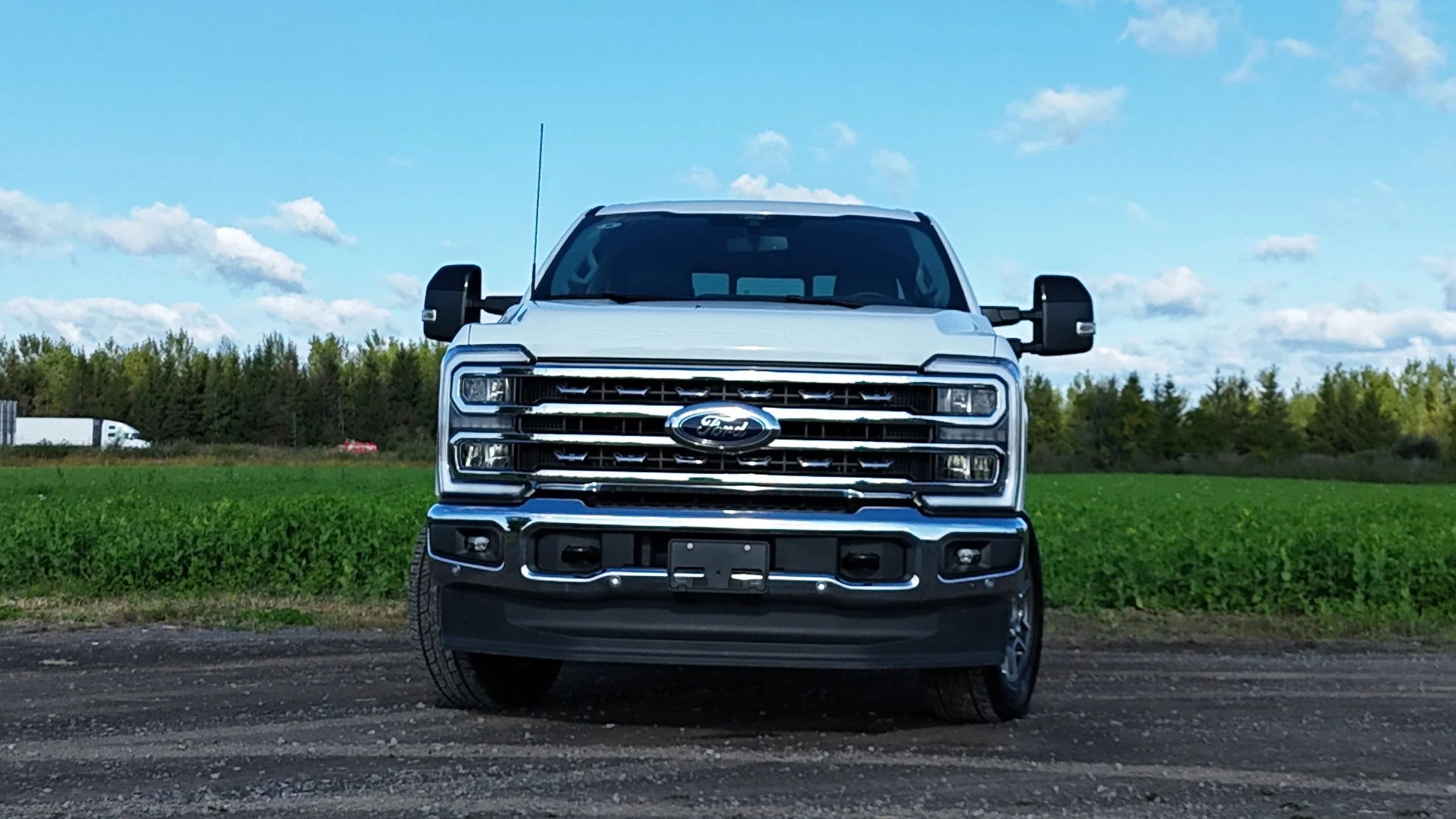
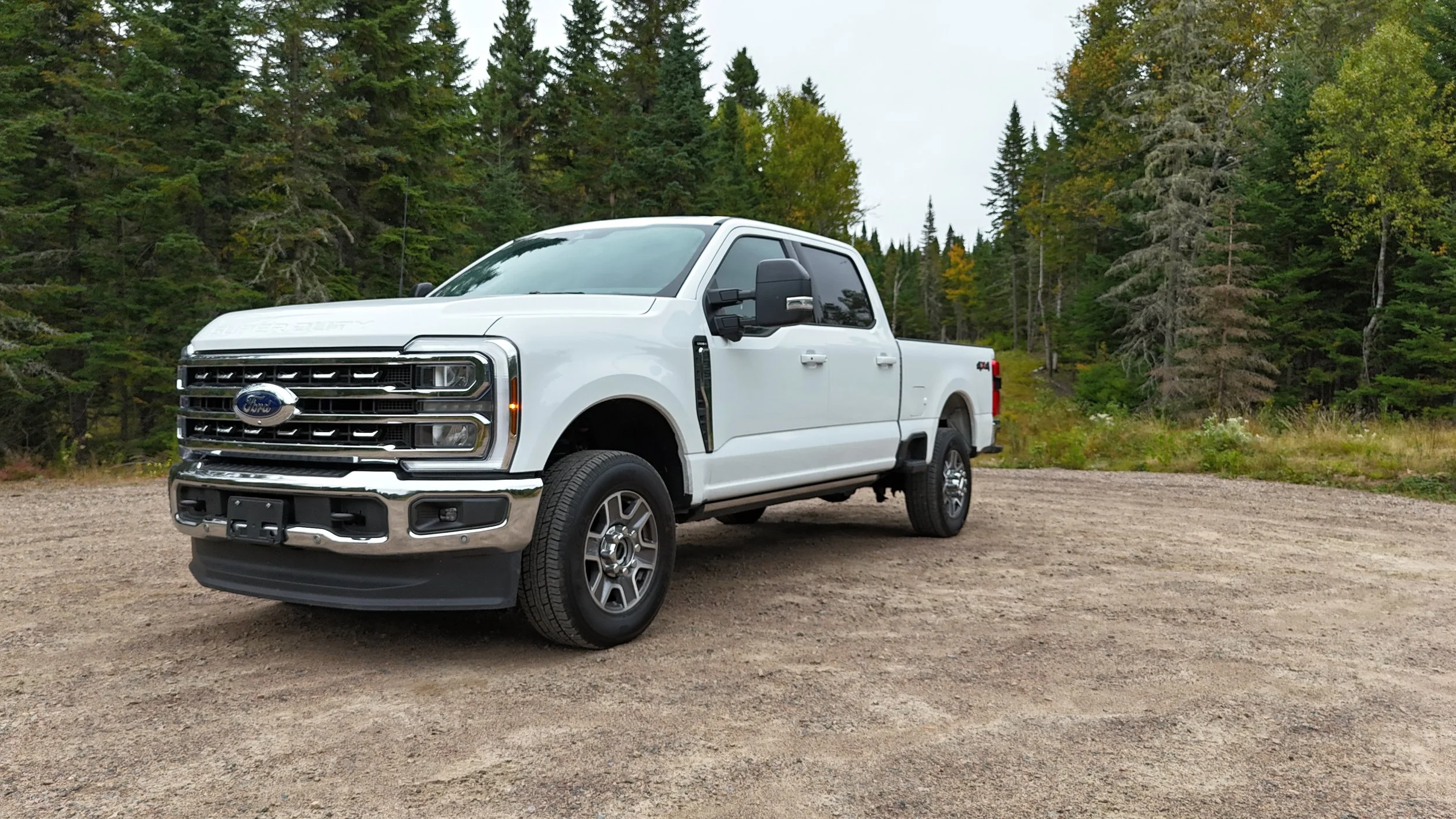
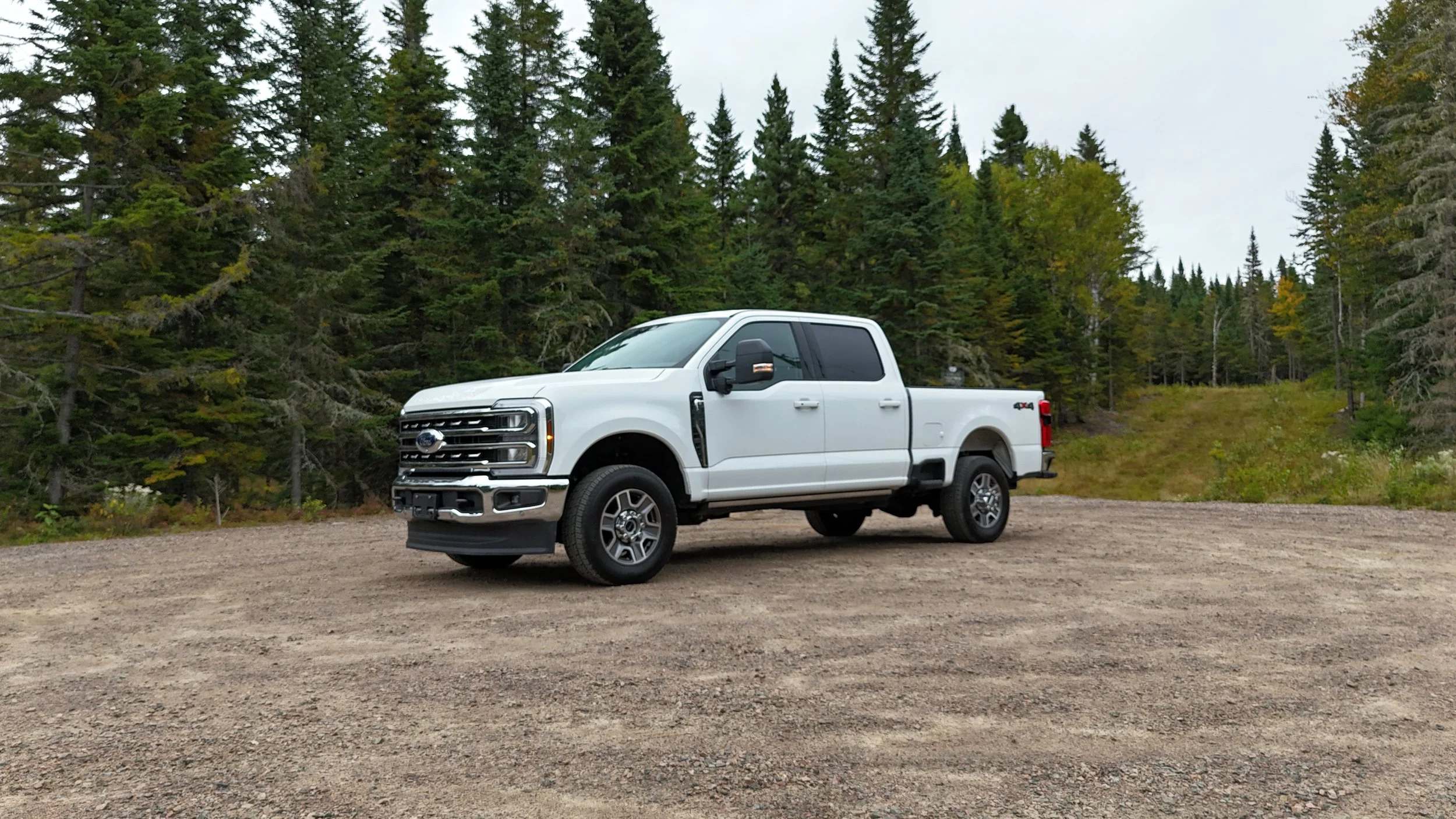
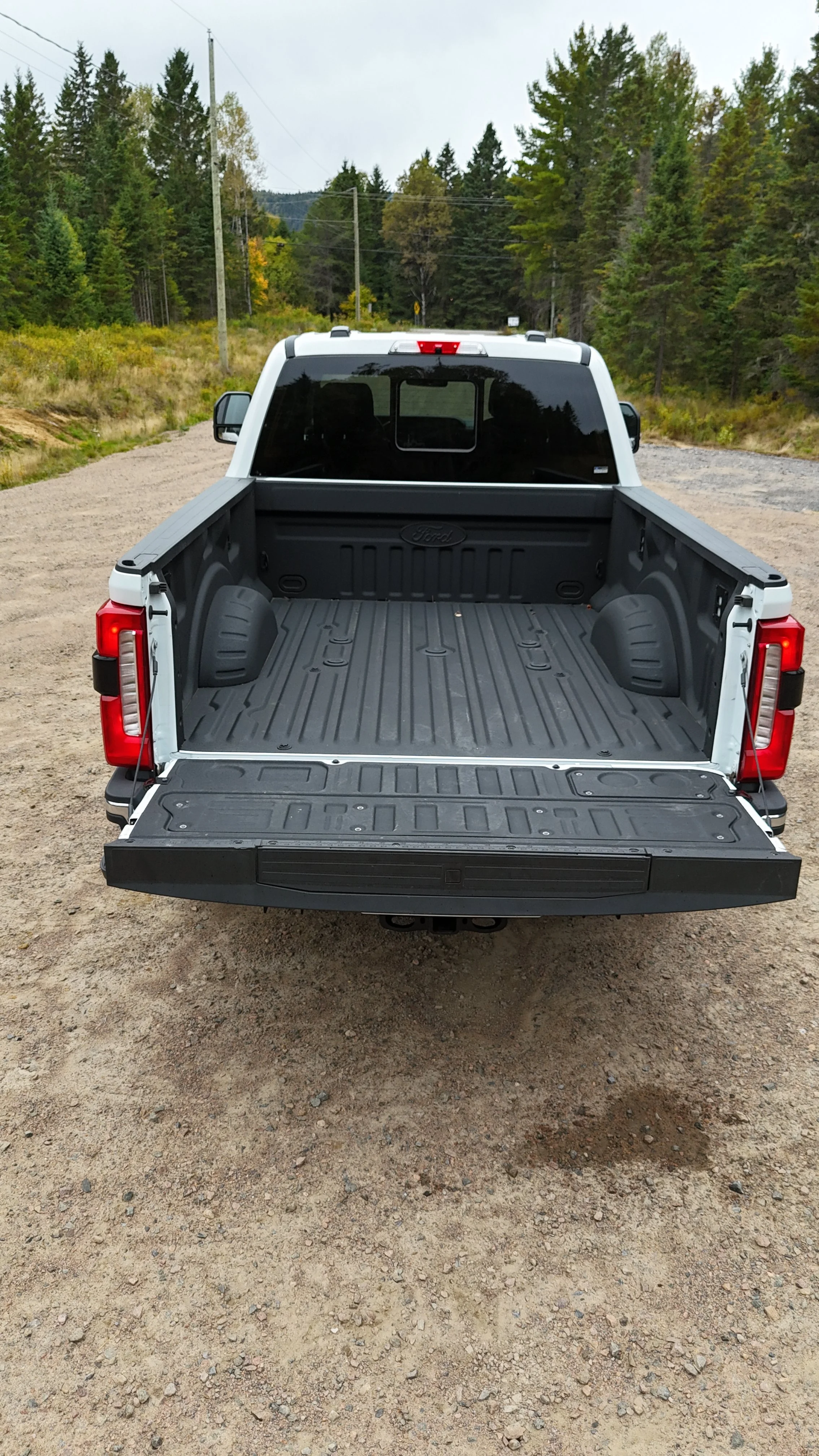
I recently got behind the wheel of a Ford F-350 Lariat equipped with the 7.3L Godzilla gas engine. But instead of a standard walkaround, we need to address the elephant in the room: the escalating global diesel crisis. With diesel prices surging and talk of the US government potentially banning diesel exports—which would cause our prices up here in Canada to skyrocket even further—is it finally time to abandon the heavy-duty diesel and switch to gas?
After my 19 years in the military—spanning infantry, paratrooper, and serving as a special close protection operator—I learned to calculate logistics and adapt to supply chain realities. Let's do the math and see if the legendary 6.7L Power Stroke still makes financial sense over the 7.3L Godzilla gas V8 when towing 15,000 lbs.

The Real-World MPG and Fuel Costs
Right now (as of September 2026), the national averages are sitting at roughly $1.78/L for regular gas and $2.20/L for diesel in Canada. South of the border in the US, it’s $4.48/gallon for gas and a massive $6.51/gallon for diesel.
Here is what it costs to drive 1,000 miles (approx. 1,600 km), both running empty and dragging a 15,000 lb trailer.
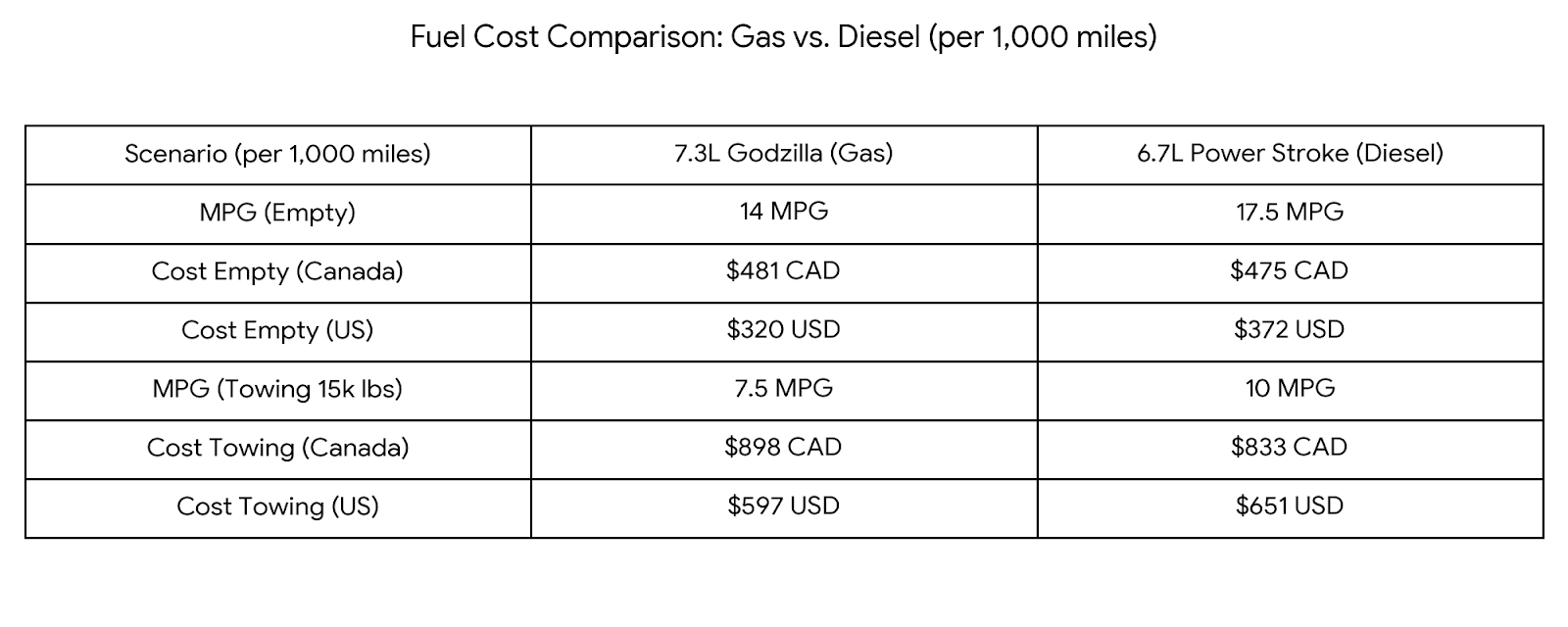
Fuel cost comparison table for gas vs diesel per 1,000 miles, 7.3L Godzilla vs 6.7L Power Stroke
The Real-World MPG and Fuel Costs: THE TOWING BREAKDOWN
Right now (as of September 2026), the national averages are sitting at roughly $1.78/L for regular gas and $2.20/L for diesel in Canada. South of the border in the US, it’s $4.48/gallon for gas and a massive $6.51/gallon for diesel.
Here is an image breakdown of what it costs to drive 1,000 miles (approx. 1,600 km), both running empty and dragging a 15,000 lb trailer, so you can easily save or share the math:
In the US, it is currently cheaper to tow 15,000 lbs with a gas engine. In Canada, the diesel saves you about $65 CAD in fuel over 1,000 miles of heavy towing—but fuel isn't the only metric.
The Hidden Maintenance Tax
When you run a modern diesel, you are chained to the DEF pump. When dragging 15,000 lbs, the 6.7L Power Stroke burns through Peak BlueDEF Diesel Exhaust Fluid at a fast rate. You can expect to buy a 2.5-gallon jug roughly every 1,200 miles while towing heavy, adding about $20 CAD to $30 CAD in hidden operating costs per 1,000 miles. That immediately wipes out half of your fuel savings in Canada.
Then there is the oil change. The Godzilla V8 takes a standard 8 quarts of Motorcraft Sae 5w-30 Premium Synthetic Blend, which costs a DIYer roughly $55 CAD. Meanwhile, the Power Stroke requires a massive 15 quarts of heavy-duty 15W-40, costing you around $125 CAD just for the oil, not to mention the expensive diesel fuel filters you must routinely replace.
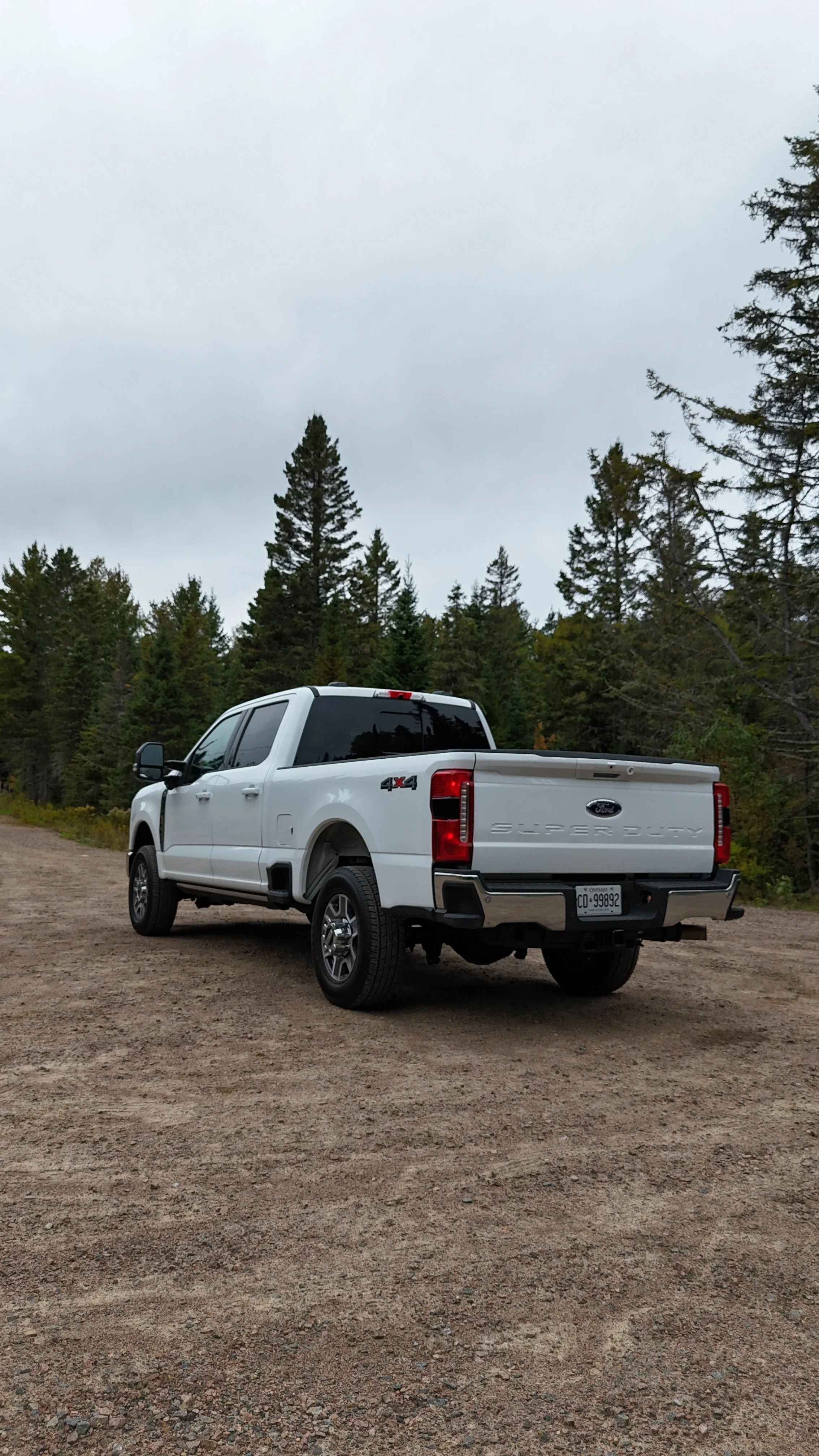
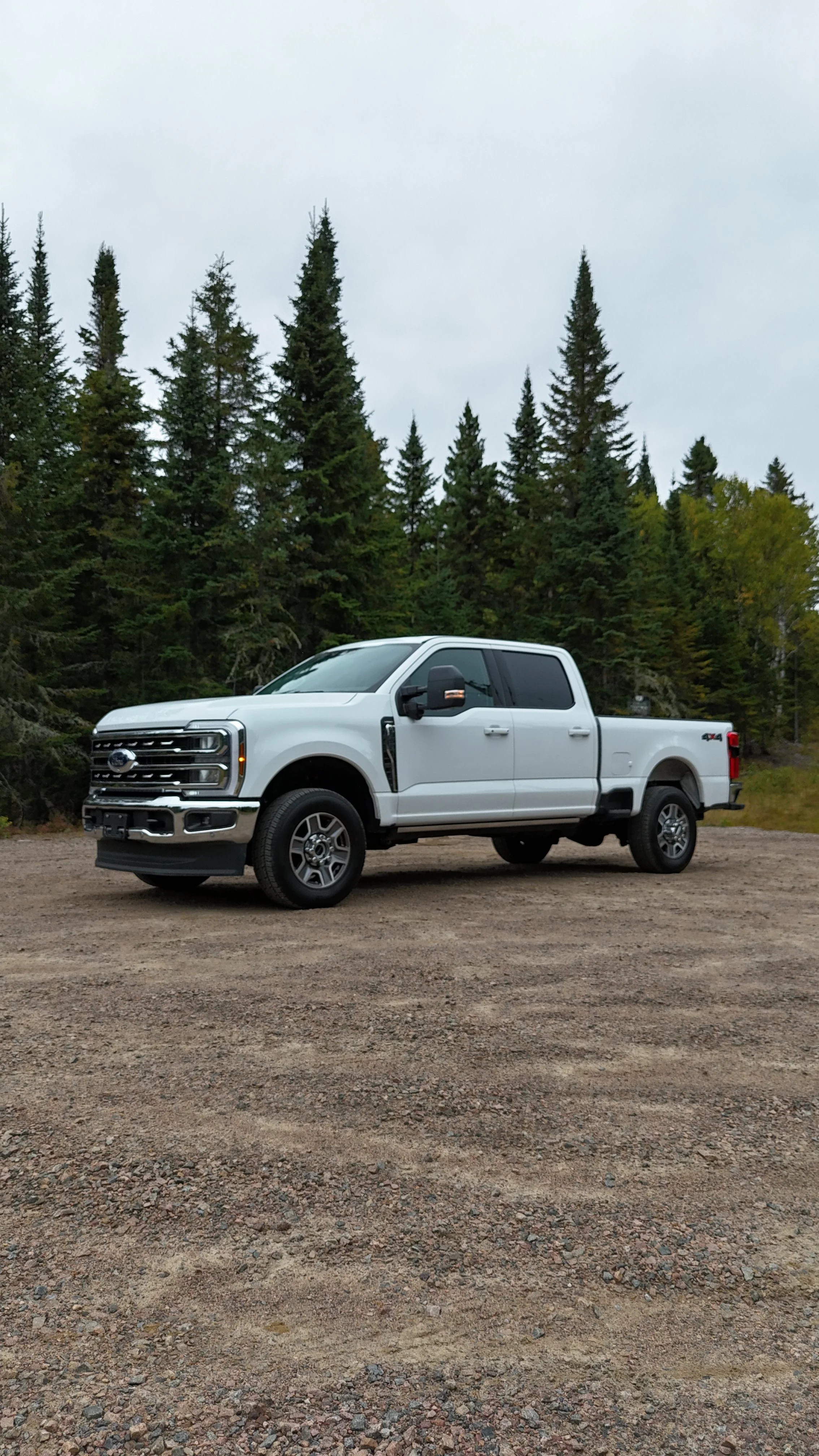
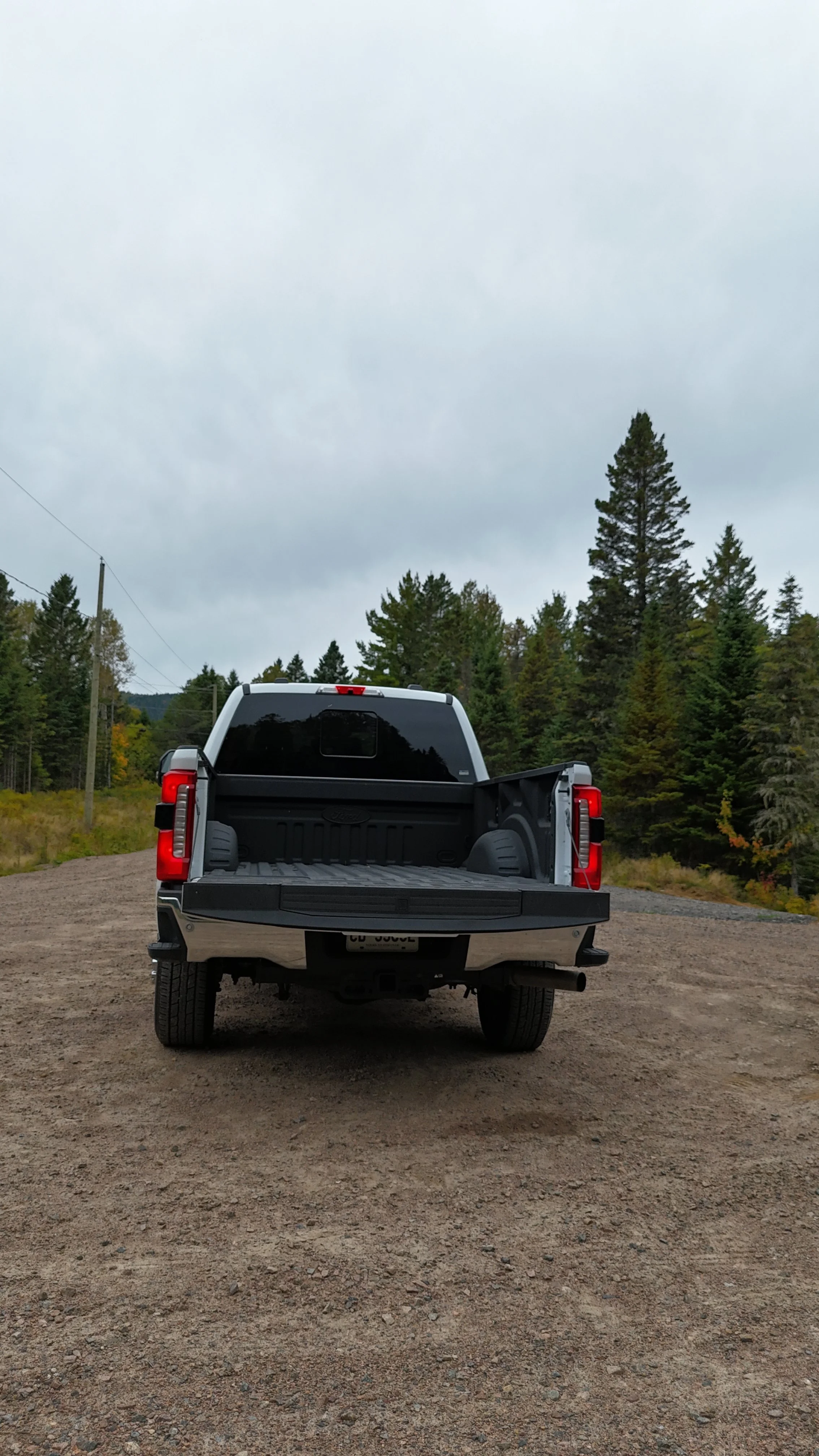
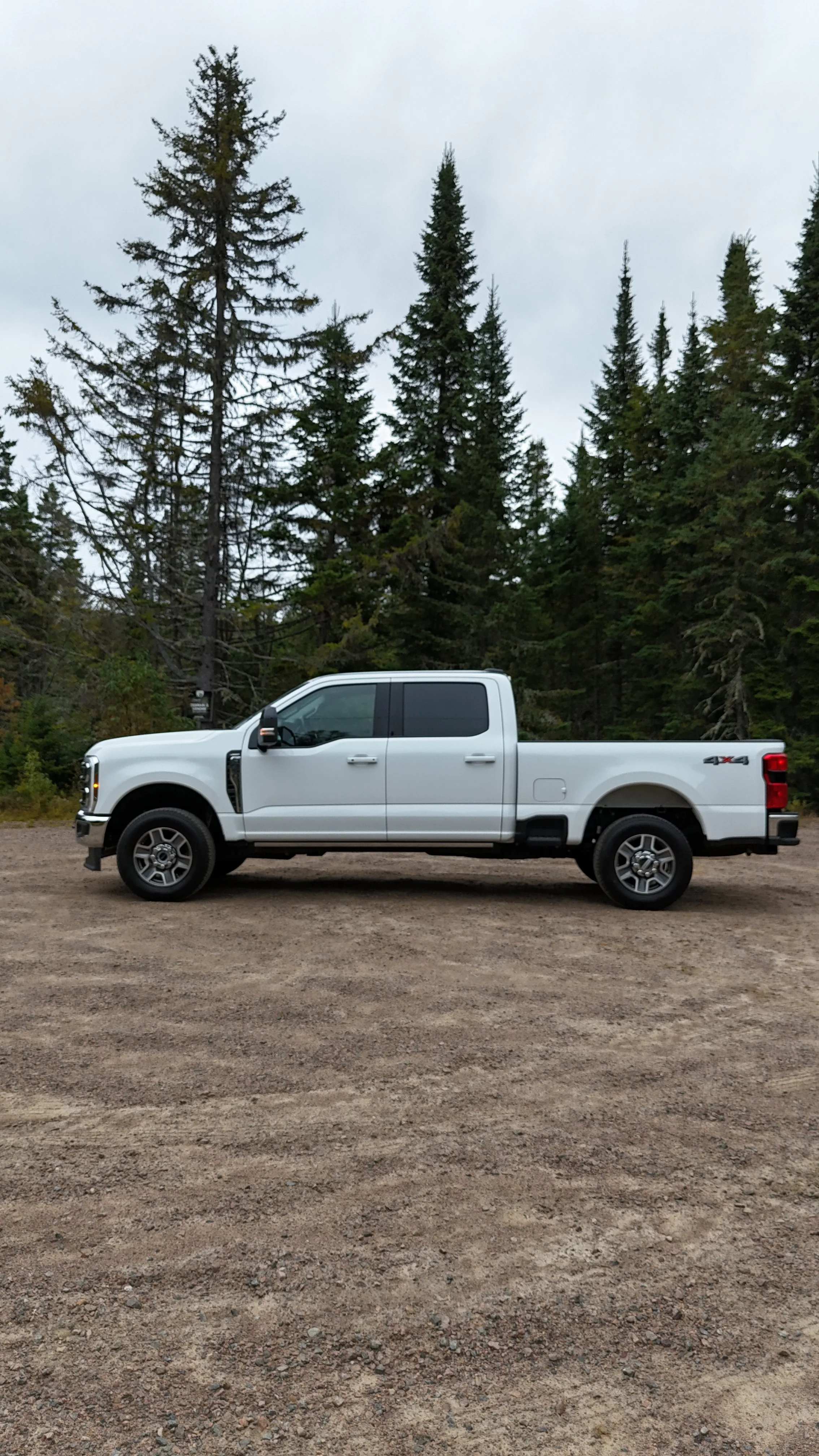
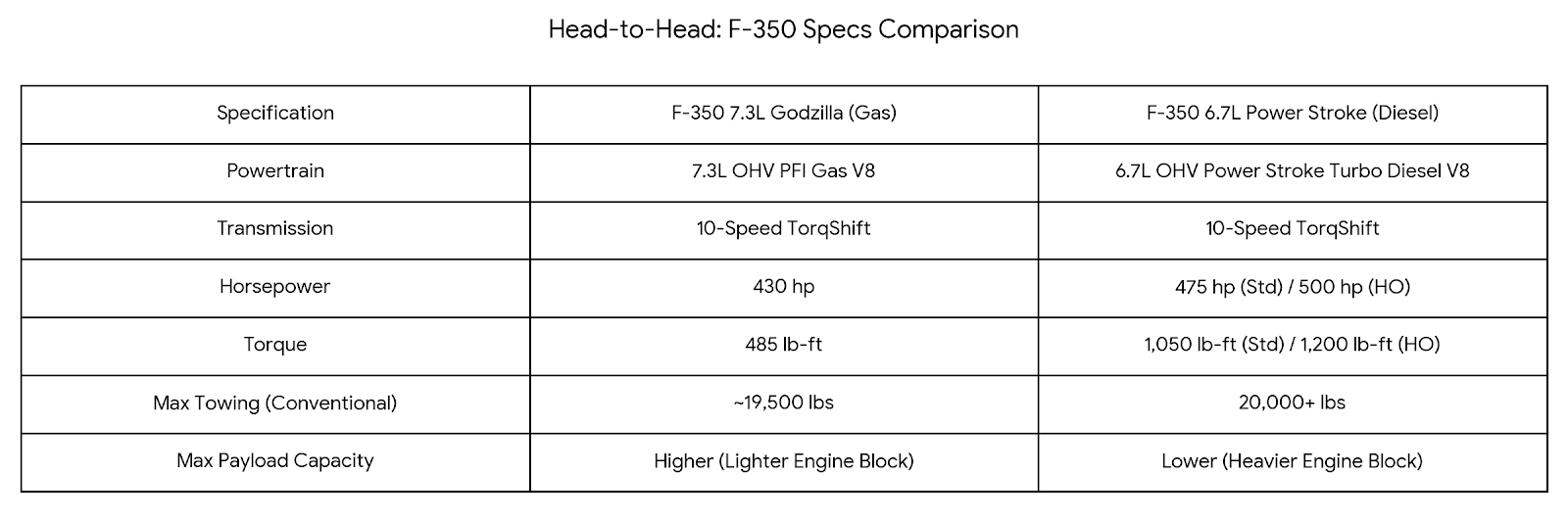
Head-to-Head: The Specs
Before we get to the final verdict, here is exactly how the F-350 Lariat specs stack up depending on the powerplant you drop under the hood:
The Verdict: Annual Cost of Ownership
During my week with the Godzilla Lariat, I immediately enjoyed how quiet the vehicle was inside the cabin, especially compared to the heavy clatter of a Power Stroke engine. You gain a few more things with the gas variant aside from your current fuel savings; it really comes down to the overall cost of ownership.
To find the clear winner, let's average this out over a typical year of driving 30,000 km (roughly 18,640 miles). Let's assume a 60/40 split: towing 15,000 lbs for 60% of the time, and driving empty for the remaining 40%. When we factor in fuel consumption, DEF usage, and the cost of three basic oil changes over that year, here is the total annual cost of ownership:
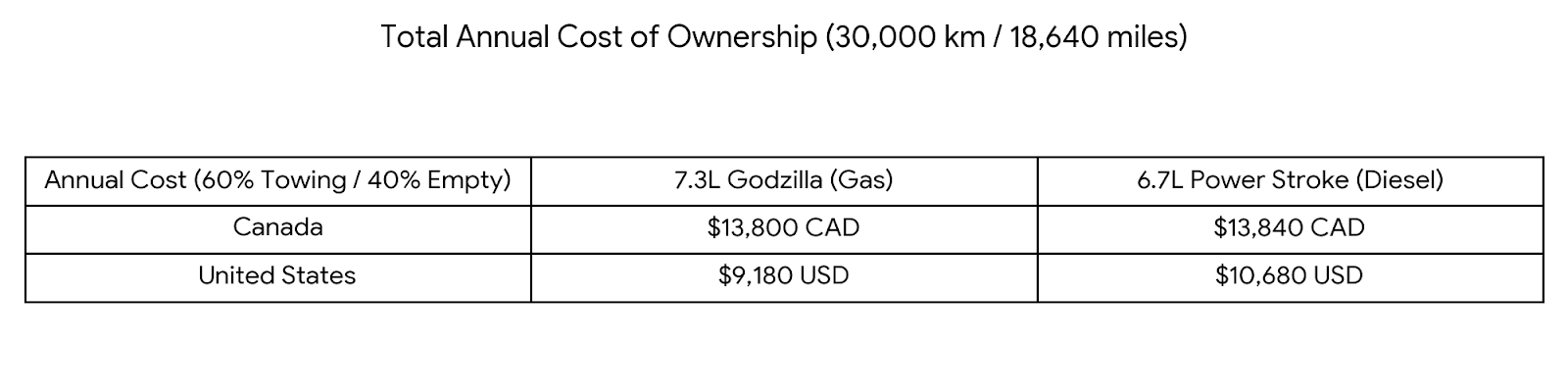
Just a year or two ago, pulling the trigger on a diesel for heavy towing was the obvious choice. Up here in Canada, the annual cost of ownership between the two is still practically neck-and-neck. But you have to look at the horizon. From where we stand today, there is no daylight at the end of the tunnel for this oil crisis. Whether it's overseas wars or just bad political decisions, diesel prices always seem to take a much harder hit than gas, and you should expect that cost to keep climbing. Meanwhile, down in the United States, drivers are already saving a massive $1,500 annually just by sticking to gas.
I know there are other factors in play. The 7.3L Godzilla is a powerhouse, but it hasn't fully earned the battle-tested pedigree of its diesel counterparts just yet. Still, it is a discussion that is absolutely worth having right now. As heavy-duty gas engines become increasingly capable and powerful, and as diesel prices continue their upward march, this debate is only going to get louder in the coming months. If you aren't dragging more than 20,000 lbs on the daily, it might be time to adapt to the situation and leave the diesel at the pump
