

This article is the written companion to my full video review of the 2026 Volkswagen Taos, embedded at the bottom of this page.
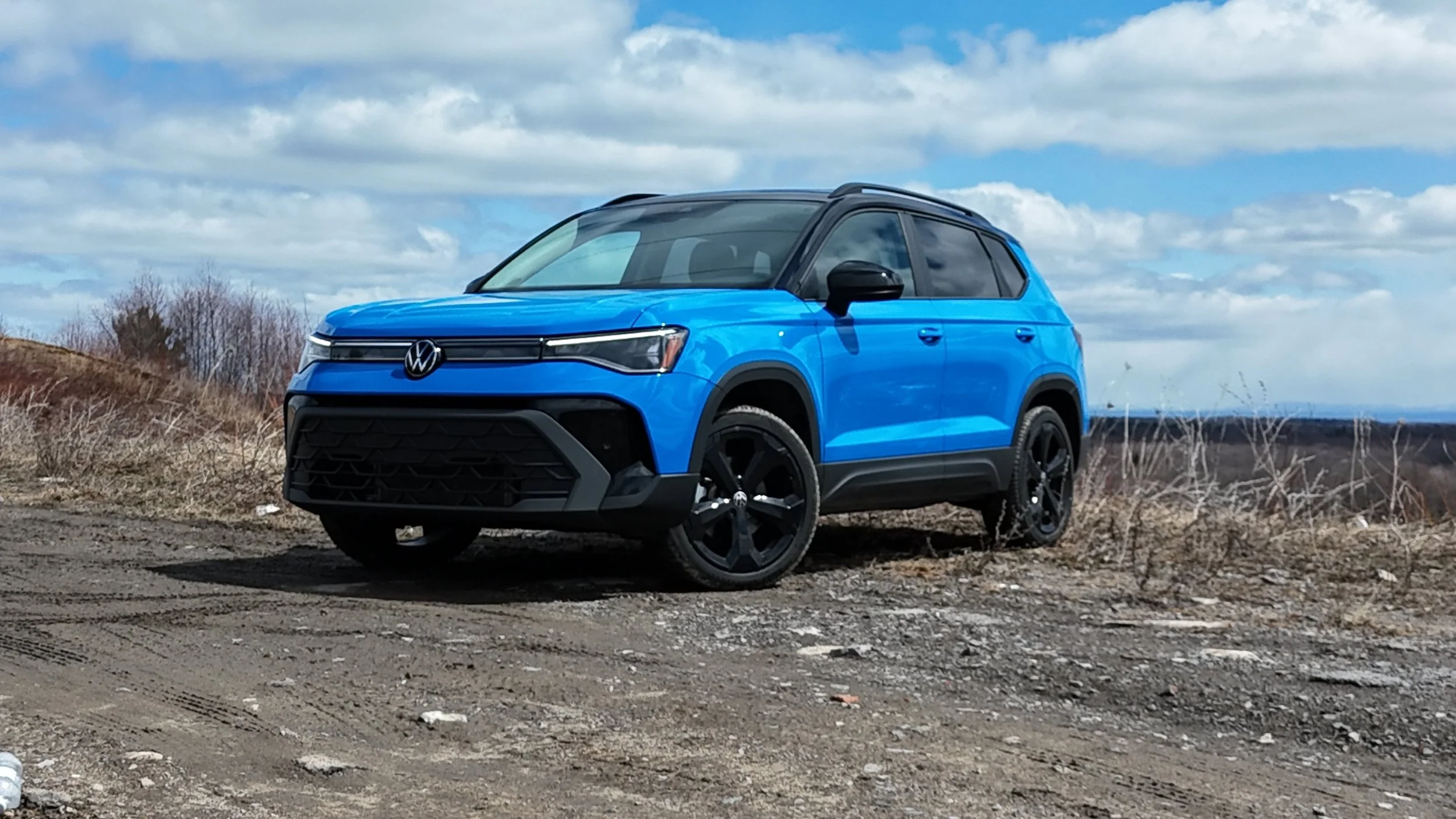
Some vehicles get all the attention in their segment. The Taos isn't one of them. The Kia Seltos and the Subaru Crosstrek get the headlines, but after a week with the 2026 Volkswagen Taos, I'm convinced it's the most underrated subcompact SUV you can buy. People are sleeping on this thing.
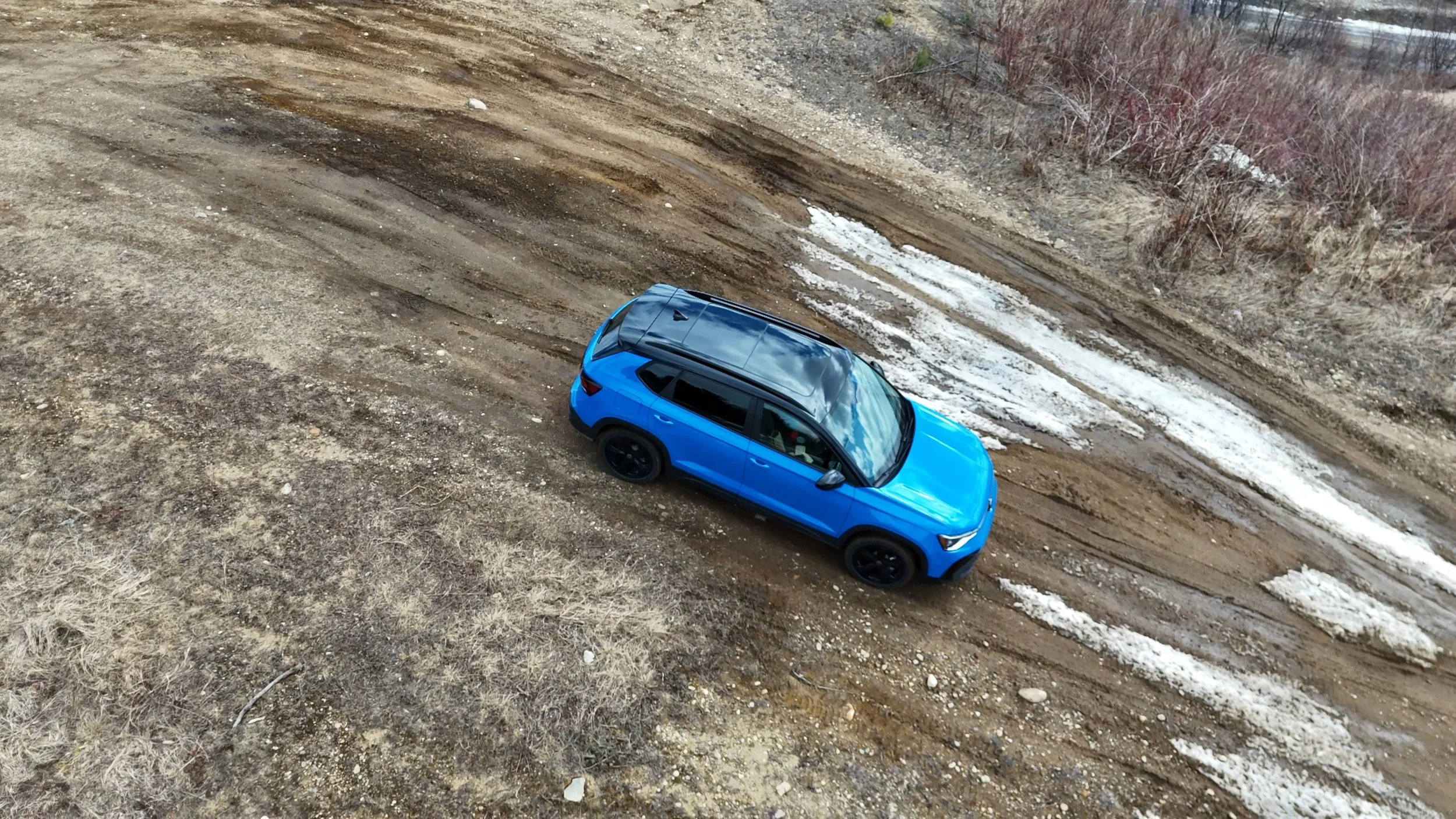
My tester was a Comfortline Black Edition 4MOTION in a bright blue with a black roof. Highline is the top trim in Canada. And here's the part that matters: even this well-equipped tester sits just under $38,000 before fees, right around $40,000 once the fees pile on. For what you get, that's a serious amount of vehicle for the money.
What the Taos Is
The Taos is Volkswagen's subcompact SUV, slotted below the Tiguan, but it doesn't feel subcompact. I call it subcompact plus. It's 175.8 inches long, essentially the same footprint as a Subaru Crosstrek and about 10 inches shorter than a Tiguan, so it's smaller than a Chevy Equinox but bigger and far more useful than the little crossovers it gets lumped in with.
The Canadian lineup runs Trendline, Comfortline, Comfortline Black Edition, and Highline. The base Trendline is front-wheel drive; every other trim is 4MOTION all-wheel drive only, and 4MOTION is available on the Trendline too.
Every Taos runs the same engine: a 1.5-litre turbocharged four-cylinder with an 8-speed automatic. No CVT. That alone separates it from half the segment.
SPECS
Engine: 1.5 L turbocharged 4-cylinder
Power: 174 hp
Torque: 184 lb-ft
Transmission: 8-speed automatic
Drivetrain: Front-wheel drive (Trendline) / 4MOTION all-wheel drive
0–60 mph: 7.0 seconds
Fuel economy (NRCan, 4MOTION): 9.4 city / 7.2 highway / 8.4 combined L/100 km (25 / 33 / 28 mpg)
My observed fuel economy: 7.3 L/100 km (32 mpg)
Cargo: 24.9 cu ft behind the rear seats, 60.2 cu ft folded (4MOTION)
Rear-seat legroom: 37.9 in
Length: 175.8 in — same footprint as a Subaru Crosstrek, about 10 in shorter than a Tiguan
Ground clearance: 6.6 in
Curb weight: 3,437 lb (4MOTION)
Price (Canada): from $30,595; this tester (Comfortline Black Edition 4MOTION) $37,895; Highline $39,895
Looks
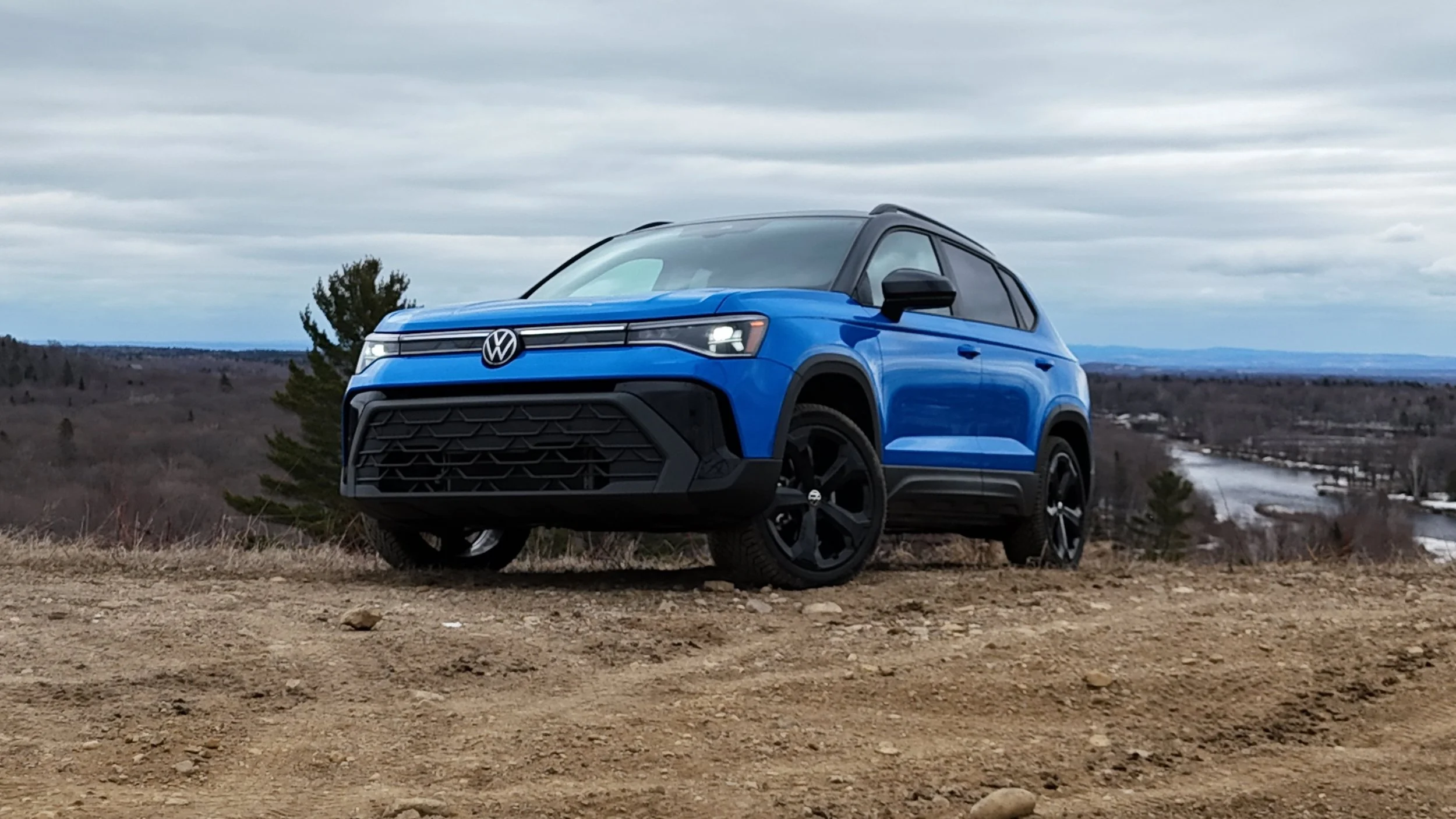
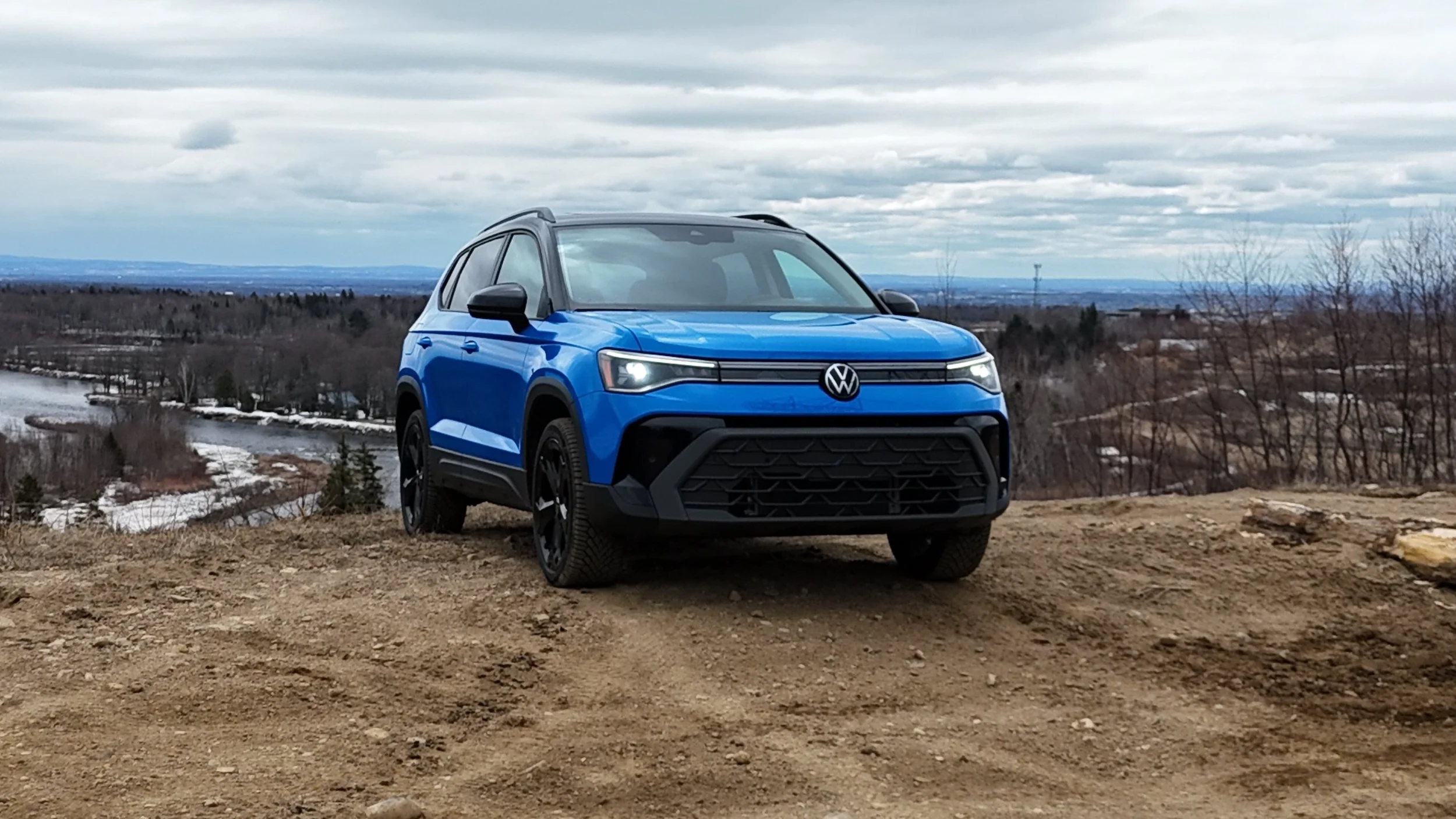
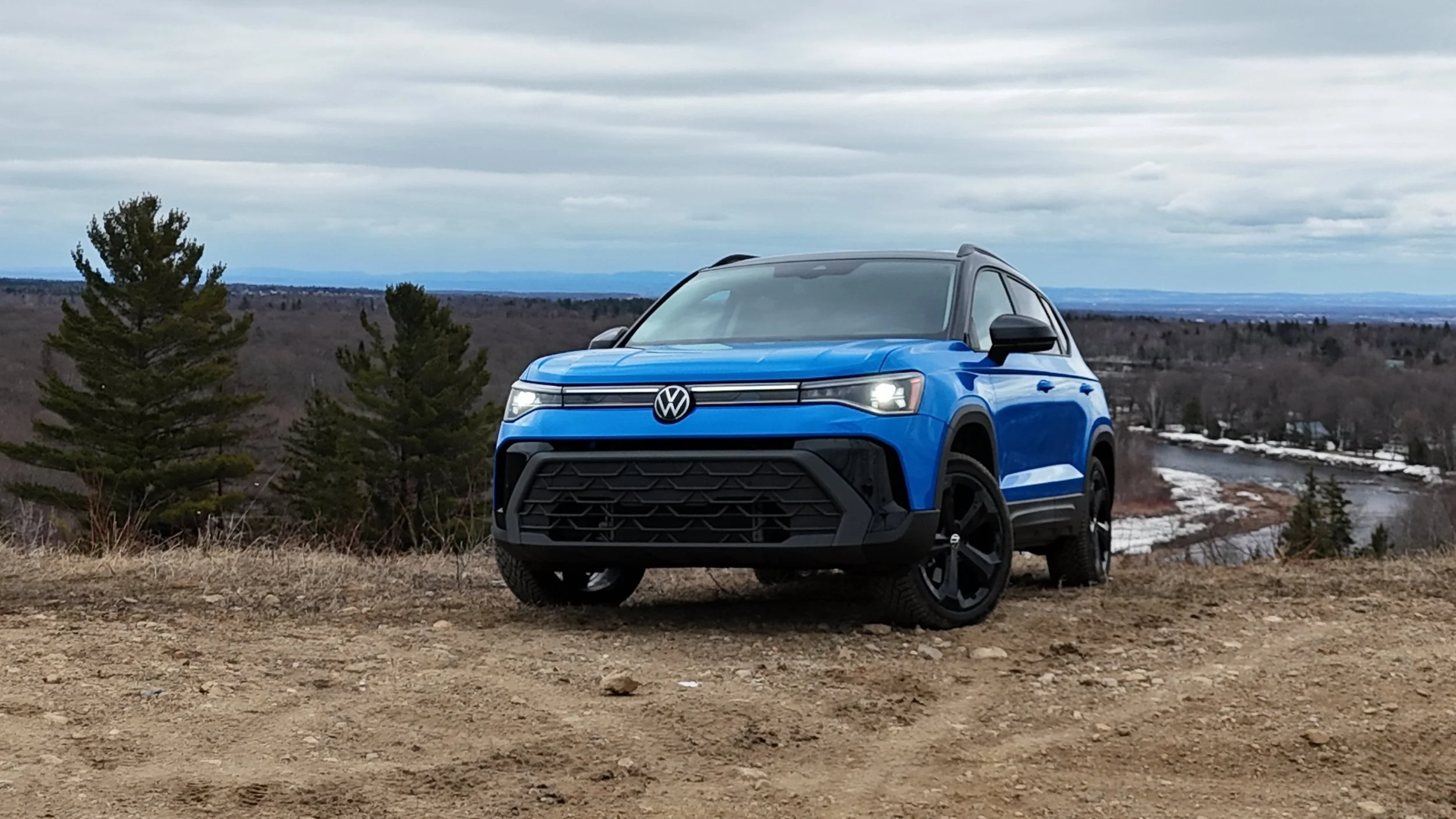
Volkswagen went boxy and angular with this one, proper German styling, and it works. Full LED lighting with the IQ light setup, a light bar across the front, a body-coloured front treatment instead of a big black grille, and at the back an illuminated VW logo with another light bar. Little touches, but they add up to something that looks more expensive than it is.
The Black Edition adds the black roof, black mirror caps, and blackout 19-inch wheels, and the two-tone look suits it. The blue on my tester got plenty of compliments. There's a green available, and honestly, that's the one I would have picked.
Space and Cargo
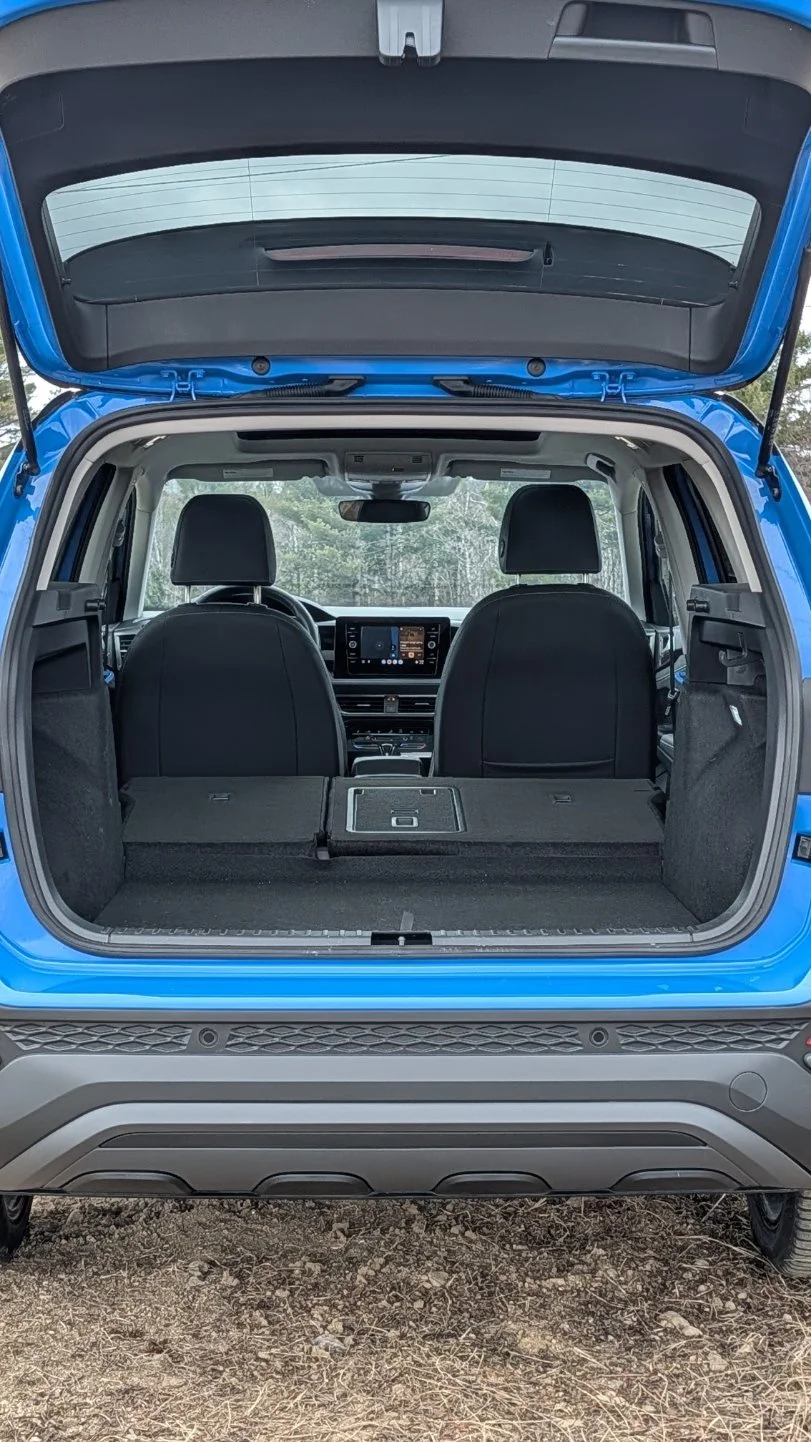
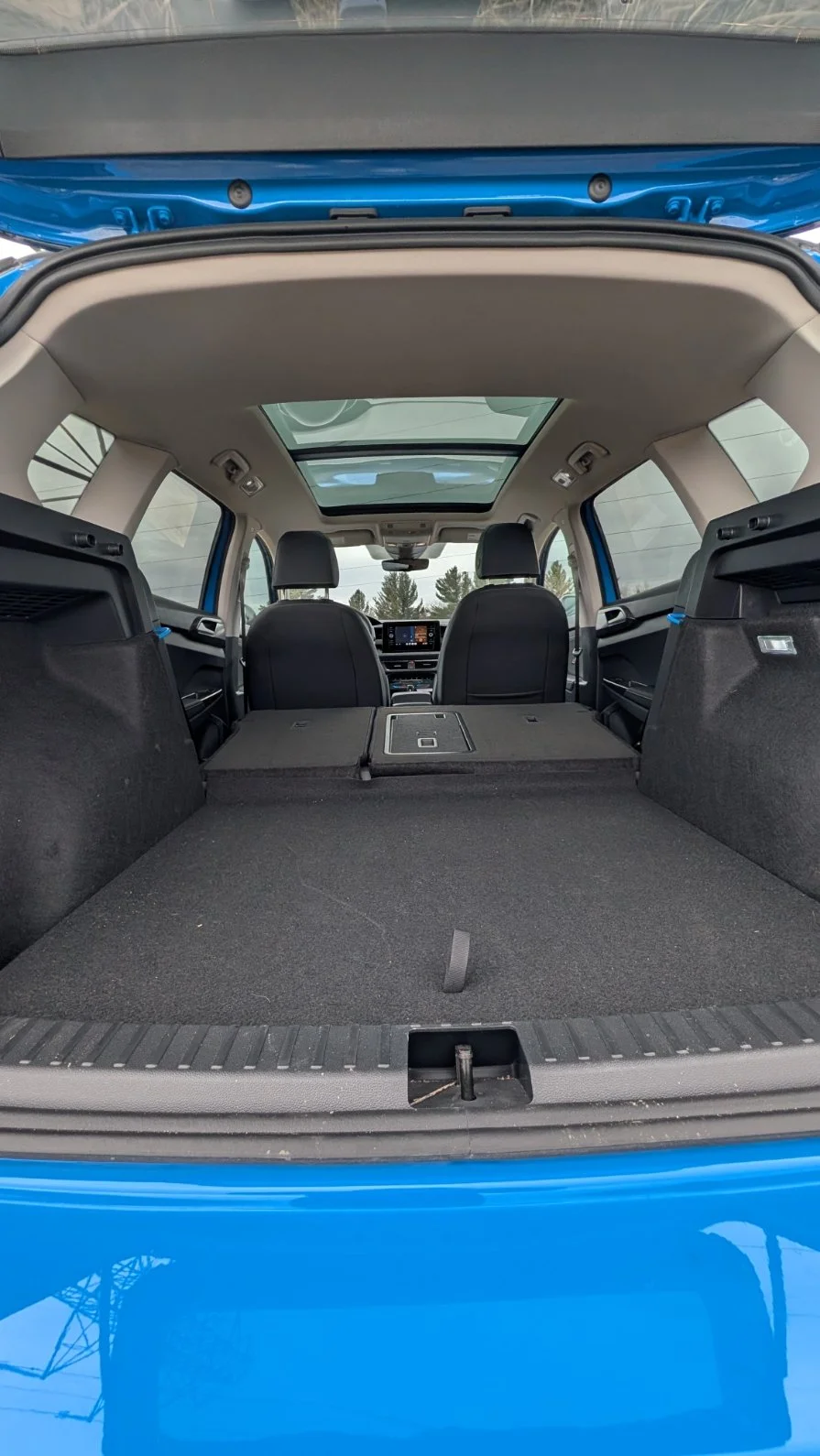
This is where the Taos embarrasses its badge. Cargo space is 24.9 cubic feet behind the rear seats and 60.2 with them folded, and the space is a useful shape, not a brochure number. There's a centre pass-through in the rear seat, which means my hockey sticks fit without folding anything down. And underneath the floor, there's still a spare tire. Plenty of manufacturers have quietly deleted that. Volkswagen didn't.
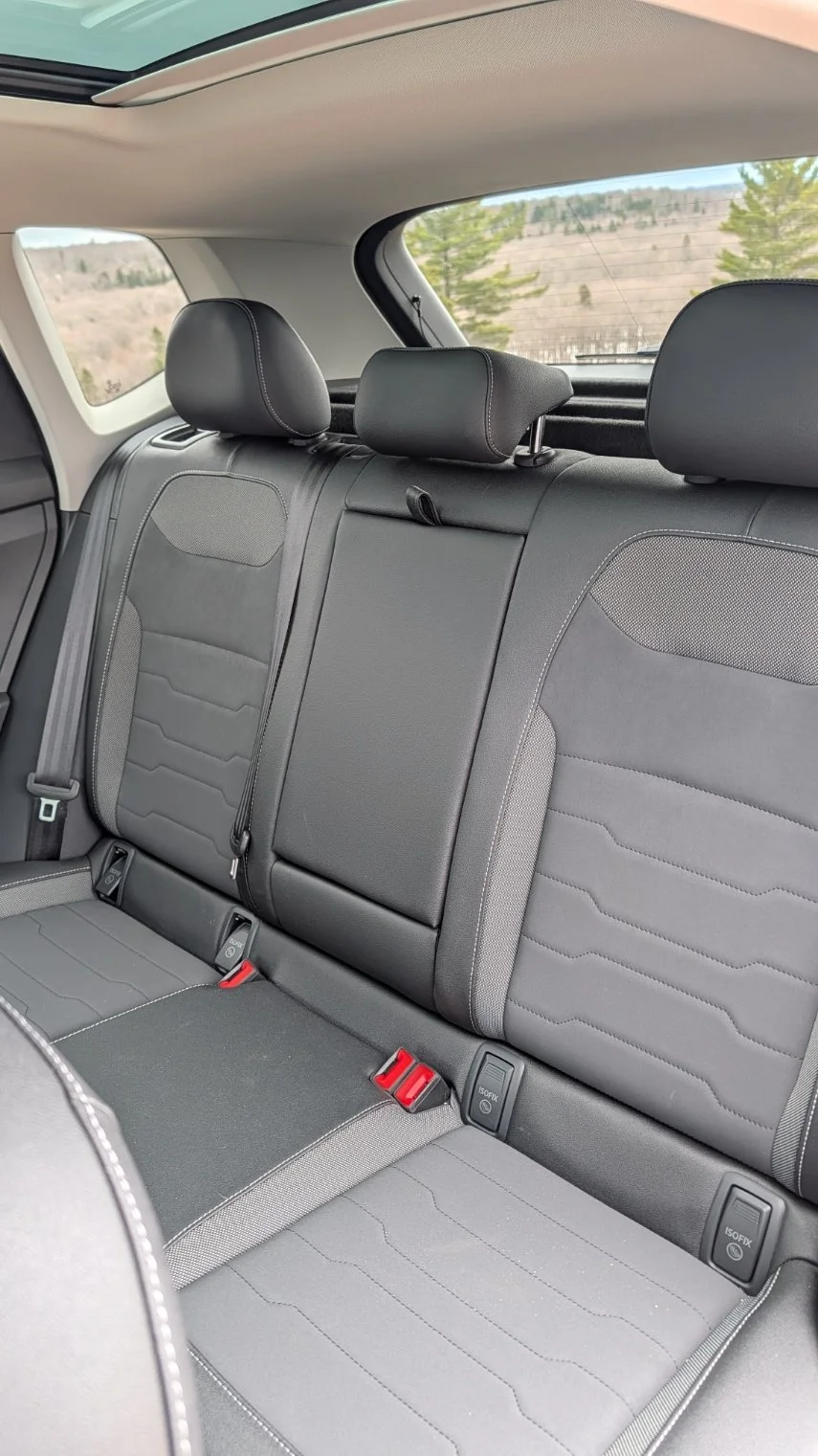
The back seat is one of the most comfortable I've sat in in this segment. Rear legroom is 37.9 inches, the seats recline, headroom is generous even for someone taller than my 5'9", and you get vents and two USB-C ports back there. The one catch is the middle position: there's a real tunnel hump in the floor, so the centre seat is a short-trip-only proposition.
Inside
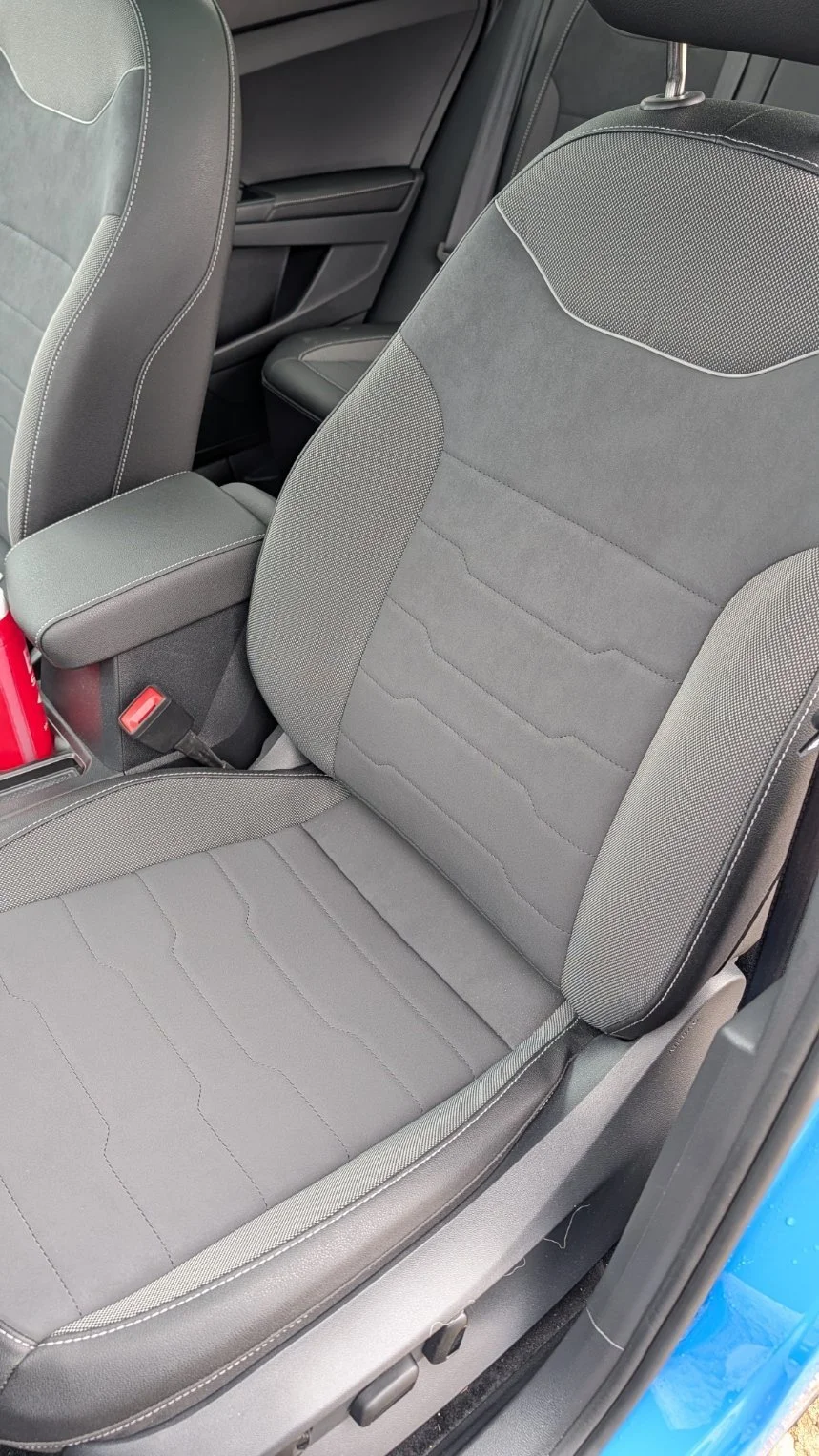
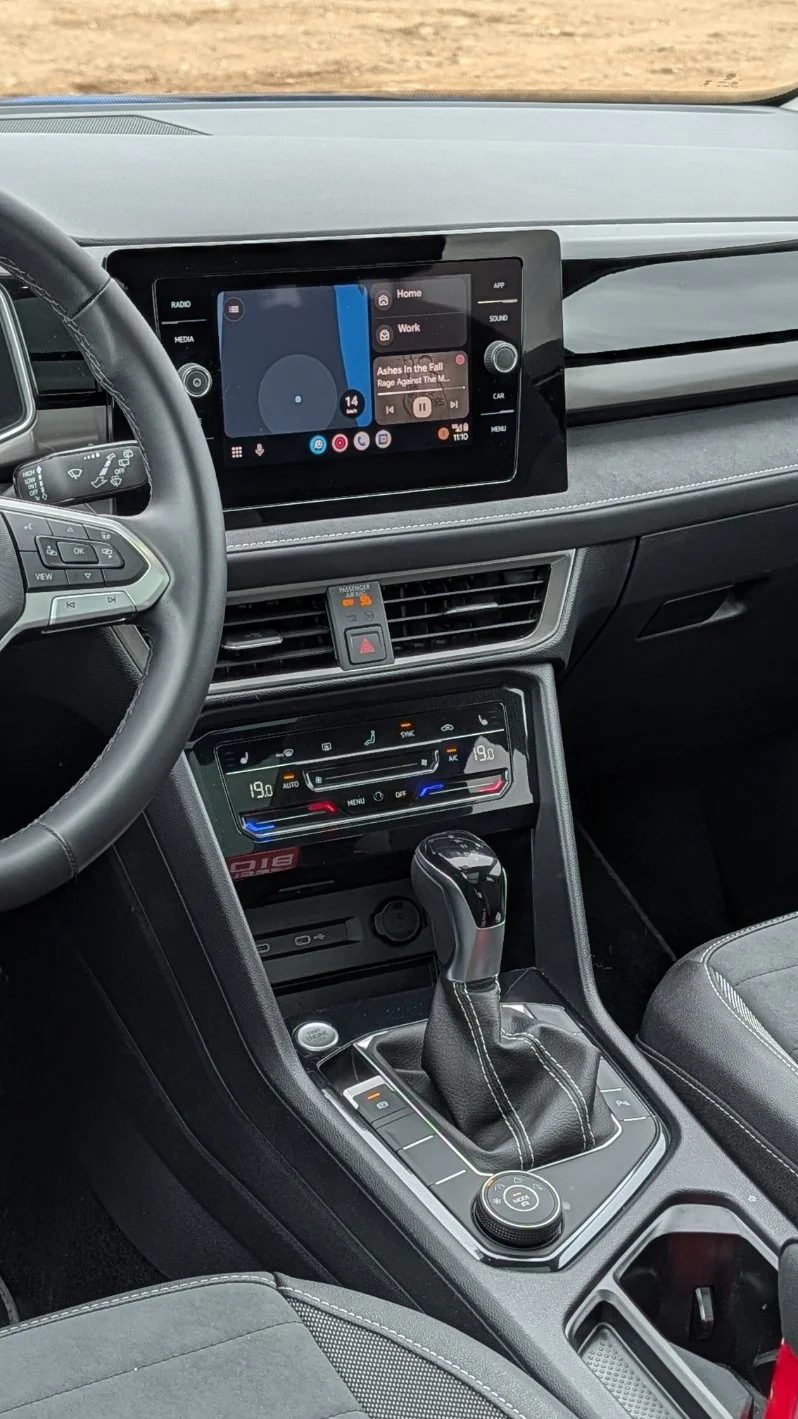
The front seats carry the same suede-like material as the back, and it's a nice place to spend time. The driver's seat is power; the passenger seat is manual, but it has height adjustment, which is not a given in this segment. The front seats are heated. Not ventilated, but at this price, that's fair.
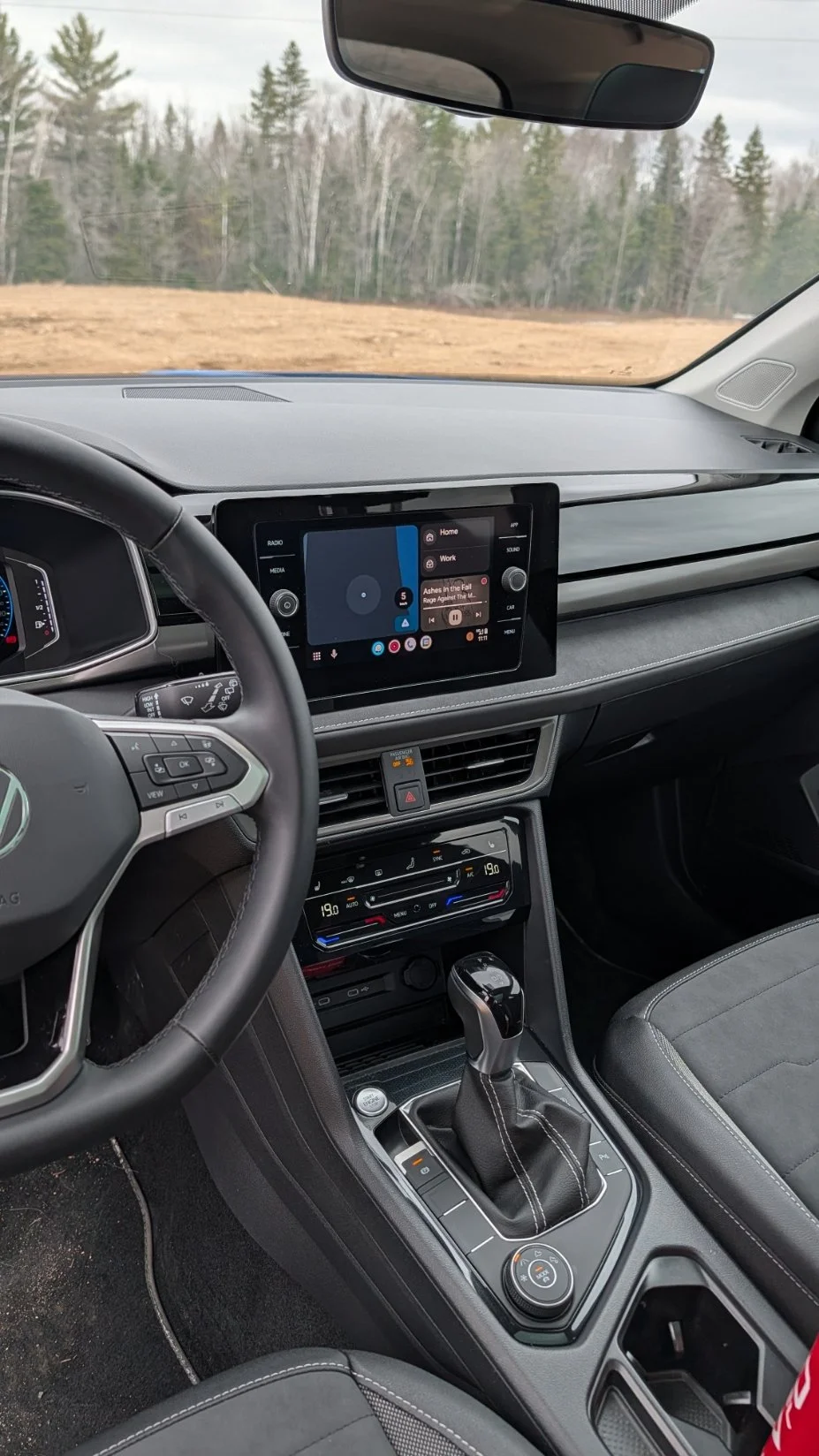
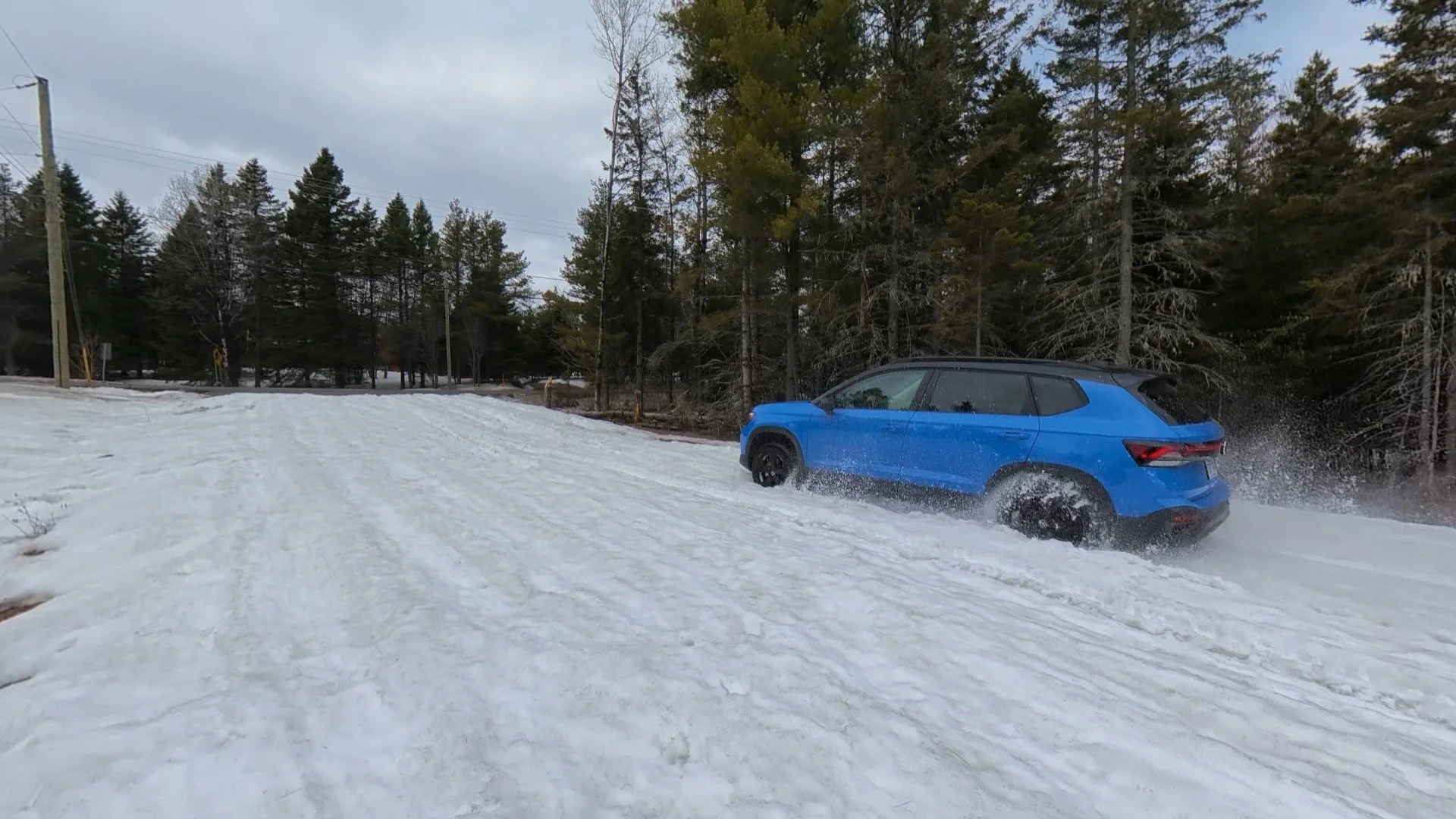
The tech is straightforward: wireless Apple CarPlay and Android Auto, graphics that are basic but a system that's functional and responds when you touch it. Here's the thing that surprised me. I reviewed the Atlas the week before, a vehicle costing around $60,000, and I prefer the Taos setup. The controls are better organized, and you don't get those gimmicky sliders under the screen. The Taos also keeps a traditional shifter, a proper drive-mode wheel on the console, a physical light switch, and a customizable digital cluster.
Two thoughtful details worth calling out. The wireless phone charger has a small fan above it to keep your phone from cooking while it charges. And the key fob gives you remote start and hatch release. The liftgate itself is manual.
What I don't like: the piano black trim. There's too much of it. Wood, fake wood, almost anything else would look better. And there's no phone button on the steering wheel, so ending a call means reaching for the screen. Small things, but they're the things you touch every day.
On the Road
The Taos outperforms its spec sheet. 174 horsepower doesn't sound like much, but it feels peppy, especially around town. Put your foot down hard and you'll find some turbo lag, but in normal driving it just goes, and highway merging from low speed was never an issue. Zero to 60 takes 7.0 seconds, which makes it the quickest of the three SUVs in the comparison below. Sport mode sharpens up the throttle response, and the 8-speed automatic does its job without the droning you get from a CVT.
Handling surprised me. There's very little body roll, it stays stable and planted through curves, and it felt composed when I put it through some quick direction changes. On gravel, the 4MOTION system hooked up convincingly. On a partially groomed cottage road, the suspension did its job well, although you can hear and feel the gravel hitting underneath. The cabin could use more sound insulation.
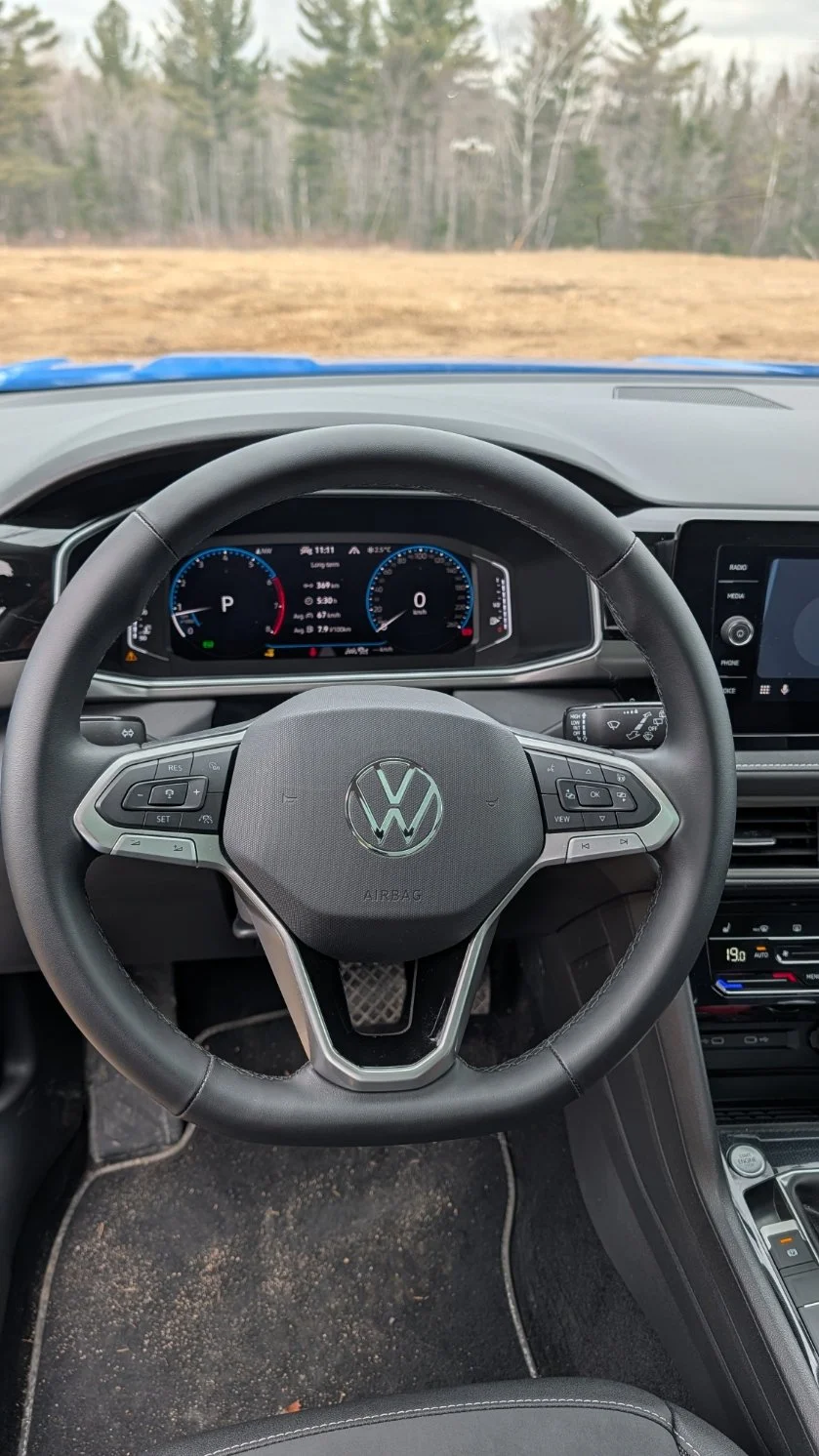
I didn't leave the all-wheel drive test at gravel, either. I ran the Taos in the snow to put the 4MOTION to work there too, on the Continental VikingContact 7 winter tires the tester came fitted with. Same story as the gravel: a little bit of sliding, the system kicks in, and it just goes. My verdict from the video stands. I'm very content with Volkswagen's 4MOTION system. It's really good.
That carries onto the highway. Road noise is my main complaint with how the Taos drives. In fairness, nothing at this price is exactly serene at highway speed, but the boxy shape doesn't help. The driver-assistance tech does help: adaptive cruise control and lane keeping both worked well, visibility is good, the mirrors are large, blind-spot monitoring is there, and the backup camera is clear. There's no 360-degree camera, which I'd like to see.
And then there's fuel economy. The 4MOTION Taos is rated at 8.4 L/100 km combined (28 mpg). Over my week of mixed driving, with plenty of accelerations mixed in, I saw 7.3 L/100 km (32 mpg). It beat its own rating while I was enjoying it.
Taos vs. Seltos vs. Crosstrek
Against the Kia Seltos and the Subaru Crosstrek, the Taos holds its own and then some. It's the quickest of the three: 7.0 seconds to 60 against roughly 8 seconds for both rivals. On cargo, it beats the Crosstrek and gives up only about 2 cubic feet to the Seltos. Rear legroom falls just short of the Seltos and beats the Crosstrek.
On paper, fuel economy goes to the other two, about 8.1 L/100 km (29 mpg) against the Taos's 8.7 L/100 km (27 mpg). In real life, I found the Taos better. Those EPA numbers don't mean much.
Subaru's all-wheel drive is excellent, no argument. But Volkswagen's 4MOTION is pretty darn good, and the Taos costs less than a Crosstrek. Prices across the three are similar, so honestly, I don't know why you'd take the Crosstrek unless you specifically want Subaru's all-wheel-drive system.
The Adventure Trim Volkswagen Should Build
Here's my pitch to Volkswagen. The Crosstrek Wilderness exists because buyers want this size of vehicle with real adventure hardware. The Taos is a better starting point, and a light dusting like the Atlas Peak Edition treatment isn't enough. Build a proper Taos adventure trim: 17-inch wheels with beefier tires, a 1-inch suspension lift, skid plates, a more aggressive roof rack, proper badging, and a 360-degree camera you can actually use off-road. Do that, and the Taos wouldn't just compete in this segment. It would be killer.
Pricing (Canada)
The Taos starts at $30,595 for the front-wheel-drive Trendline. My Comfortline Black Edition 4MOTION tester lists at $37,895, and lands right around $40,000 once freight and fees are in. The top Highline comes in at $39,895 before fees. However you spec it, you're at or under the $40,000 mark, and in 2026, there aren't many vehicles left you can say that about.
The Outsider’s Take
When I closed out the video review, I said something I rarely say: I honestly struggled to name a real con, and I asked viewers to suggest one. That's still where I land.
What I like:
Quickest in its class, and it feels quicker than the numbers
Real-world fuel economy that beat its own rating in my testing
Cargo space and a back seat that belong in a bigger vehicle
A spare tire and a pass-through that fits hockey sticks
Controls that make more sense than the ones in a $60,000 Atlas
All of it at or under $40,000 in Canada
What I don’t:
Road noise at highway speed; it needs more soundproofing
Too much piano black inside
No phone button on the steering wheel
The rear centre seat sits over a real floor hump
No 360-degree camera, and no adventure trim. Yet
The Taos does almost everything right: it's quick for the class, it's genuinely spacious, it's good on fuel in the real world, and it's priced like vehicles used to be priced. If you're shopping a subcompact SUV and the Taos isn't on your list, it should be. It's the most underrated vehicle in the segment, full stop.
