

Companion to three Outsider Reviews videos — the full review, the street & highway power test, and the off-road sandpit test. All three are embedded at the bottom of this article.
Most vehicles get one video on this channel. The 2026 Jeep Wrangler Moab 392 got three: a full walkaround and verdict, a dedicated street and highway power test, and a day in a sandpit and on the trails. By the end of it, the trip meter read 948.6 km. This article is the three tests rolled into one impression — what this thing is, what it does on pavement, what it does in the dirt, and whether it's worth the money.
What the Moab 392 is
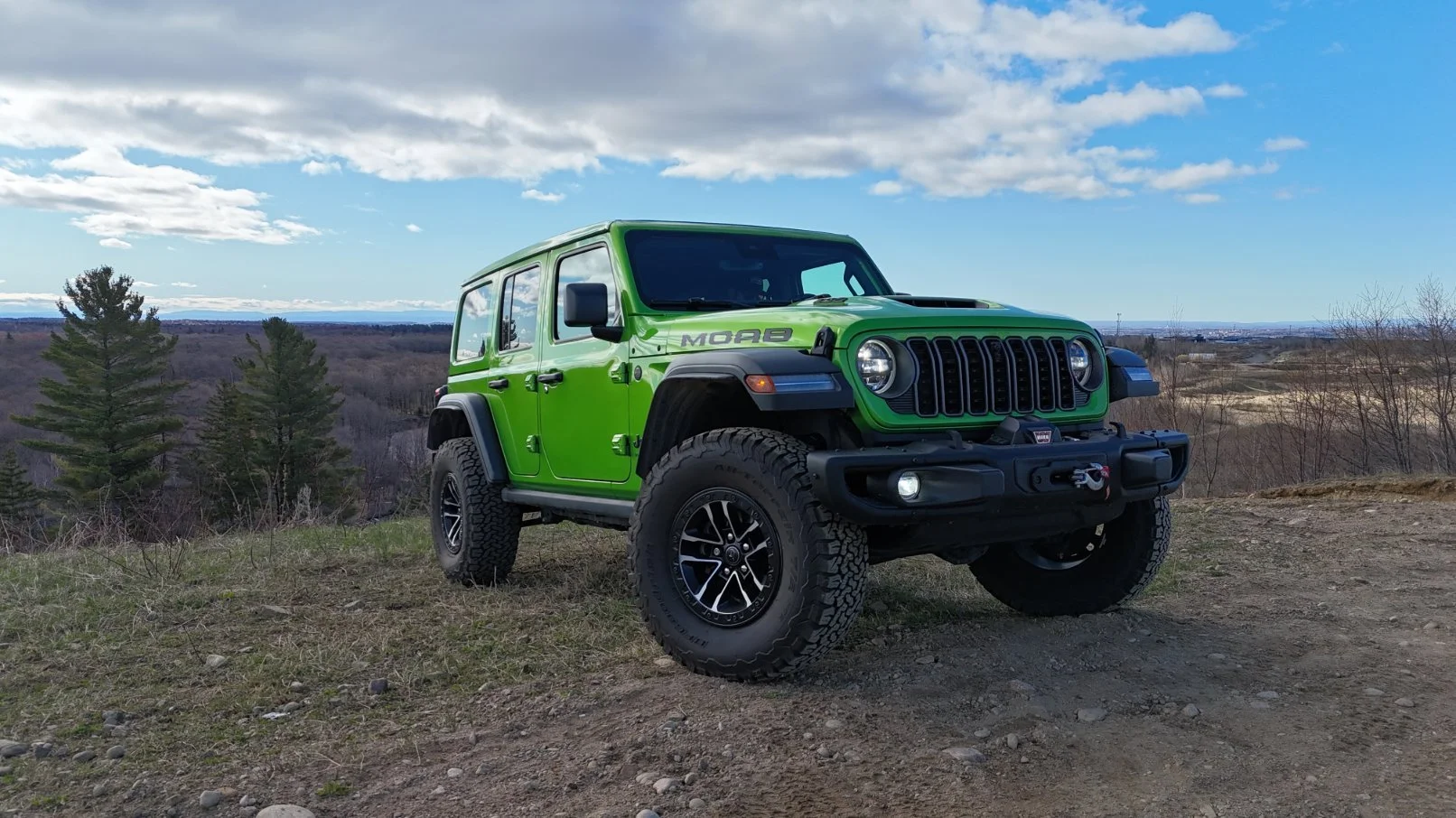
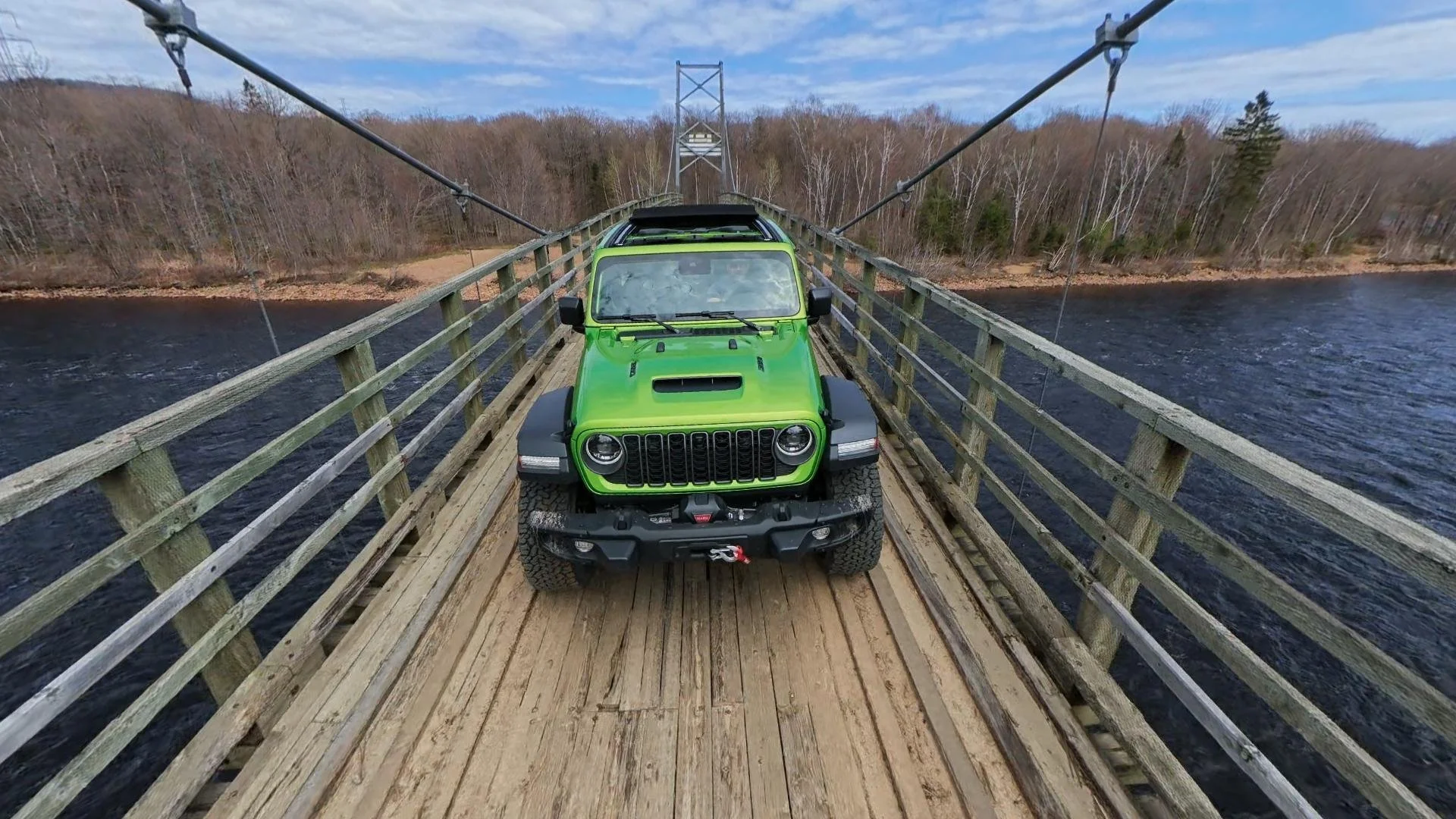
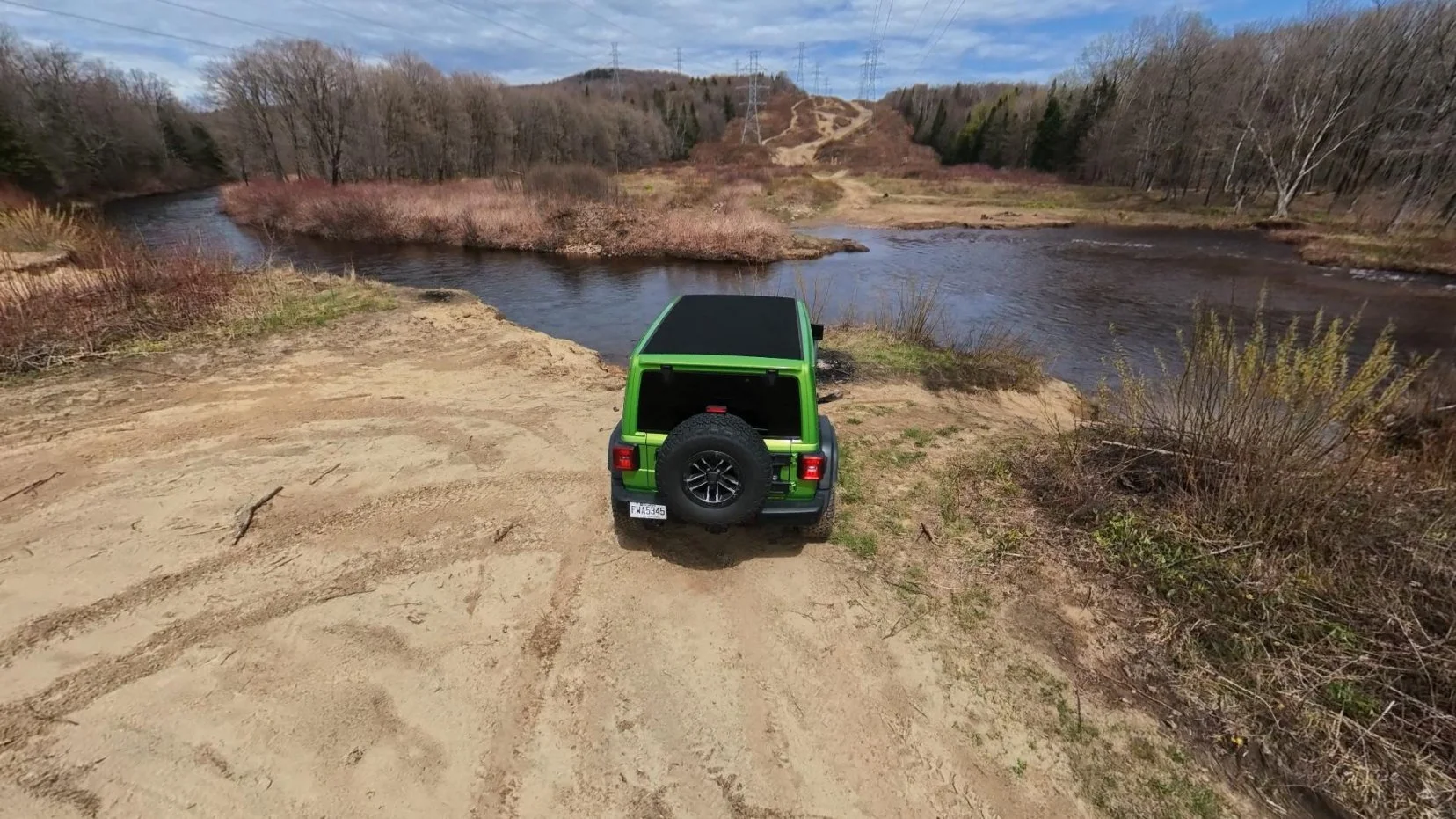
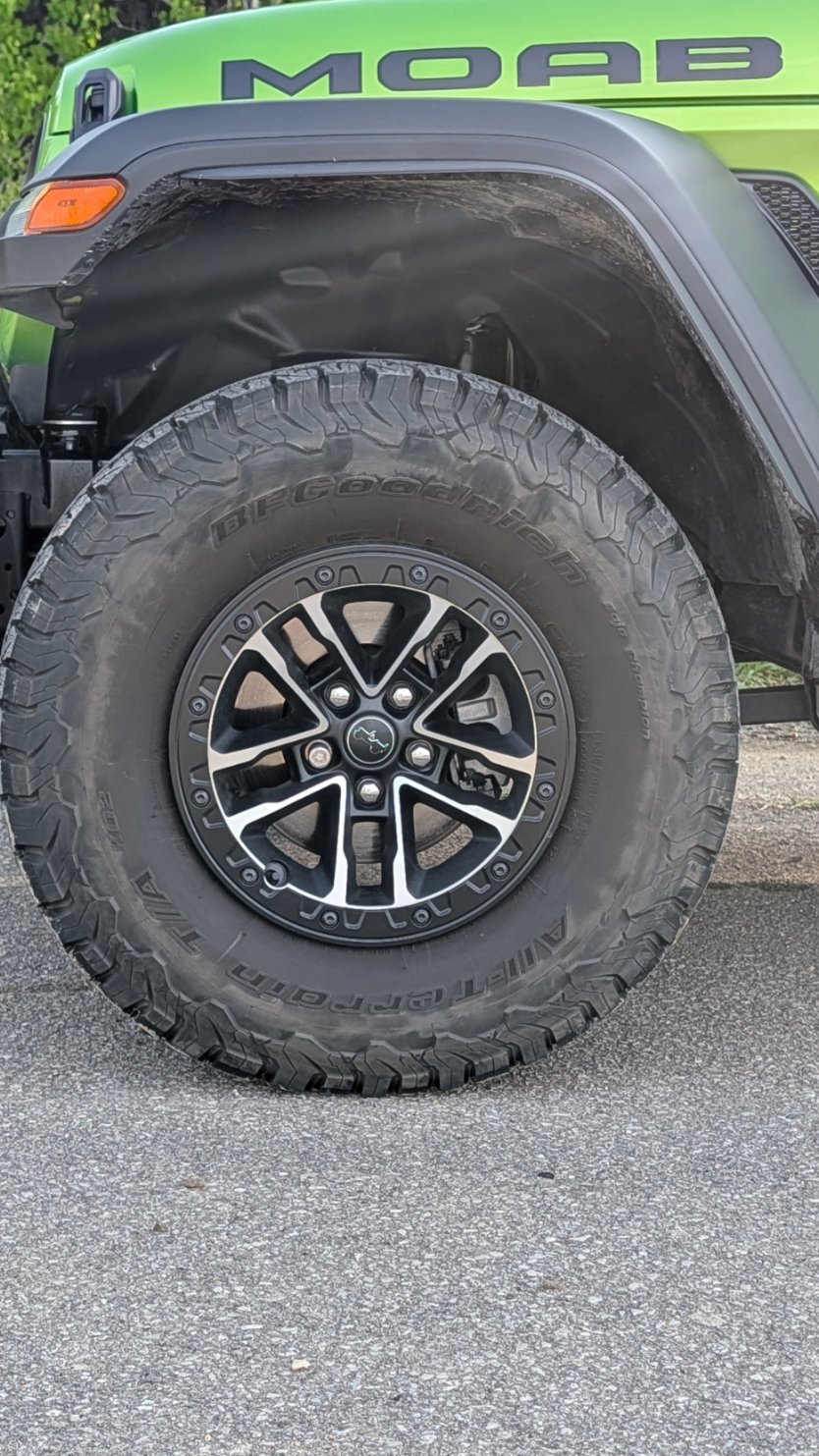
The Moab 392 is the first of Jeep's "Twelve 4 Twelve" special editions — twelve limited Wranglers, one a month, marking 85 years of Jeep. Underneath, it's the hardware that used to be the Rubicon 392: the 6.4-litre HEMI V8, full-time four-wheel drive, locking differentials front and rear, a disconnecting front sway bar, and 35-inch tires from the factory. The one I tested wore the launch colour, a very loud green called Mojito, with MOAB written across the hood and a Warn winch in the steel front bumper.
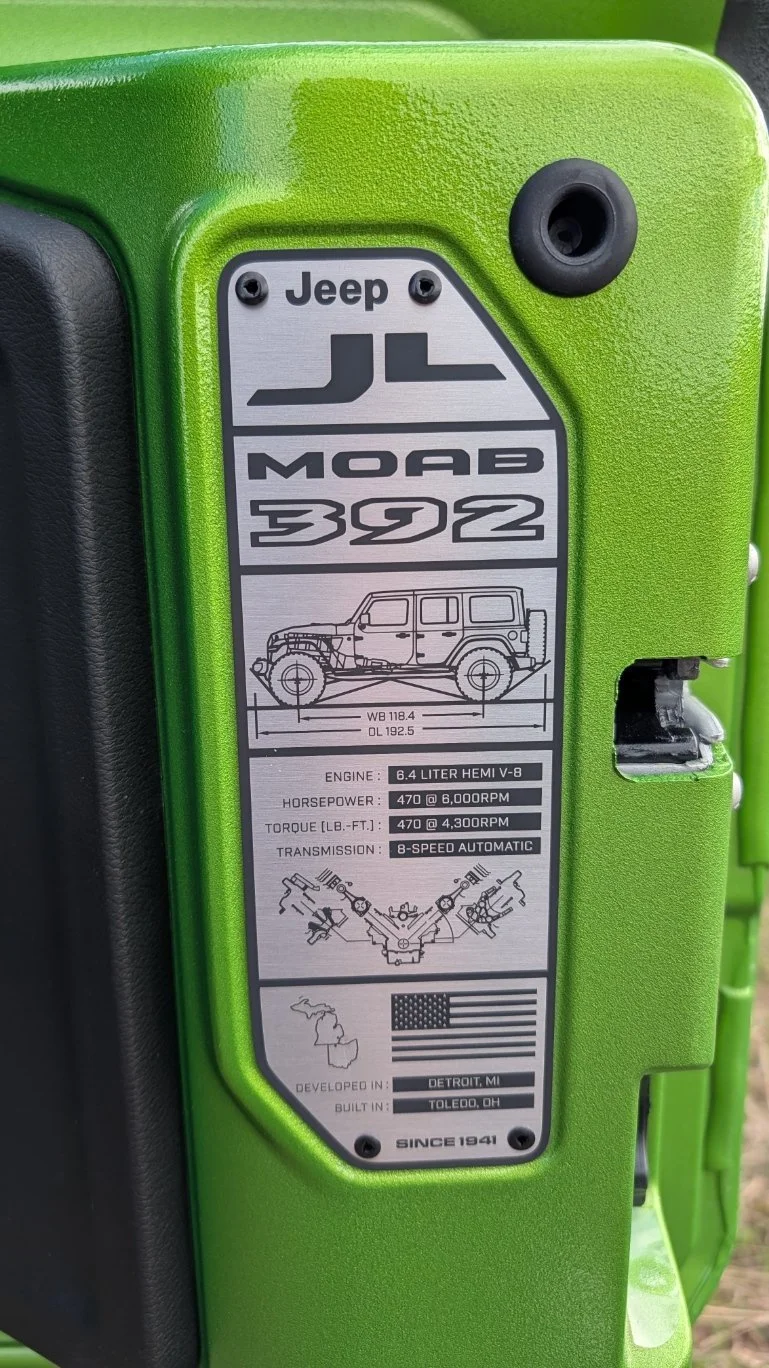
Check the back door frame and there's a metal plaque with the whole story stamped into it: 6.4-litre HEMI V8, 470 horsepower at 6,000 rpm, 470 lb-ft of torque at 4,300 rpm, 8-speed automatic, developed in Detroit, built in Toledo, "Since 1941." That's the Jeep in one plate — heritage on the surface, violence underneath.
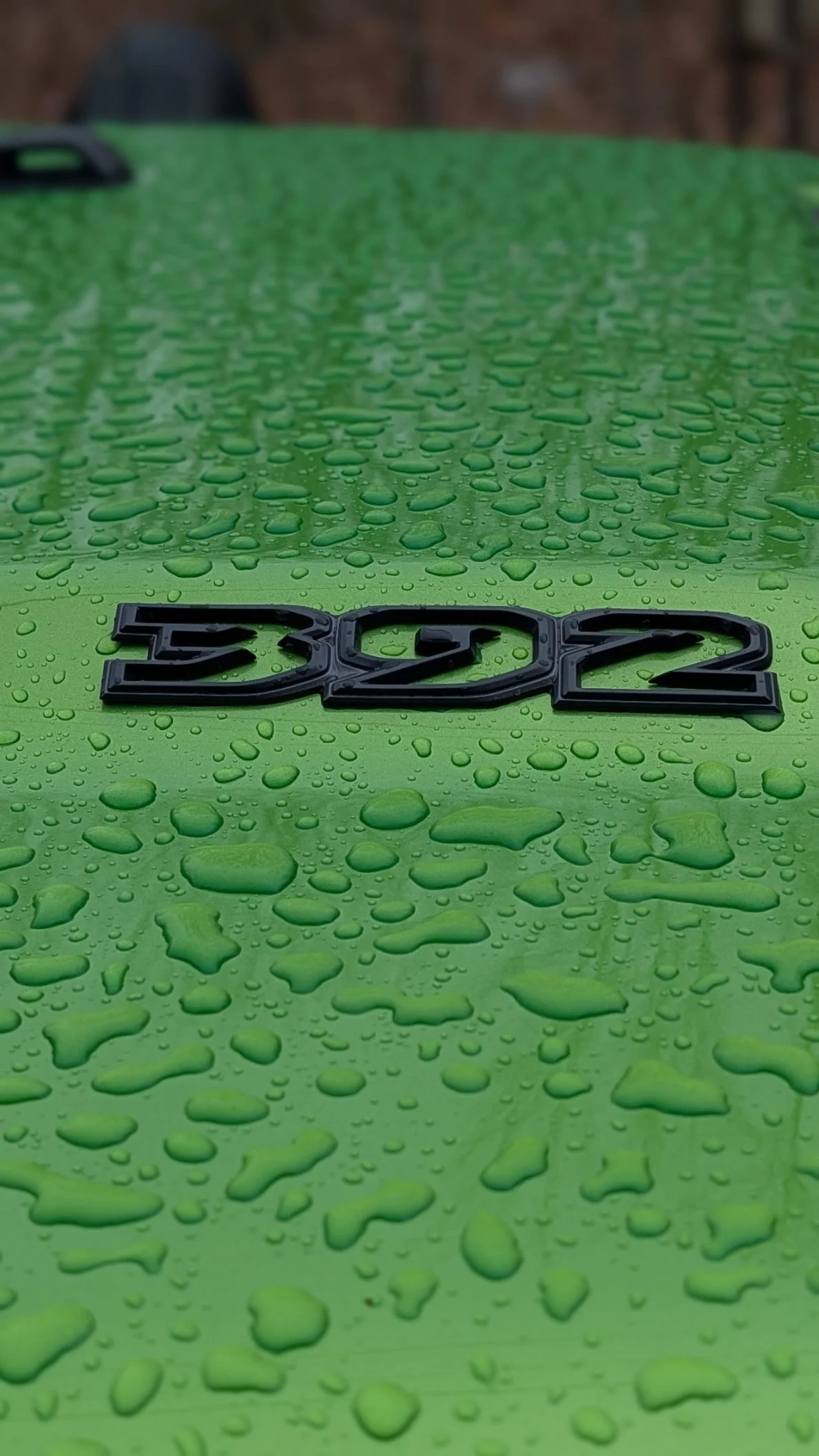
One thing to understand up front, and I said it in both driving videos: you are actually LOSING ground clearance by choosing the 392. A Rubicon with the 35-inch package sits almost 2 inches higher — the HEMI is so heavy up front it pulls this one down. Nobody buys this engine for clearance. It is all about the power, and that beautiful, sweet sound.
SPECS
Engine: 6.4L HEMI V8, naturally aspirated
Power: 470 hp @ 6,000 rpm
Torque: 470 lb-ft @ 4,300 rpm
Transmission: 8-speed automatic, paddle shifters
Four-wheel drive: Selec-Trac full-time, 2.72:1 low range
Differentials: Tru-Lok electronic lockers, front and rear
Axle ratio: 4.56
Tires: 35-inch BFGoodrich All-Terrain T/A KO2, 17-inch beadlock-capable wheels
Roof (as tested): Sky One-Touch Power Top
Ground clearance: 11.1 in — more than a standard Rubicon (10.8 in), but less than a Rubicon with the Xtreme 35 package (12.9 in) on the same 35-inch tires; the HEMI's weight sits it lower
Approach / breakover / departure: 46.7° / 24.5° / 39.8°
Water fording: 34 in
Length: 192.5 in / Wheelbase: 118.4 in — a touch longer than a Ford Bronco Raptor, on a longer wheelbase
0–60 mph: 4.5 seconds (Jeep)
Fuel economy: 13 mpg city / 16 mpg highway (EPA); NRCan combined 16.8 L/100 km
Max towing: 3,500 lb
Price (Canada): about $100,000 to start; my tester about $110,000 with the Sky One-Touch top, the Warn winch, and freight — about $15,000 under a Bronco Raptor
On the street
The street test is where the Moab 392 makes its case — and its confession. The case: 470 horsepower in a brick on 35-inch tires is every bit as ridiculous as it sounds. Jeep says 0–60 mph in 4.5 seconds, and from behind the wheel it feels like it. The 8-speed answers the throttle instantly, there is no start/stop system to get in the way, and the dual-mode exhaust is the best factory soundtrack in the business — quiet-ish when you behave, and absolutely not when you don't.
The confession: it's still a Wrangler. You hear the tires, you hear the wind — the fabric Sky top makes it a touch louder than the Bronco on the highway — but there's no vibration through the wheel, and then it corners way better than a Wrangler on 35s has any right to. I said it on camera in the big review: "This thing corners really well. Like, I'm really surprised." My street video runs it head-to-head against the Ford Bronco Raptor, and the Jeep takes the street fight: it's the king of power (less wheelspin, instant torque), and it feels more planted on pavement — less wobbly than the Raptor felt even in its sport damper mode. You'd think the Bronco's wider stance would win on the road. It doesn't. It's also almost a foot narrower than the Raptor, so it fits a normal car wash and threads tight spots the Bronco can't.
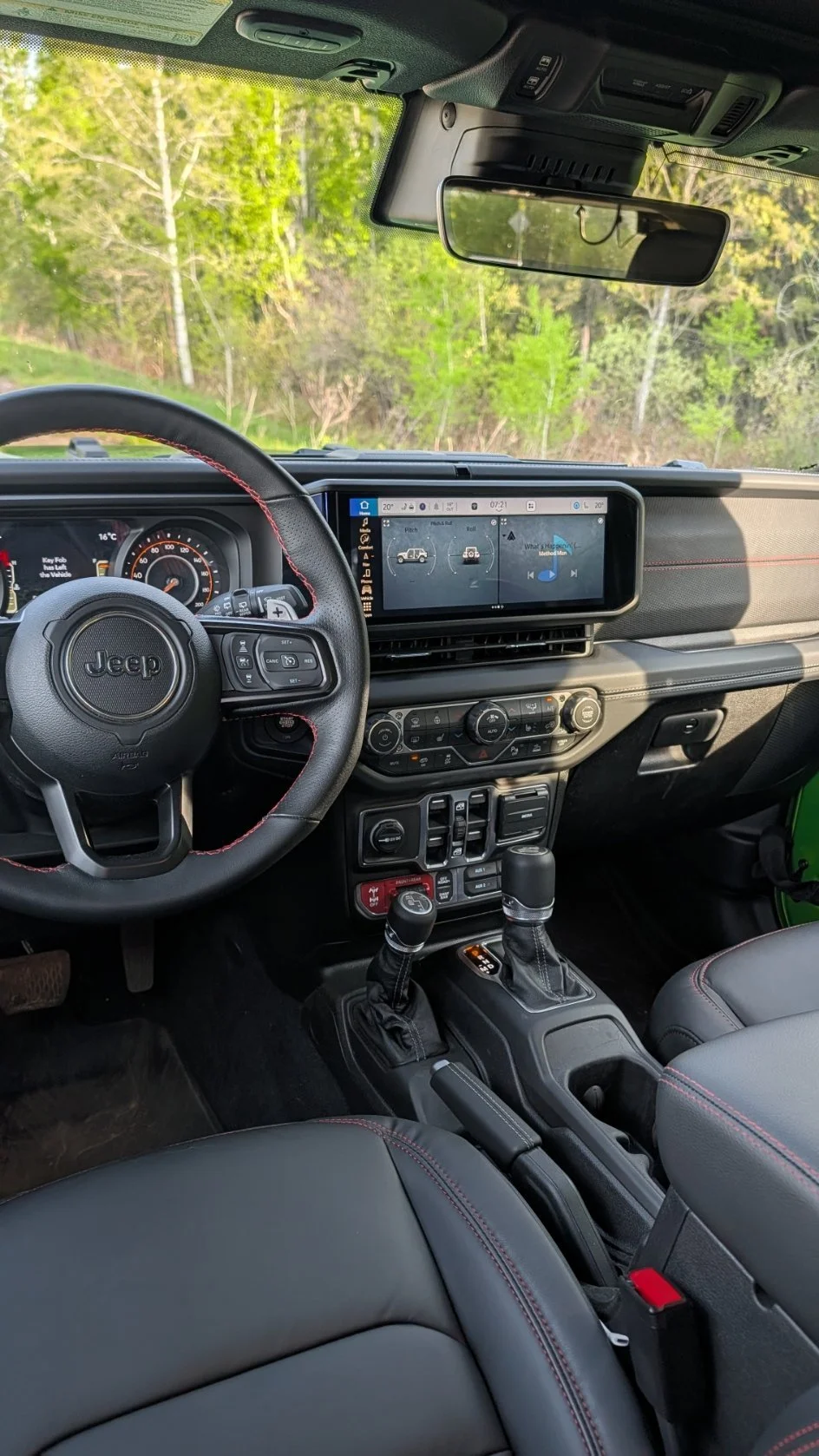
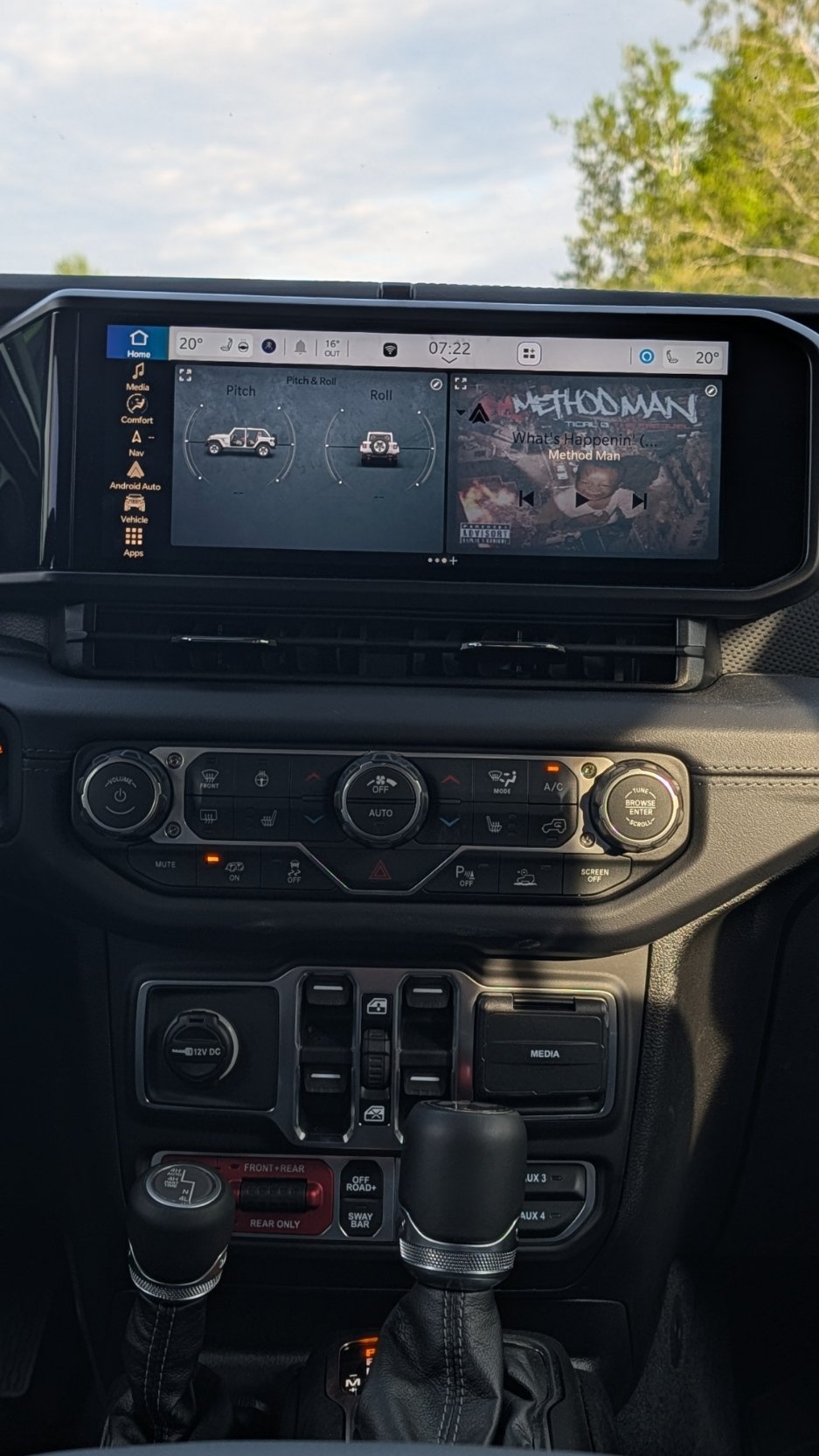
And the surprise: fuel economy made my pros list. Same drive I did in the turbo-V6 Bronco Raptor, same result. The trip computer settled at 16.1 L/100 km across the videos, and the dash showed 15.8 L/100 km over 948.6 km (that's the trip readout in the photos below) — against a 16.8 L/100 km combined rating. A 470-horsepower V8 matching its turbo-V6 rival. Who would have thought?
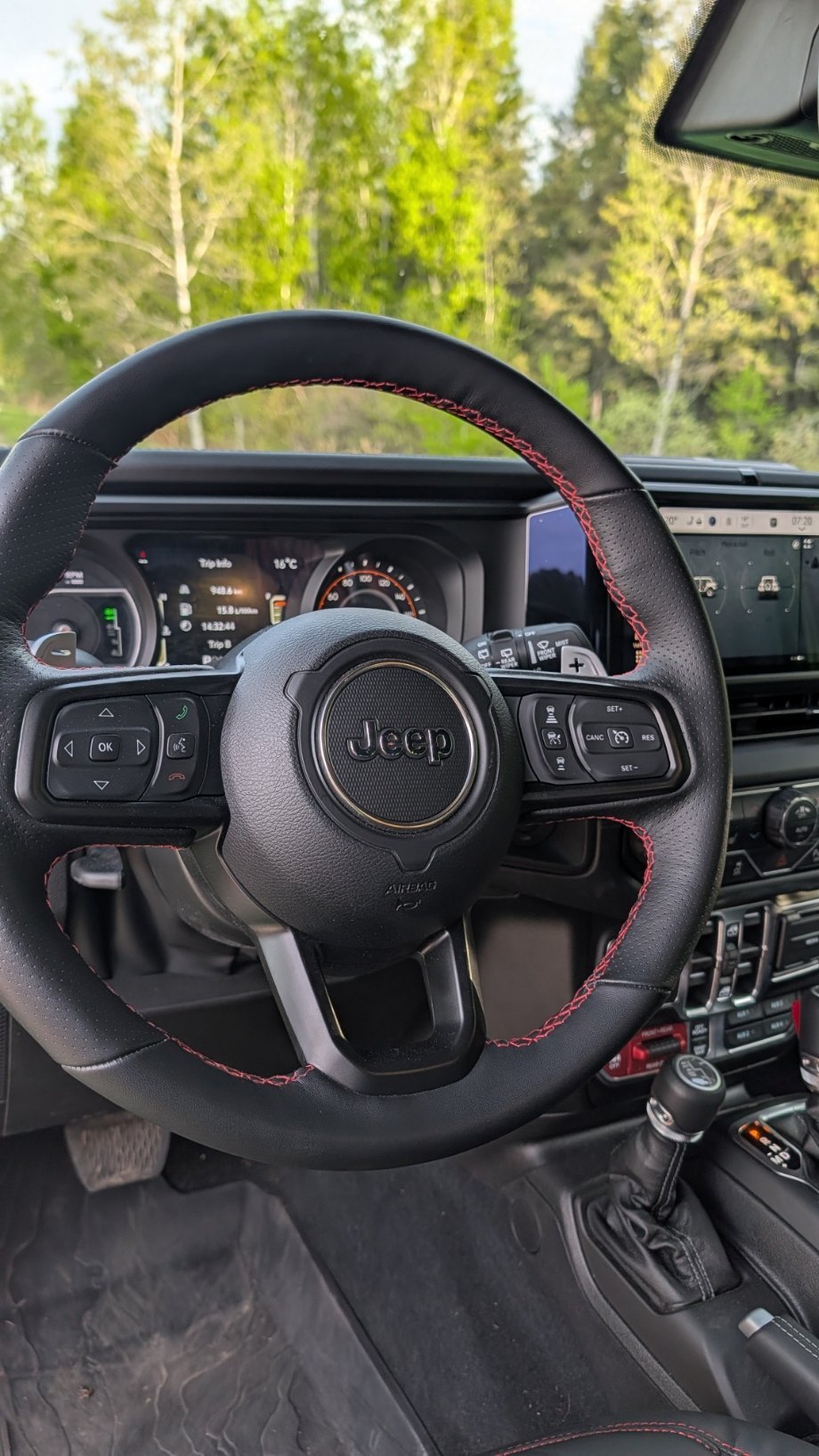
One real flaw, and it's my biggest con in both driving videos: the brake pedal sits too far toward the centre. The big transmission tunnel pushes everything over, and if you're built like me, bumper-to-bumper traffic has you reaching across yourself to brake. The flip side: off-road, that pedal placement is perfect for two-foot driving on the rocks. Big-guy problem on the street, bonus on the trail.
In the sand and on the trail
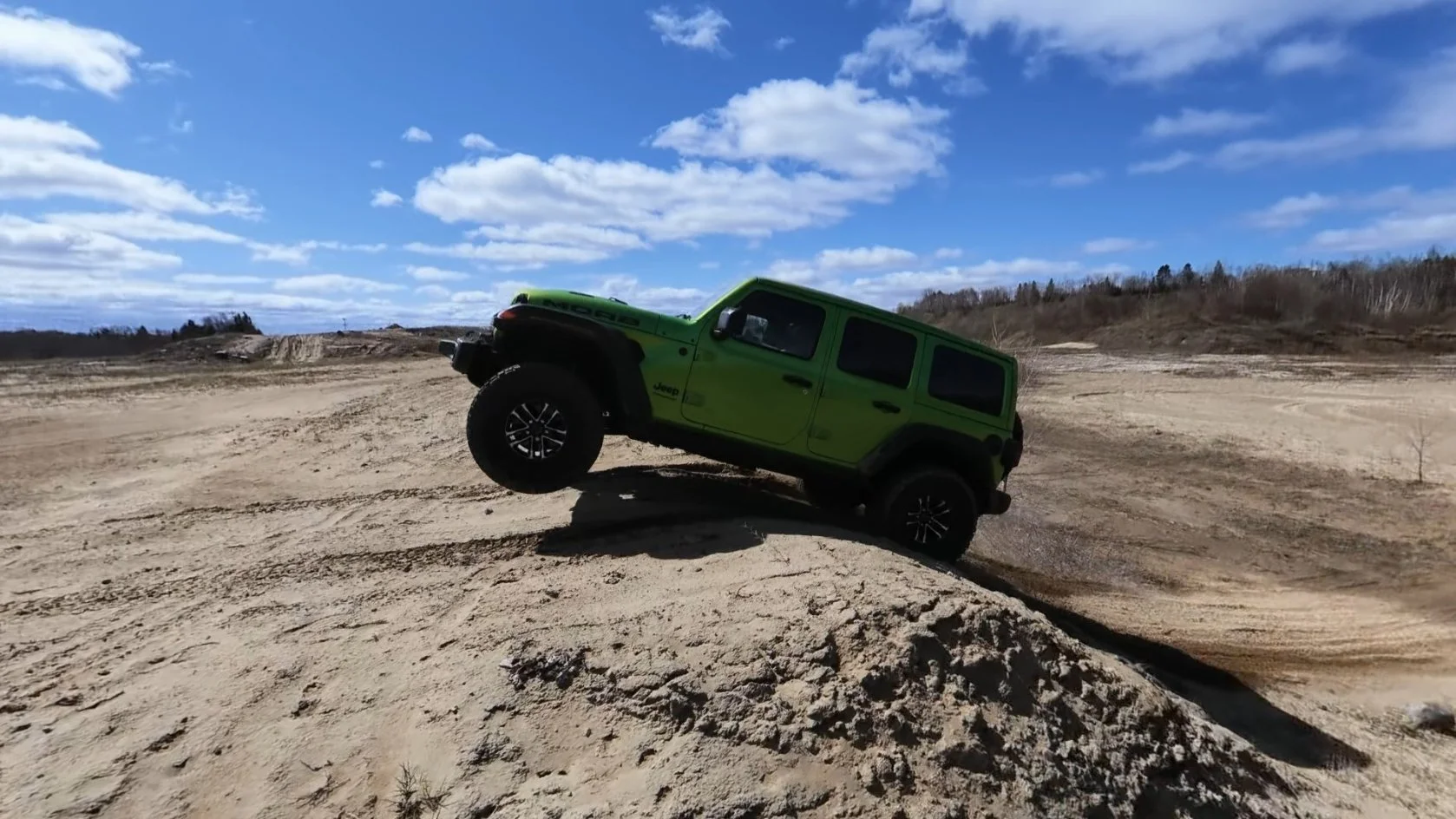
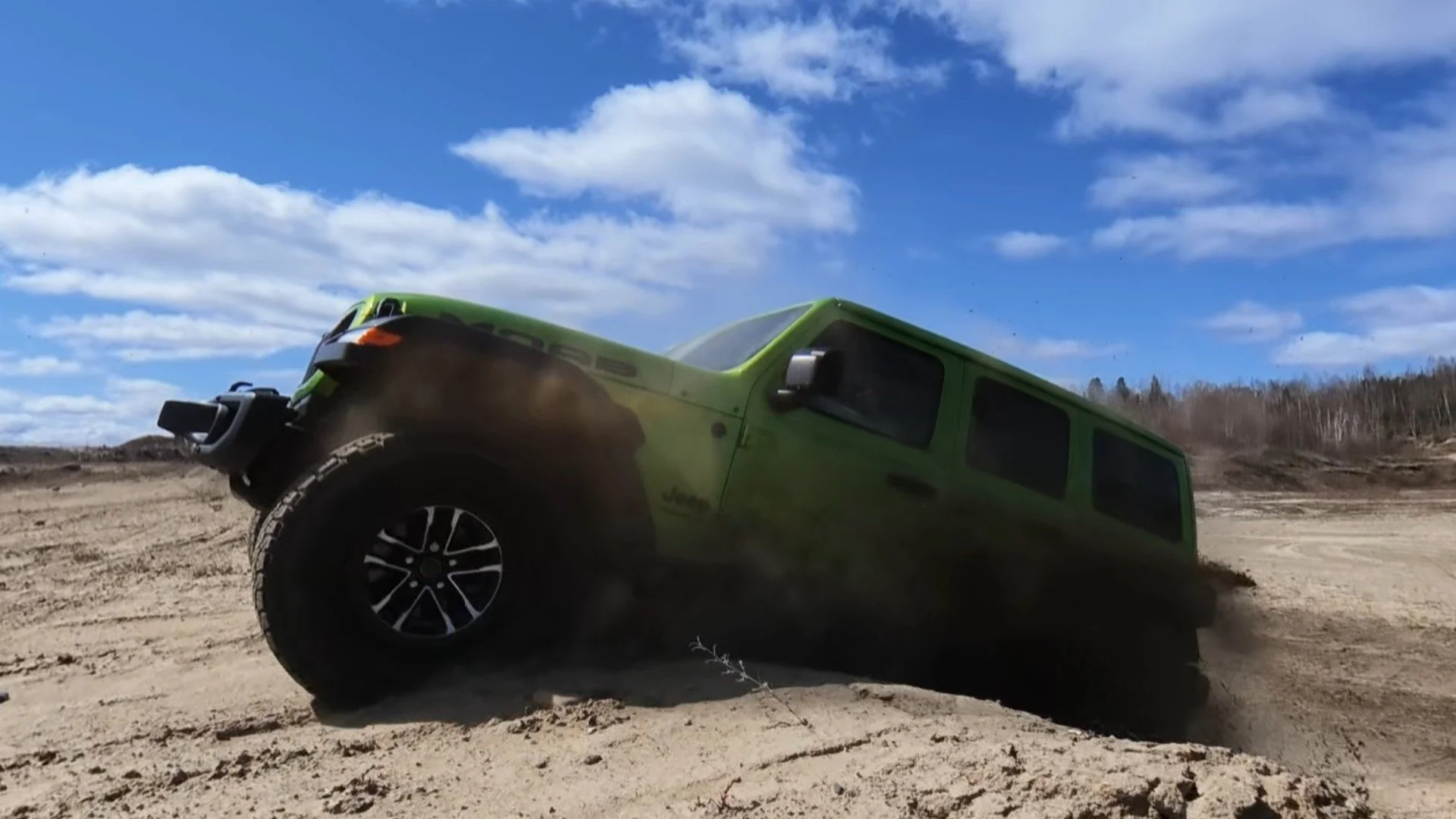
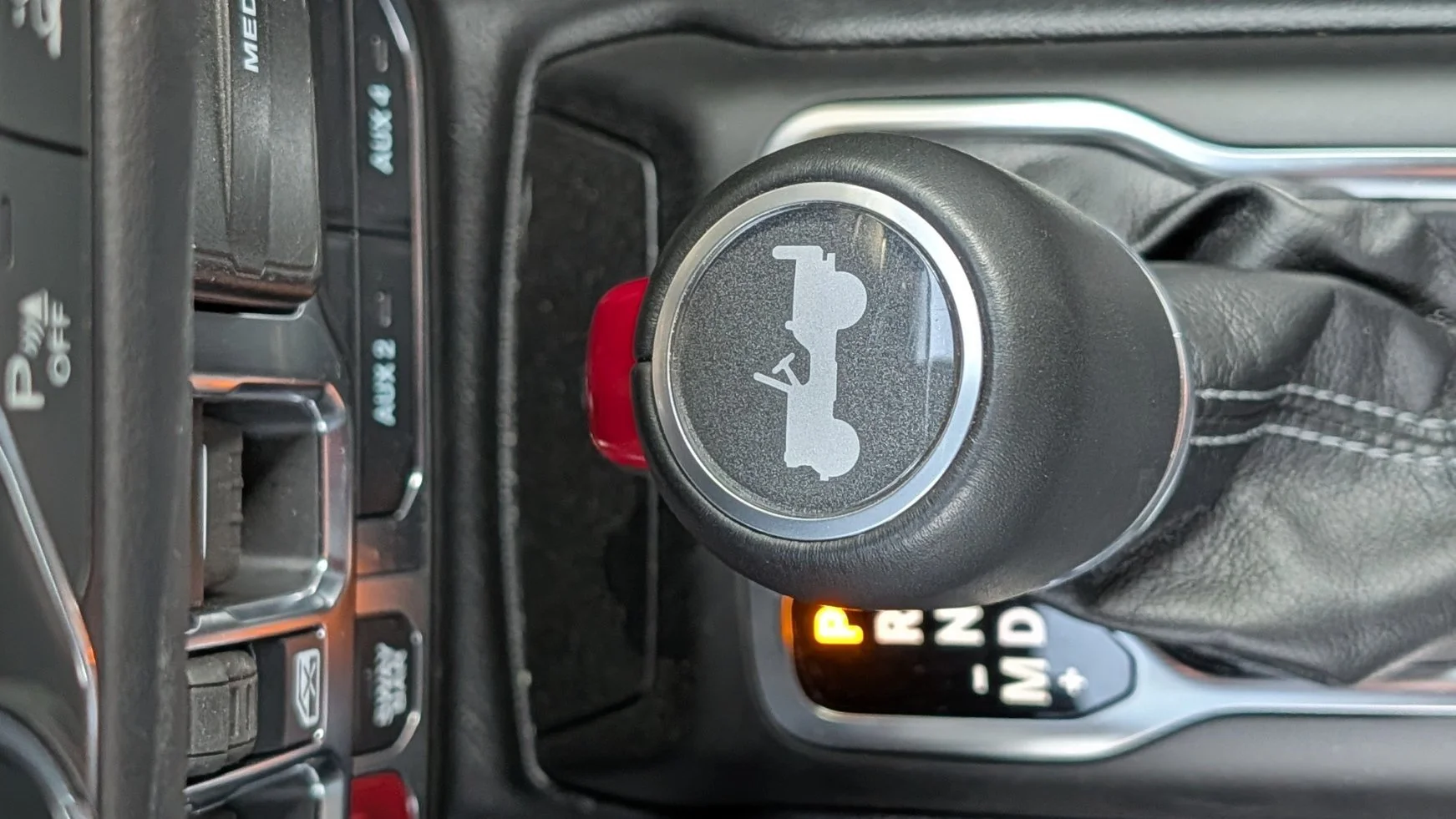
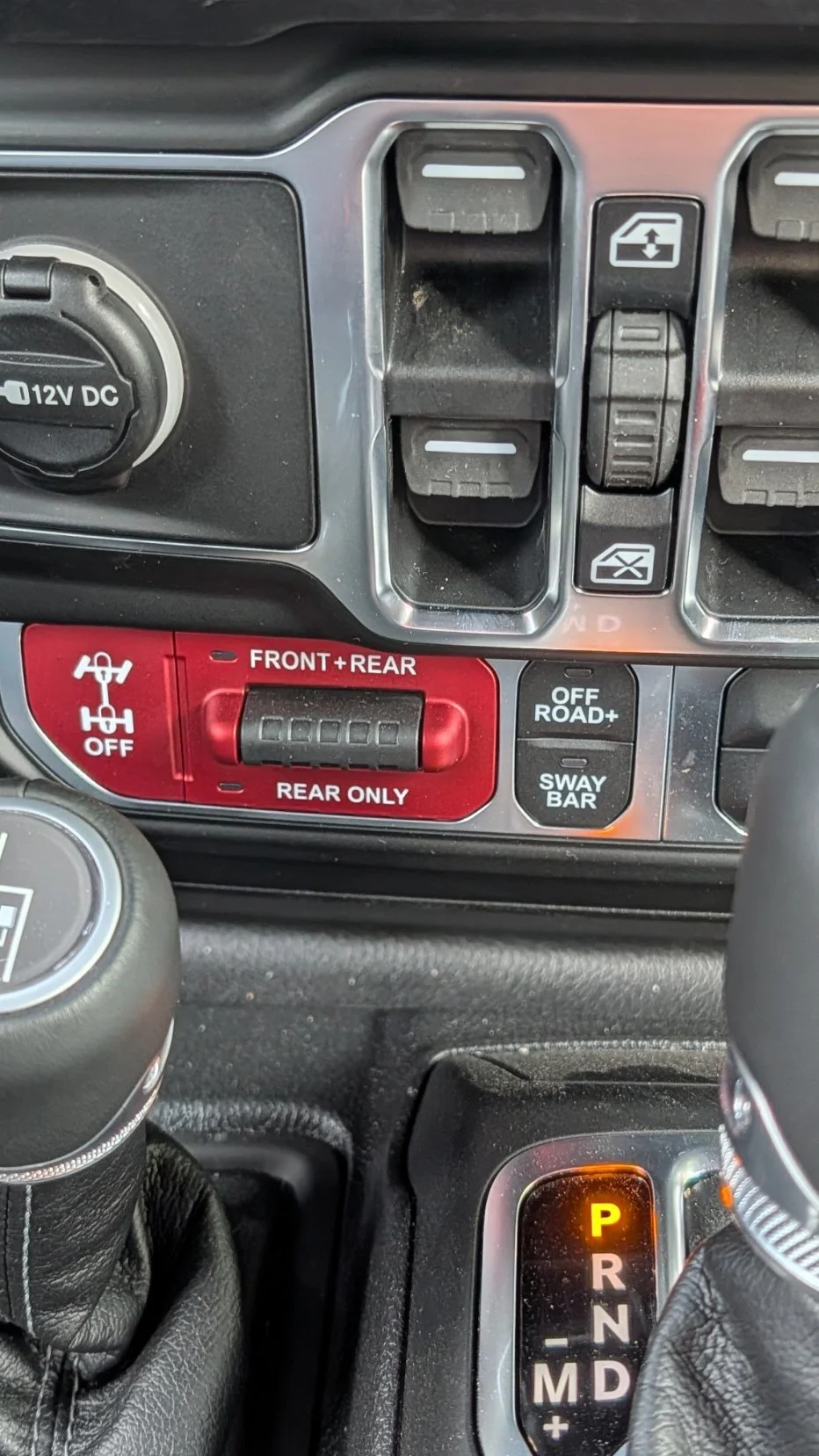
Off-road is where the recipe comes together. In the sandpit, the V8's instant torque and the KO2s keep momentum where a smaller engine would be digging, and the thing will climb, crest, and — yes — catch a little air if you're committed. On the rocky trails, the toolkit is all there: lockers front and rear at the push of a switch, the sway bar disconnected for articulation, Off-Road+ mode, and a proper low range with a lever, the way it should be. The one number to respect is the wheelbase: 118.4 inches is long over sharp crests, so you pick your line — the clearance and the skid plates forgive a lot, but geometry is geometry. That wheelbase cuts both ways, though: breakover is a modest 24.5 degrees, less than the Bronco Raptor — but the rear seat gets 38 inches of legroom the Bronco can't match. And the tools help you manage the terrain: hill descent you can dial down to 1 km/h with the paddle shifters — extremely smooth, it does all the braking for you. You also run the lockers and modes yourself here; there's no drive-mode dial doing it for you like in the Bronco.
One honest limit, and I said it in the big review: if you want to go fast — real Baja mode — this isn't the suspension for it. That takes adaptive dampers, Fox Live Valve like the Bronco Raptor runs. In the Moab, at speed on rough ground, you're going to feel like you're in a blender. It's a crawler and a bruiser, not a desert runner.
The honest summary from the off-road video: a lot of these high-powered rigs spend their lives on pavement. This one doesn't feel wasted on a trail — it feels built for it, and the V8 isn't a gimmick off-road. Torque you can meter out by the millimetre is a real tool.
Inside
The cabin is loaded Rubicon spec: Nappa leather seats with red stitching, heated and powered front seats, a heated steering wheel, and the 12.3-inch Uconnect screen with Off-Road Pages showing pitch and roll. Rear legroom is 38 inches — a couple more than the Bronco Raptor, courtesy of that long wheelbase. The controls that matter off-road are physical switches right where your hand falls — the red locker panel, the sway bar button, auxiliary switches for accessories. The cargo area is standard four-door Wrangler: decent space with the seats up, a nearly flat floor with them down, and the spare where it belongs, on the tailgate. At $110,000 as tested, two things are missing that shouldn't be: a 360-degree camera (front and rear only) and a built-in light bar. And the option I'd tick first: my tester had the Sky One-Touch Power Top — one button and the roof panel slides back. Here in Quebec that's the whole point: sunshine now, rain in an hour, and you close it on the fly. Open-air Wrangler, no panels to unbolt and no cargo space clogged storing them.
The Outsider’s Take
Let me give it to you the way I closed both driving videos — cons first, because there are only two: the brake pedal placement, which you've already read about, and the crowded centre console. That's the list.
The pros start with the obvious: the power, and THE SOUND. It's a beast, and it sounds like it. You do not get tired of that noise. But here's the thing people get wrong about this Jeep: you don't buy the 392 for capability. A Rubicon on the same 35s sits almost 2 inches higher and will go anywhere this goes. You buy it because you want pure American muscle in a Wrangler — the power, the sound, and, let's be honest, to not be like everyone else. And then the surprise pro: fuel economy. It matched the turbo-V6 Bronco Raptor on the exact same drive. Who would have thought?
The honest trade is the suspension: quicker, louder, more powerful than the Raptor, better on pavement — and too rigid when the dirt gets fast. If your off-roading is Baja speed, buy the Raptor. If it's everything else, this saves you $15,000 and sounds better doing it. Is it worth $100,000? As a rational purchase, no. As the loudest, wildest Wrangler ever built, with my kid begging for school drop-offs in it — it's cool dad territory. And I completely get it. And if you want one, don't wait for a discount that isn't coming. Limited editions don't work that way, and neither does this Jeep.
