

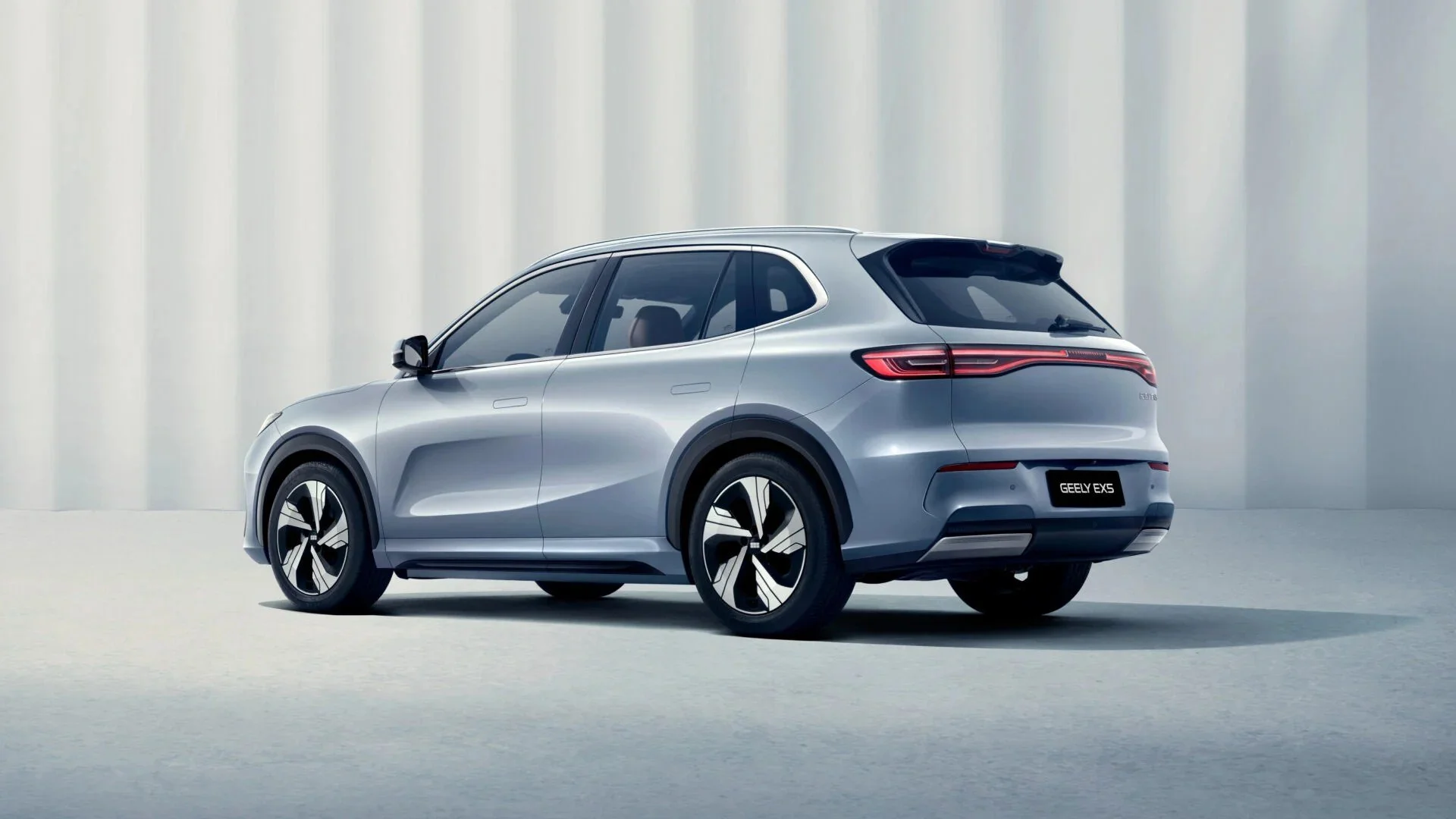
Photo: Geely (via WhichCar)
Ottawa made an announcement this week with a hole in the middle of it.
In a trade backgrounder published Monday, November 16, Global Affairs Canada wrote this, word for word: “In November 2026, a second original equipment manufacturer that is based in China fulfilled all Transport Canada requirements and has just started importing vehicles into Canada, with an expected import price of less than $35,000 CAD.”
A second Chinese automaker has finished Canada’s certification process and started bringing in cars. The government just didn’t say which one.
So I went looking. The answer is sitting in a public federal registry that anybody can check — and it points to Geely.
The registry trail
Before a foreign manufacturer can import new vehicles into Canada, its factories have to be pre-cleared by Transport Canada. That list is called the Appendix G pre-clearance registry, and for passenger cars built in China, it contains exactly two names.
The first is BYD — its Shenzhen and Xi’anplants. BYD has been on that list for months; back in March, it was the only Chinese carmaker on it.
The second name is Zhejiang Haoqing Automobile Manufacturing Co., Ltd. — Guiyang and Taizhou plants. Haoqing is Geely Auto’s manufacturing arm. Automotive News Canada reported on November 5 that those two plants had recently been added to the registry, and Transport Canada confirmed to them that a manufacturer must complete the applicable certification testing before it can be registered. In plain language: you don’t get on the list until the testing is done. A November listing means a November fulfillment — exactly what the government’s backgrounder describes.
I searched the same registry for the othernames making the rounds. Chery: no records. Dongfeng: no records. Nobody else.
Why the other guesses don’t hold up
Two other brands have been floated, and both fail the paperwork test.
Dongfeng is the popular guess because its Canadian distributor has promised its firsttwo models, the BOX 01 hatchback and the Vigo SUV, at retail prices below $35,000. But read Ottawa’s sentence again: the $35,000 figure is an import price — the declared value of the car when it crosses the border — not a sticker price. And Dongfeng has no Transport Canada pre-clearance listing at all. Every report through this month describes its certification as still underway, with a launch aimed at 2027.
Chery has a Canadian website for its Omoda and Jaecoo brands and has been spotted testing in Toronto, but it also has no Appendix G listing, it was still seeking certification this month, and its first model here is expected to be a Jaecoo priced around $65,000 to $70,000 — nowhere near the government’s price line.
The cars are already here
Geely is not working from a standing start. An EX5 electric SUV and the smaller EX2were photographed arriving at Toronto Pearson Airport on May 27, 2026, for testing, and an EX5 running on Ontario manufacturer plates was filmed in Toronto traffic in late August.
The corporate side is in place, too. Geely Auto Canada was established on October 9, 2026, headquartered in Markham, Ontario, under managing director Bryan Wu. Its consumer site is live, and its retail launch through a Canadian dealer network is planned for 2027.
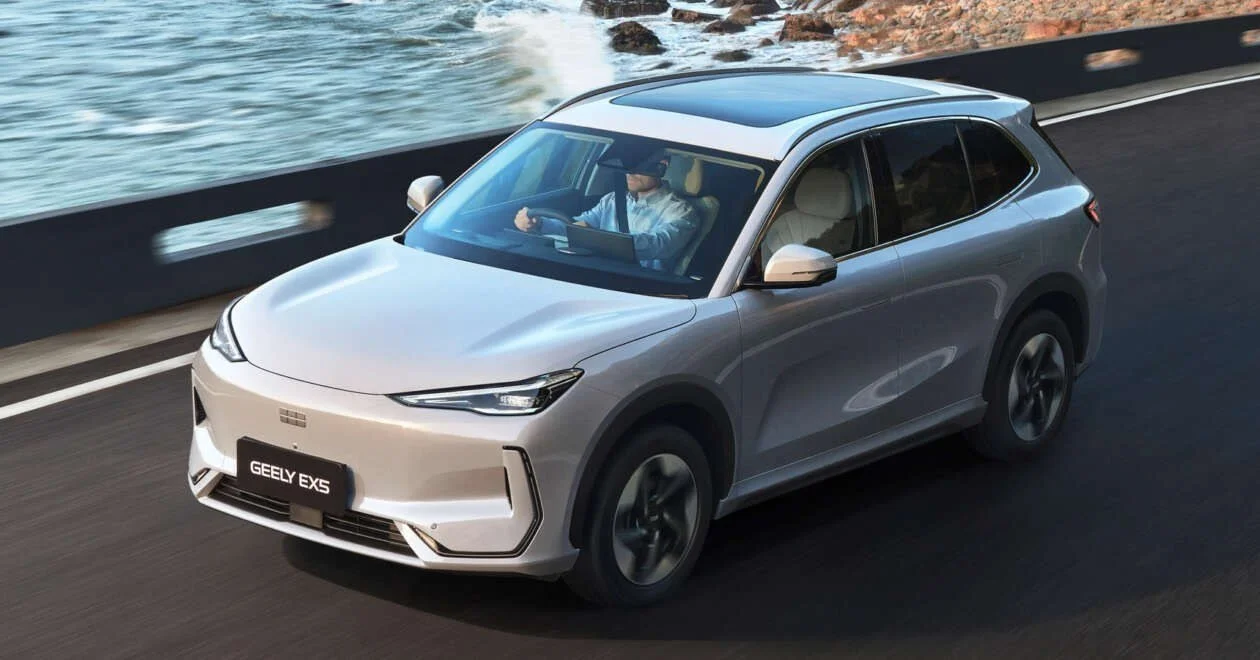
Photo: Geely (via Paul Tan)
What Geely would actually sell here
Appendix G doesn’t name models, and Geely Auto Canada hasn’t confirmed its Canadian lineup. But the two plants that were just cleared tell the story: Guiyang builds the EX5, a compact electric SUV sold in China as the Galaxy E5, and Taizhou builds the Starray EM-i, a plug-in hybrid SUV. Those are the two vehicles every report on the registry addition points to, and they are Geely’s volume export pair in markets like Australia and the UK.
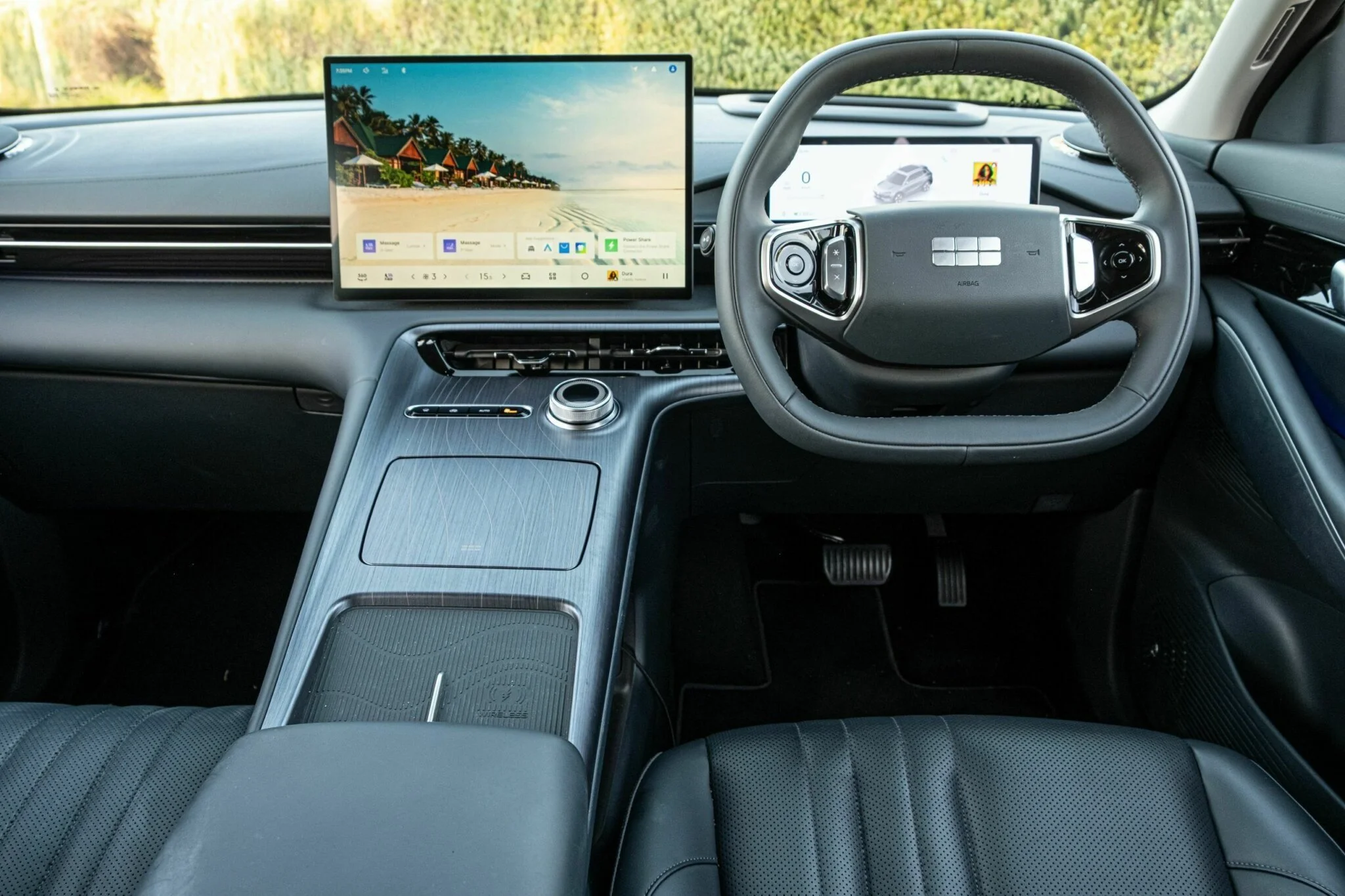
Photo: Geely (via evee.com.au)
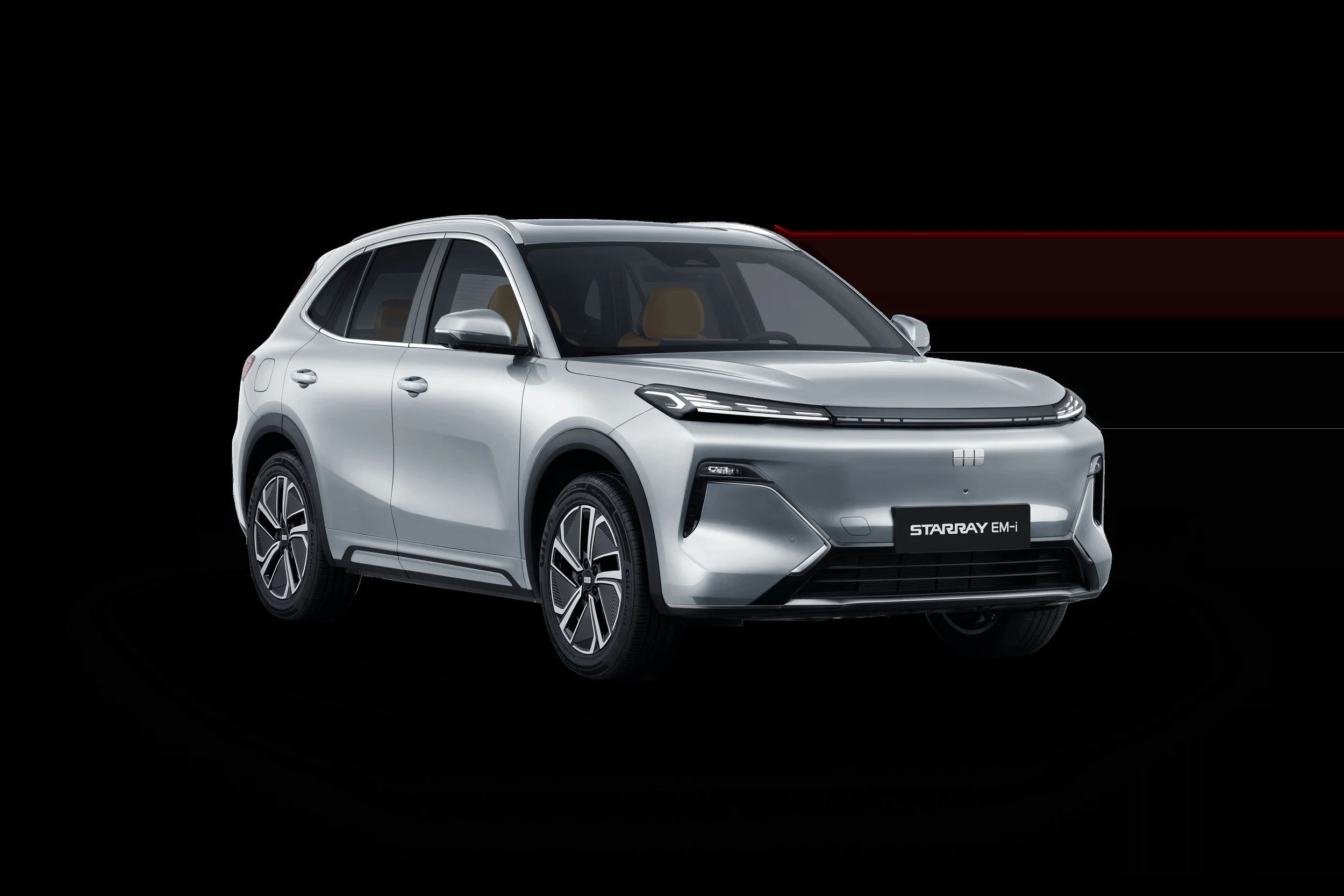
Photo: Geely
On price, be careful with the numbers you’ll see thrown around. The government’s “less than $35,000” is an import price — it excludes freight, duty, dealer margin and taxes. The EX5’s China-market price converts to roughly $20,500 to $28,900 Canadian, which makes a sub-$35,000 import value entirely plausible. In Australia, where the EX5 is already on sale, it retails for the equivalent of about $40,900 to $44,800 Canadian. Industry estimates for a Canadian sticker land around $40,000 to $46,000 — but those are estimates. Geely has published no Canadian price, and until it does, treat every sticker-price claim as a guess.
The strange part: almostnothing is actually arriving
Here’s the context that makes this storyodder. Since the 100% surtax on Chinese EVs was repealed on March 1, 2026, and replaced with a 6.1% duty under a 49,000-vehicle annual quota, a total of 16,211 Chinese-built EVs have been imported. But the flow has nearly stopped: zero were imported in October, and just five in November as of last Friday. That leaves 32,789 quota spots unused with the first quota year ending February 28, 2027.
Two cautions belong on that 16,211 number. First, most Chinese-built EV imports to date are Teslas built in China — Tesla is not a China-based company, which is why it isn’t the “first” or “second” OEM in Ottawa’s count, and Ottawa has capped Tesla’s own import quota separately. Second, nobody outside the government knows which brands the five November imports belong to. They are consistent with a small first batch from a newly cleared maker, but that link is not proven.
The honest fine print
I want to be straight about what is proven here and what is not.
Ottawa has not named Geely. No federal spokesperson has confirmed it, and Geely Auto Canada has not announced it in those terms. What exists is a public registry with exactly two Chinese names on it, a documented November addition for the second one, and a government sentence describing a November fulfillment at a sub-$35,000 import price. The identification of Geely as the second OEM is a conclusion from that paperwork — a strong one, built by elimination — and I am labelling it as a conclusion, not a confirmation.
One more caveat for the record: Geely’s parent group also owns Lotus, which shipped 18 Chinese-built Eletre SUVs to Canada in May, plus Polestar and Volvo. If Ottawa counted approvals at the corporate-group level, you could argue Geely was here first. But Lotus was certified under its own name years before any of this, and the new November fulfillment is Geely Auto’s own registration, for its own badge. That is the reading the paperwork supports.
What to watch next
Three things will tell us if this reading is right. First, an official naming — from Ottawa or from Geely Auto Canada itself. Second, Canadian pricing: the day the EX5 gets a sticker price, we’ll know how much of the sub-$35,000 import story survives contact with freight, duty and dealer margins. Third, the 2027 launch itself — whether the date holds and whether a dealer network actually materializes.
In the meantime, the second Chinese automaker in Canada is no longer really a mystery. It’s Geely. The paperwork says so, even if Ottawa won’t.
The Outsider’s Take
I spent 19 years in the Canadian Armed Forces, and one thing that stays with you is respect for paperwork done properly. Certification is not a press release. Geely did the unglamorous work — the testing, the filings, the registry — months before it had anything to sell you. BYD did it first, and Geely has now done it second, while louder names are still “expressing interest.”
For Canadian buyers, here’s what matters. A compact electric SUV with a plausible path to a roughly $40,000 sticker is a vehicle this market does not currently have enough of. Whether Geely’s cars are any good is a question I can only answer from behind the wheel, and I’ll do that the first chance I get — nobody is selling them here yet, and I won’t pretend otherwise.
And keep the bigger picture in sight: this isthe import chapter. The fight that decides the next 30 years of the Canadian auto industry is the manufacturing one — whether any of these companies ends up building cars here, with Canadian workers, in Canadian plants. On that front, nobody has signed anything yet. When they do, you’ll read it here first, with the numbers attached.
— Pat
