

The 4Runner is an icon, in the same breath as the Wrangler and the Ford Bronco — maybe more so. And Toyota just did the one thing that makes icon owners nervous: they took out the V6 and put in a four-cylinder hybrid. Full disclosure up front, this one's personal for me. For as long as I can remember, the 4Runner has been my ultimate SUV. This week I finally got to live with one, so the only question that matters is simple: does the reality live up to the poster?
Short answer: yes. But two things nearly changed my mind, and I’ll get to both.
What This One Is
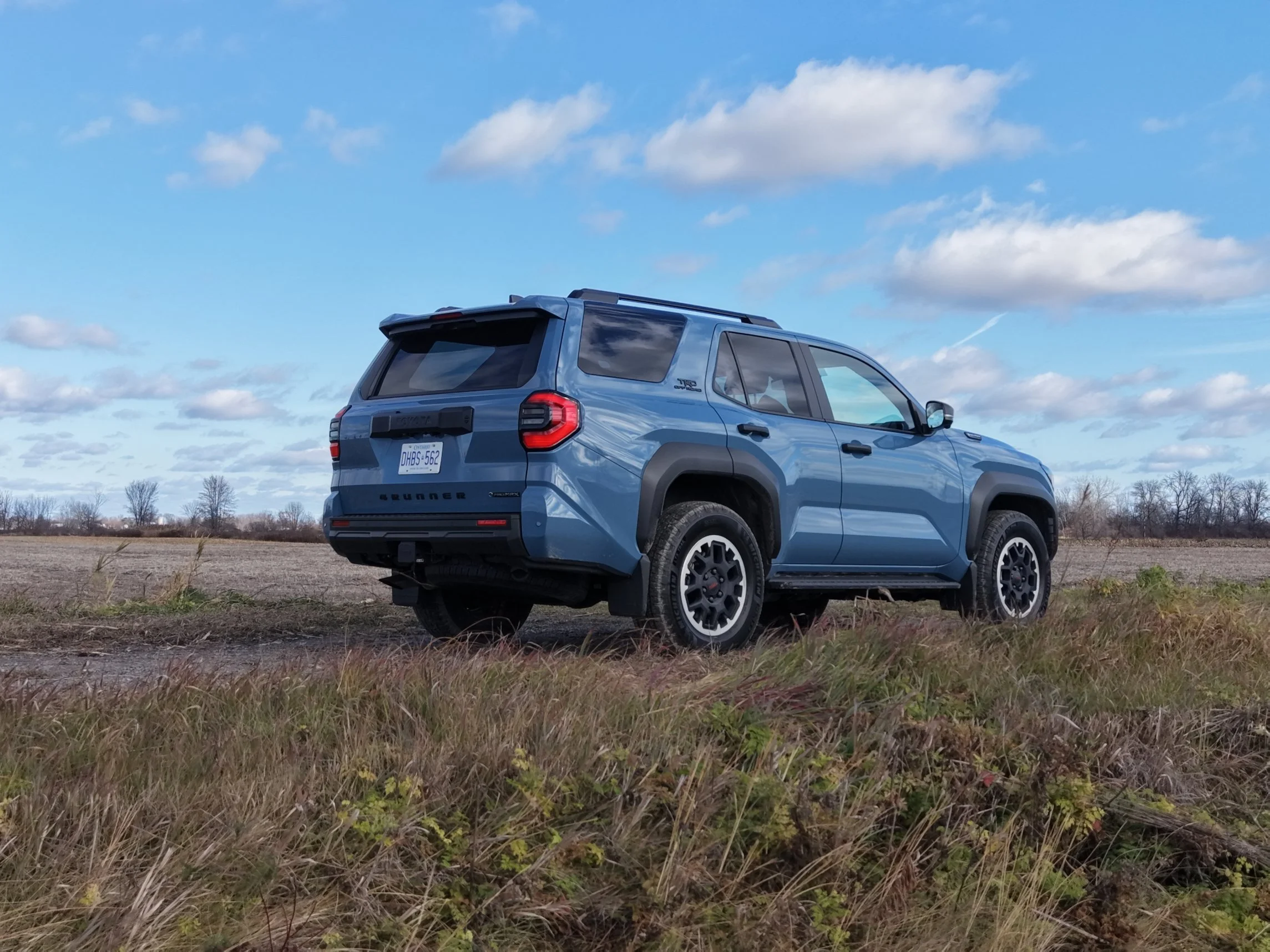
This is the sixth-generation 4Runner, built on the same body-on-frame platform as the Tacoma and the Land Cruiser. Mine for the week was the TRD Off Road — in Canada, the hybrid version is sold as the TRD Off Road Premium — in Heritage Blue, at $71,286 as tested. Full honesty: the one I always dreamt about was the TRD Pro, and the Pro sits above this one for about $10,000 more. We'll get to whether that money buys you anything real. And the colour: Heritage Blue knocks the look out of the park. It's my favourite.
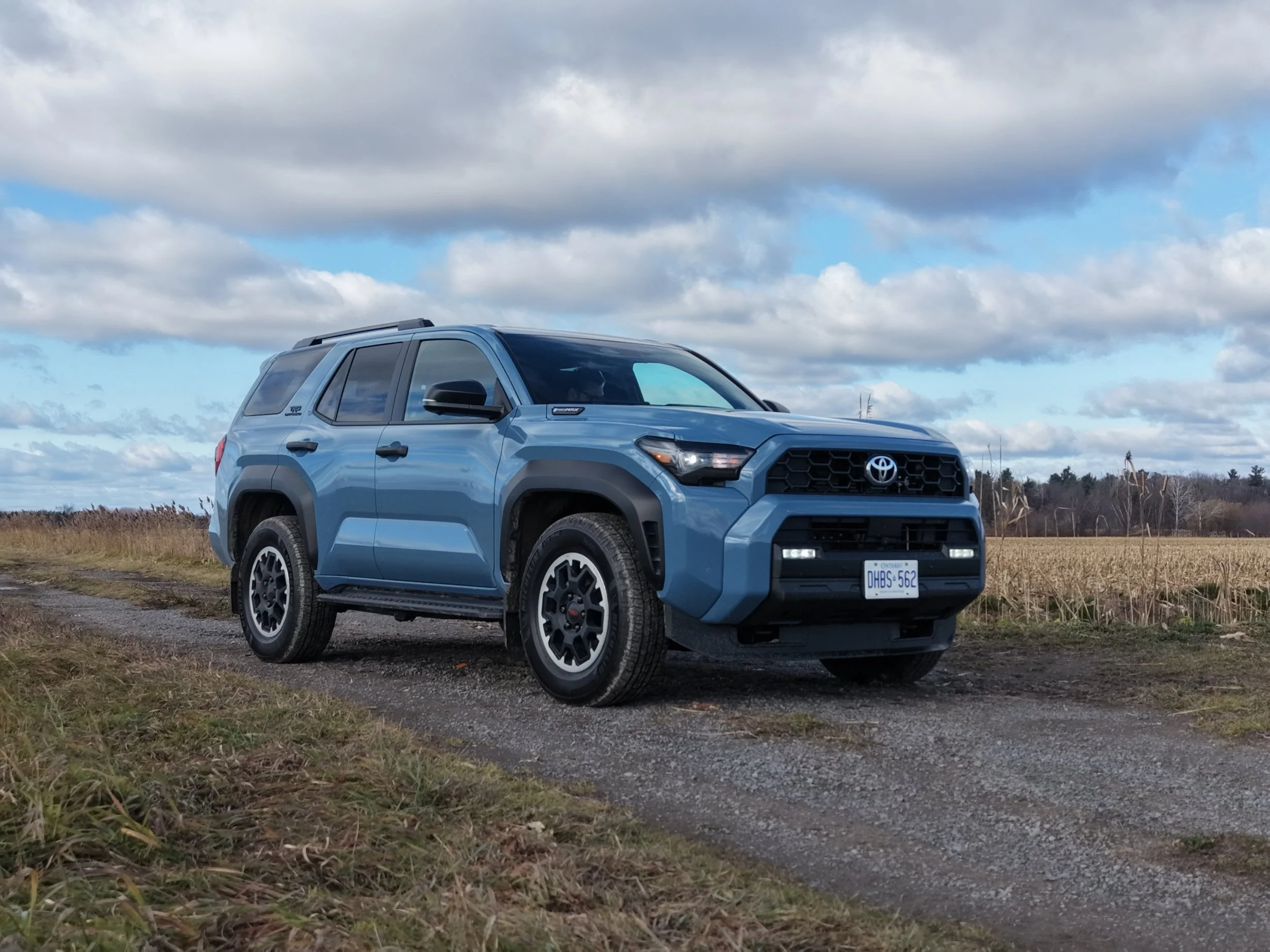
SPECS
Powertrain: 2.4L turbocharged four-cylinder hybrid (i-FORCE MAX)
Horsepower: 326 hp
Torque: 465 lb-ft
Transmission: 8-speed automatic
Drivetrain: part-time four-wheel drive with low range
Fuel economy (rated): 9.9 L/100 km combined (23.8 mpg)
Fuel economy (my week): 11.4 L/100 km (20.6 mpg)
Range per tank: roughly 630 km (392 miles)
Rear-seat legroom: 34.8 in
Cargo: 42.6 cu ft seats up, 82.6 cu ft seats down
Towing: 5,800 lb
Ground clearance: 9.1 in
Length: 194.9 in — about 5 in longer than a four-door Bronco, about 1.5 in shorter than a Land Cruiser
Width: 77.9 in — Land Cruiser width
Price as tested: $71,286
TRD Pro starting price: $81,588
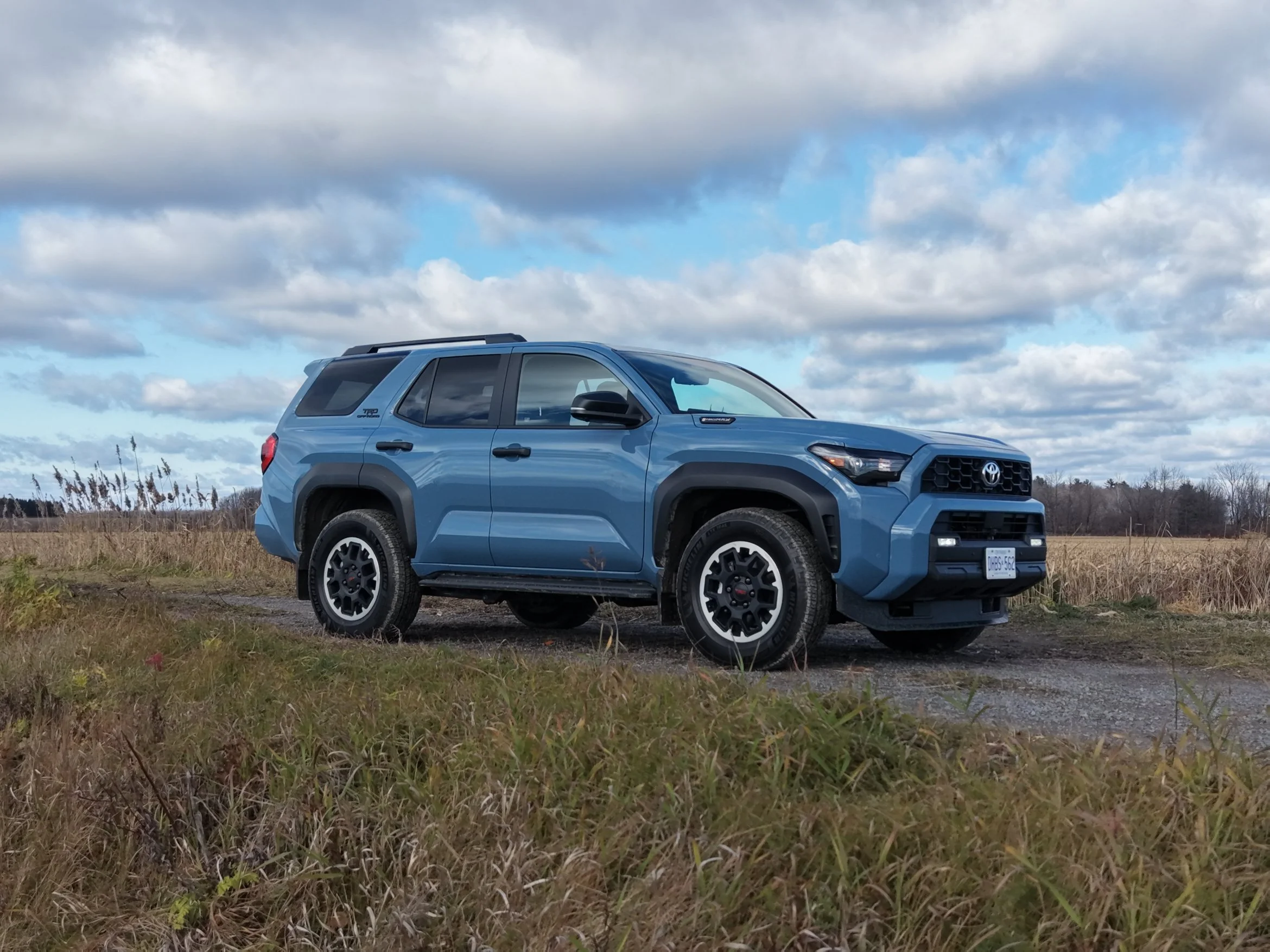
The Hybrid Is Here for Torque, Not Gas Money
Against the Bronco's 2.7L V6, the 4Runner hybrid makes 4 hp less but 50 lb-ft more torque. Against the Wrangler's 3.6L V6 — 285 hp, 260 lb-ft — it's up 41 hp and 205 lb-ft. And against the old 4Runner V6 this replaces — 270 hp, 278 lb-ft — the hybrid makes 56 hp and 187 lb-ft more. From the driver's seat, the throttle response is great, with no lag: the hybrid fills in the bottom end instantly. This hybrid isn't here for fuel savings. It's here for torque, and for this trim, the power feels right.
On fuel, the hybrid is the sipper of this group — for whatever that's worth in a group like this. The Bronco's 2.7L V6 rates 13.3 L/100 km combined (17.7 mpg), the Wrangler's 3.6L V6 rates 11.9 L/100 km (19.8 mpg), and the old 4Runner V6 rated 13.8 L/100 km (17.1 mpg). My measured 11.4 L/100 km (20.6 mpg) is the number from before my sand-hill runs — a few climbs in four-high pushed it up after that, which tells you more about the hill than the truck. Either way, you don't buy one of these for great fuel economy. The hybrid's about torque, not fuel savings.
The Hardware, and One Honest Note About the Chin
Because this is the Off Road, the kit list matters: an electronic locking rear differential, Bilstein shocks, Multi-Terrain Select, Crawl Control, skid plates, and 33-inch all-terrain tires.
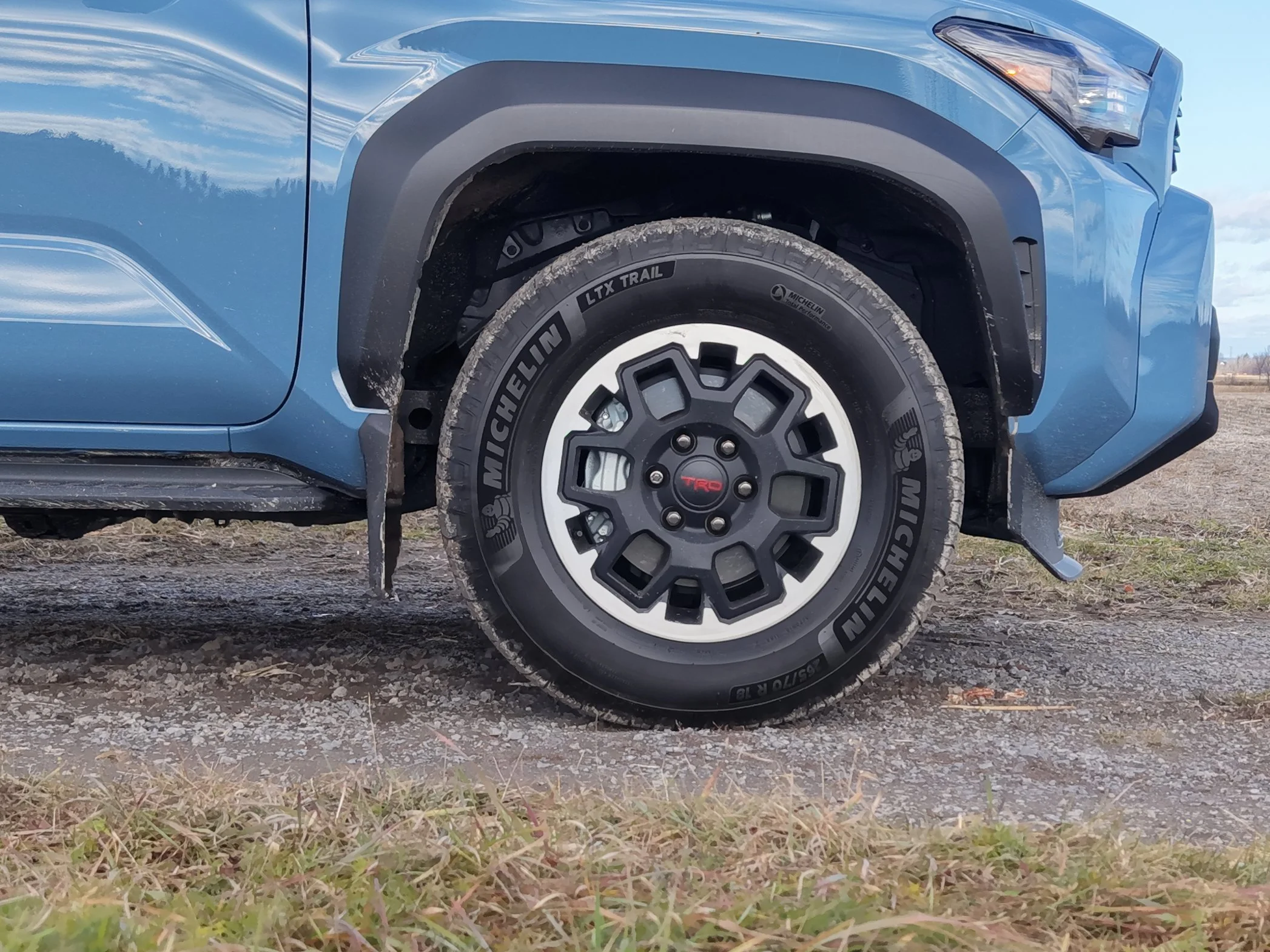
One honest note on clearance: the official ground clearance is 9.1 in, and that's real — but it's not measured at the front air dam. The dam is the low point at the nose, roughly 8.5 in by my measurement, and it's why the approach angle reads 19 degrees. The TRD Pro skips the dam entirely and reads about 33 degrees.
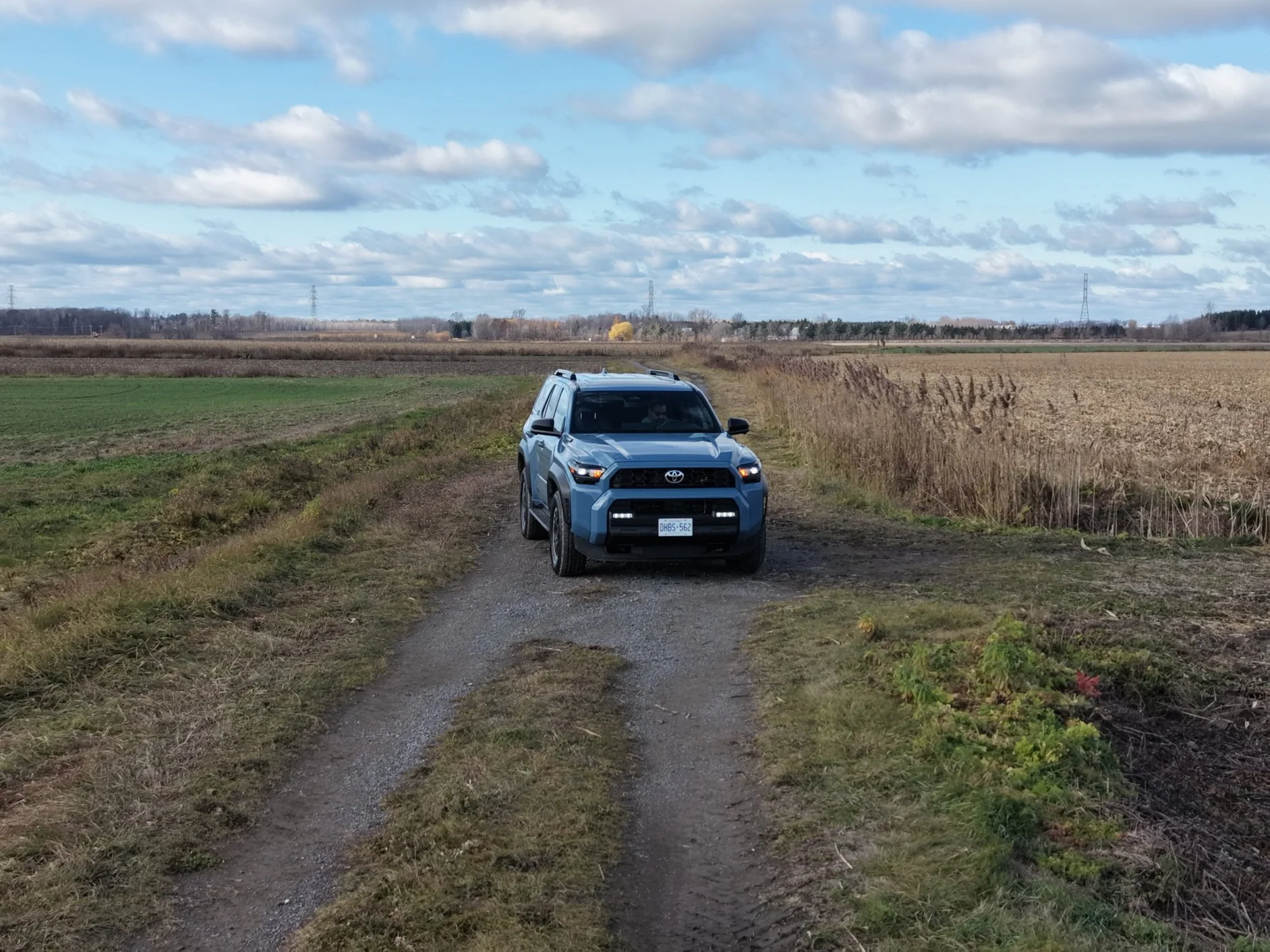
The dam comes off easily — nine 10-mm bolts and two plastic clips, a few minutes on the ground, no lift — and owners pull it at the trailhead. What does removing it cost? Toyota rates the Pro, with no dam, at exactly the same combined fuel economy as this one. Real-world testing on the Tacoma, which uses the same setup, put the cost at about 0.7 mpg — on this SUV's numbers, roughly 10.2 L/100 km (23.1 mpg) with the dam off instead of 9.9 L/100 km (23.8 mpg) with it on. That's the whole prize. Weigh it against a 19-degree approach angle and a plastic chin waiting to meet a rock, and you tell me if it's worth it. Personally, I'd leave it off. On a press vehicle I can't remove it — and it limited how much off-roading I could do.
What I could do was the sand hill. Four-high, Sport mode, and up it went — including stopping in the middle of the hill and starting again from a dead stop. The traction control and the 4Runner's capability are definitely not in question here. They're renowned, and the 2026 model year doesn't change that.
On the Road: The Smoothest of the Three Icons
Comfort first: very comfortable. You sit high, with a commanding view, like a truck should give you. The suspension is the standout — the right amount of stiffness while still absorbing. City potholes and country roads get the same treatment: big imperfections just get soaked up. It's clearly tuned for off-road, and yet the ride on pavement is very good.
Against the other two icons, let's not be shy: this is the smoother driver of the three — and the best daily driver of the three. Definitely smoother than the Wrangler, smoother than the Bronco, and much quieter than both. On the road, there's no competition. It also feels the most spacious from the driver's seat — for a wider person like me, that matters every single drive. One thing to know: this is part-time four-wheel drive, so on dry pavement you run it in two-wheel drive, like trucks used to be.
And one signature touch the other two can't do: the rear window goes down, all the way, at the touch of a button. Open the sunroof, drop that window, and the wind flows right through the cabin — just as good as a convertible top, except you don't have to take anything apart.
Inside
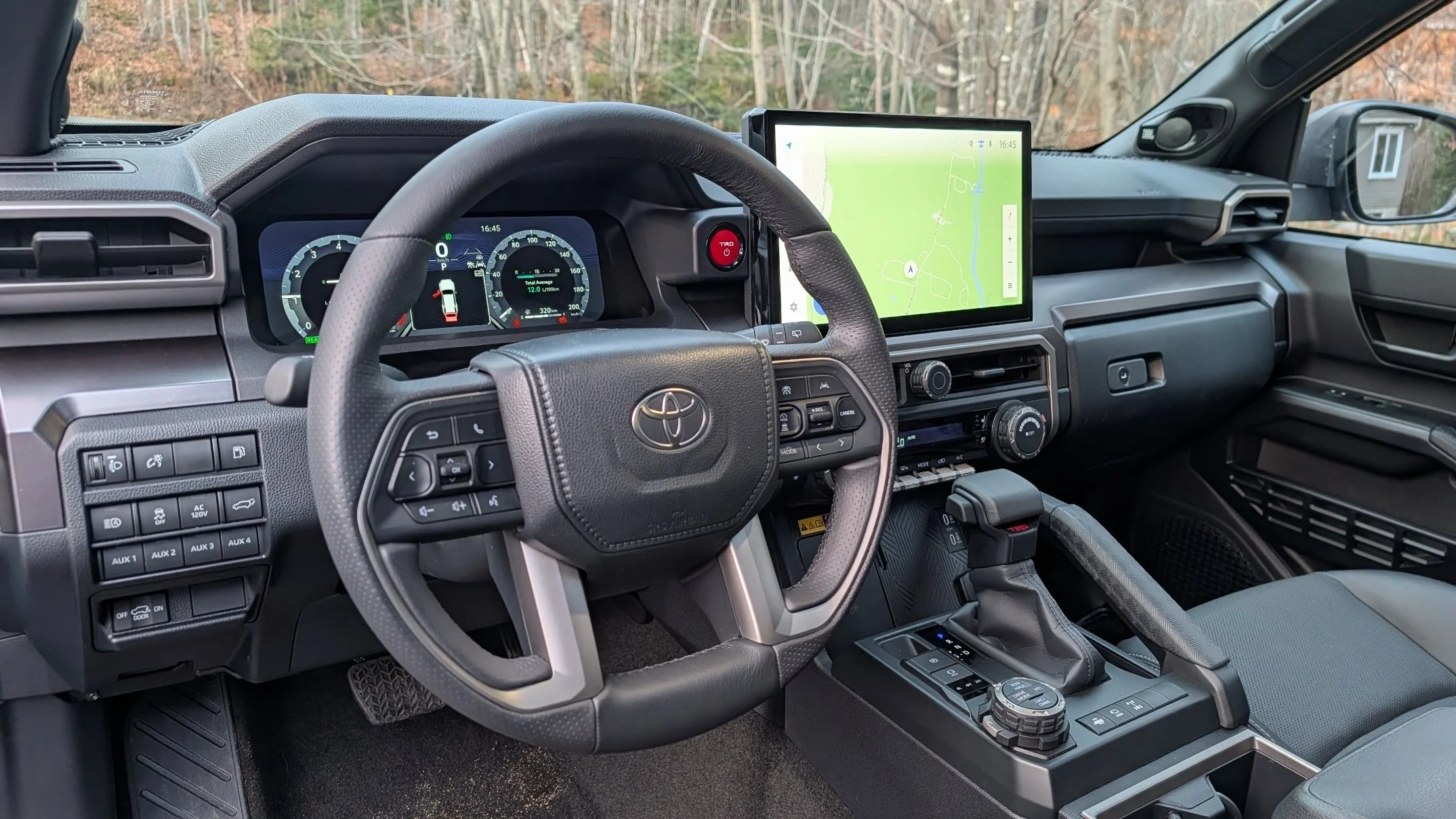
Toyota kept it real simple in here, and I mean that as the highest praise. There's an old rule we used to live by: KISS — keep it simple, stupid. That rule is in full effect in this cabin, and I'm a big fan of it.
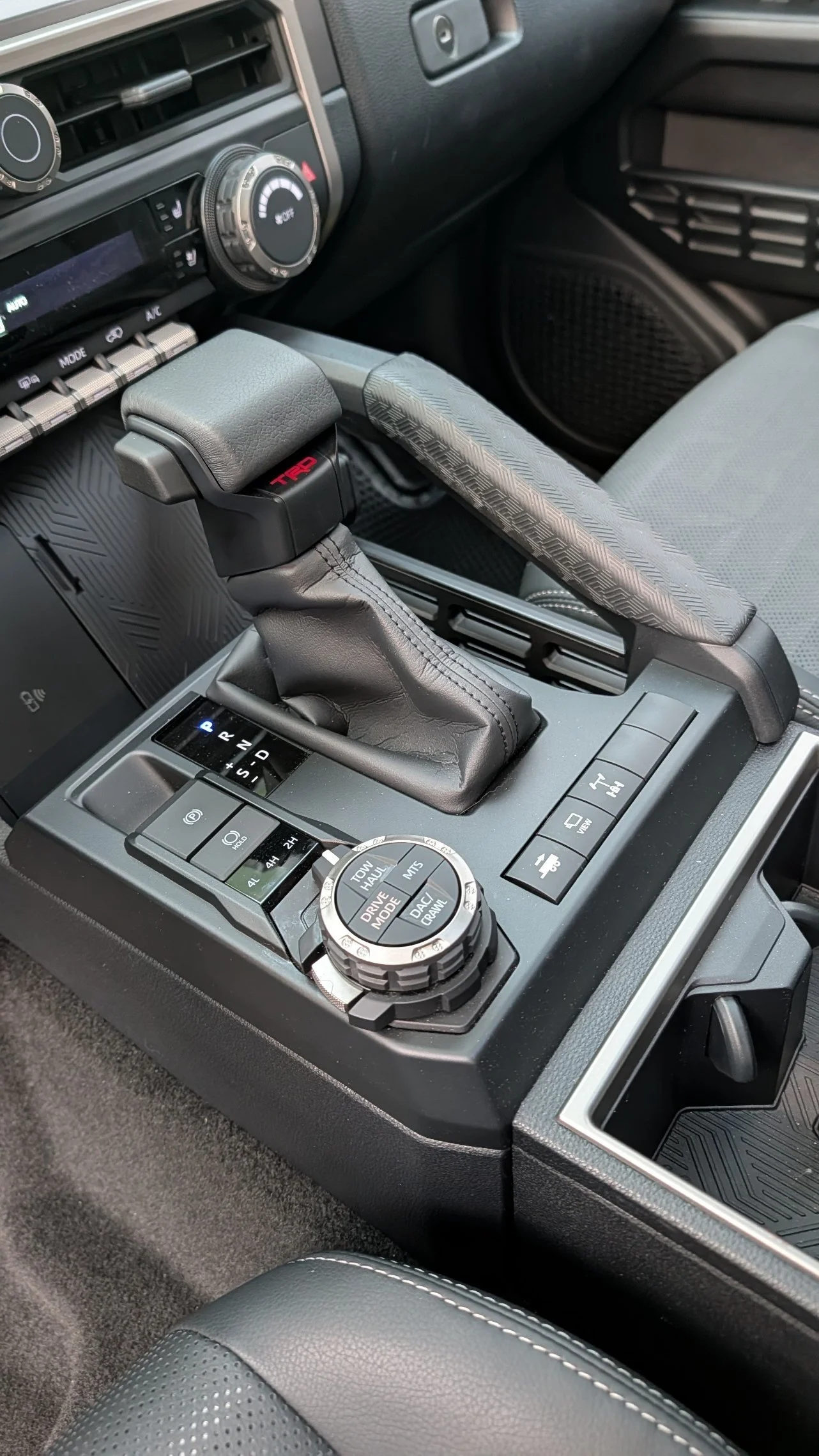
Yes, there's a nice big 14-inch display. But the HVAC gets real buttons and toggles, there's a proper shifter, and you can work all of it while wearing gloves — which matters, because we're almost in glove weather. The wireless charger sits in a smart spot, there are two USB-C ports, and the off-road controls are right where they belong by the shifter: drive modes, terrain modes, Crawl Control, four-high, four-low, and the electronic diff locker. The digital cluster doesn't look outdated, the upgraded JBL sound system is top-tier, and there's even a digital rearview mirror. The SofTex seats are wide enough to accommodate me — I'm 5 ft 9 and 260 lb, working on it, and width is usually the issue. It was in the Wrangler. It isn't here.
If I have to pick a con in the cabin — and I do — it's the infotainment itself. The system is just very bland. That's the one thing I'd change.
Back Seat and Cargo: Where the Hybrid Sends You the Bill
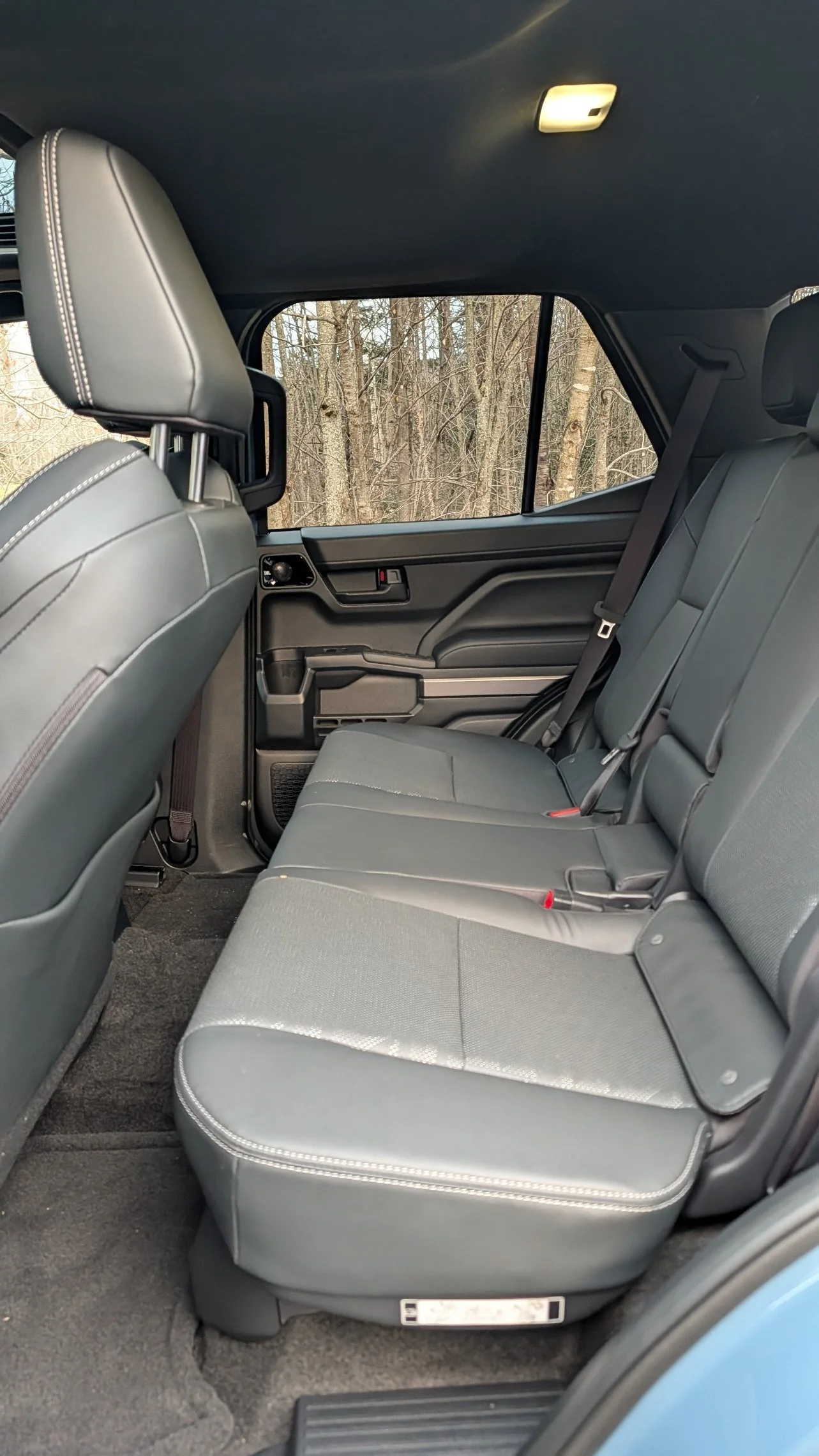
Second-row legroom is 34.8 in. Same metric, both sides: the four-door Bronco lists 36.3 in and the four-door Wrangler lists 38.3 in, so the 4Runner is the tightest of the three back here. In person it feels like a little more than the number — but headroom is the real squeeze: at 5 ft 9 I have about an inch and a half above my head sitting upright. The seats recline, though, and reclined there's plenty — if you're over 6 ft 2, plan on the recline. There's a big hump in the middle of the floor, and one detail my son absolutely loves: the big cup holders built into the rear doors.
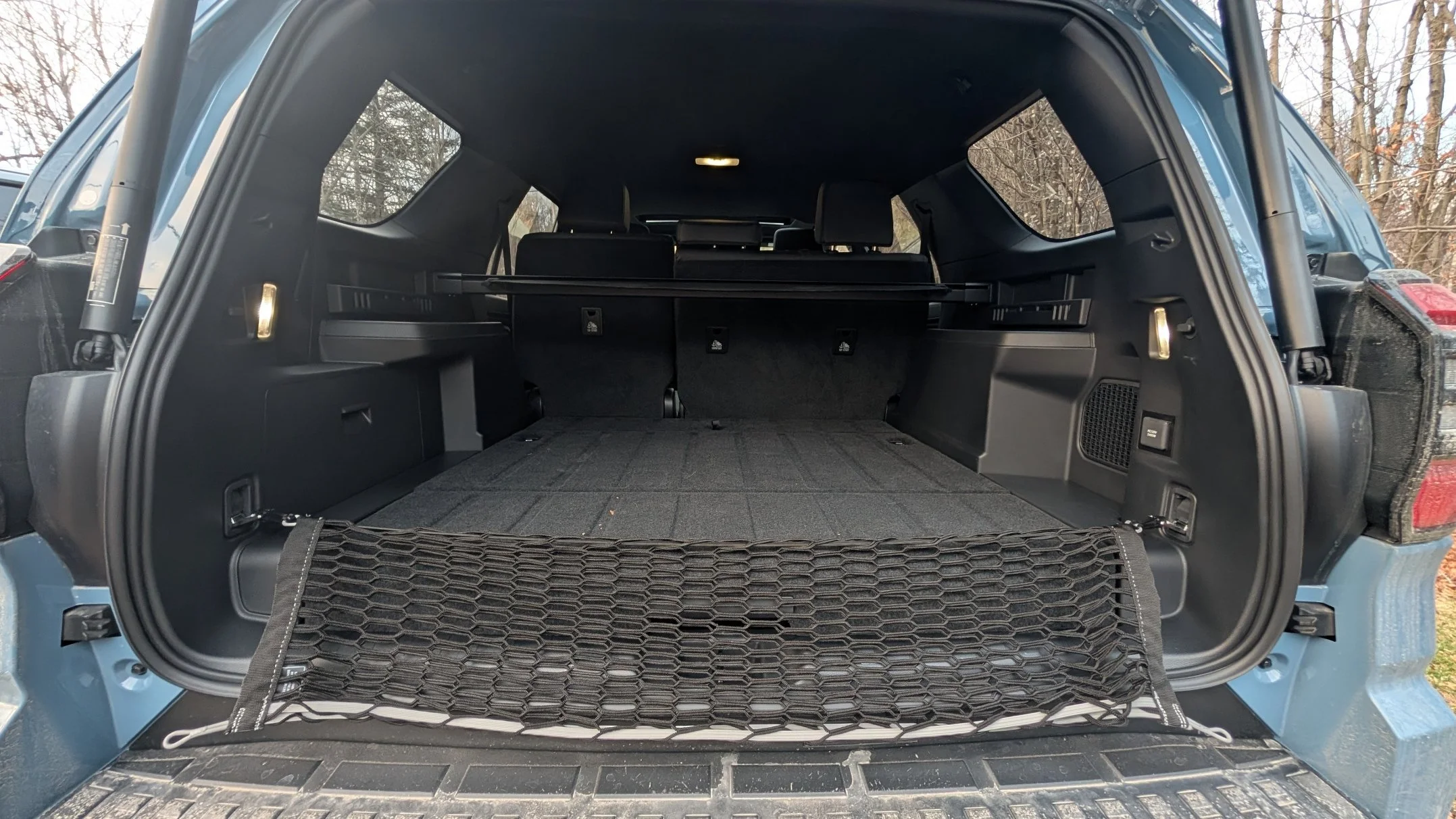
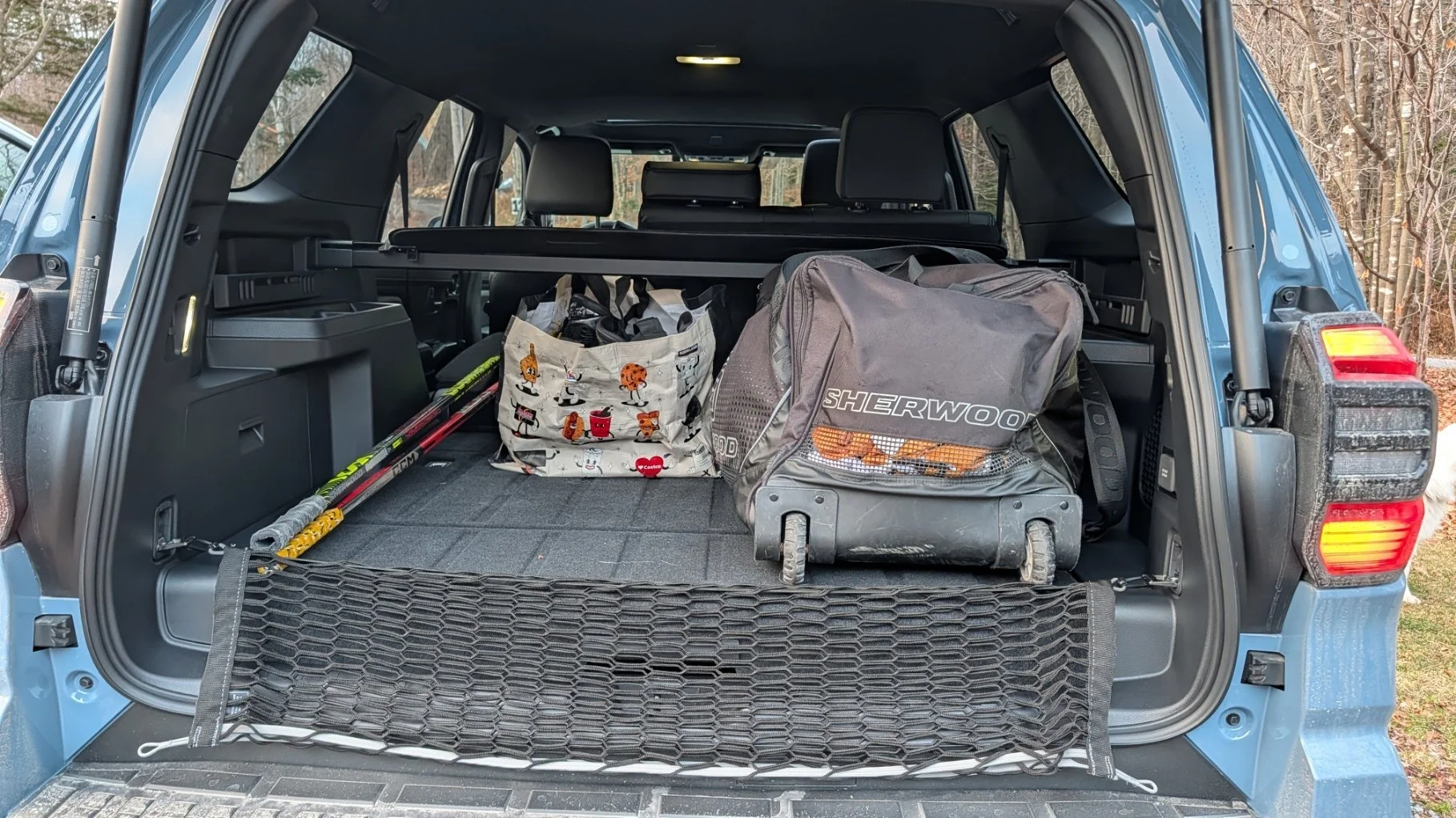
Cargo is where the hybrid sends you the bill: 42.6 cu ft behind the second row and 82.6 cu ft with the seats folded. The gas model gives you 48.4 cu ft seats up and 90.2 cu ft seats down, because the battery raises the floor — so the hybrid costs you 5.8 cu ft seats up and 7.6 cu ft seats down. But does it really cost you? Rarely do we stack cargo right up to the roof — what we use is floor space, and the floor space here is just as usable. It's just a little higher. The hybrid also gives up the gas model's optional third row, which I couldn't care less about — and you get a power tailgate, lock and unlock buttons right at the back, a cargo net I genuinely love, and the hybrid's 2,400-watt outlet: real power for a compressor or tools at a trailhead.
Towing
The hybrid tows 5,800 lb — up from the old truck's 5,000 lb, and ahead of the four-door Bronco's 4,500 lb and the Wrangler's 5,000 lb. If you tow more than that, you're in pickup territory anyway.
The Pro Question
This one: $71,286 as tested. The TRD Pro starts at $81,588. And full honesty again: the Pro is the one I dreamt about, so this is the part that pulls at my heart strings. What does the extra $10,000 actually buy? (Toyota hasn't put me in a Pro yet — possibly because they saw me jump the Wrangler. For the record: I promise I won't jump it.) An extra inch of ground clearance (10.1 in against 9.1 in) and a 33-degree approach angle against 19, because there's no air dam. Fox QS3 internal-bypass shocks, manually adjustable, with rear reservoirs. More aggressive tires — same 33-inch size, but Toyo Open Country A/T IIIs on wider wheels. A heavy-duty aluminum skid plate. The sway-bar disconnect. The light bar in the heritage grille. And the bragging rights.
What it does not buy you: more power, more towing, or more room. Same 326 hp, same 465 lb-ft, same 5,800 lb tow rating, same cabin. The 326 hp feels right in the Off Road at this price. But if I were paying TRD Pro money, I'd expect more power than this — and the Pro gives you the exact same engine. At Pro money, same power is a harder sell.
The Outsider’s Take
Is it still a real 4Runner? Yes. The torque is real, the ride is right, and it still feels like the icon — the reality lives up to the poster. It's the one vehicle for trails, winter, and family duty, and for anyone who's always wanted one, the hybrid doesn't ruin the thing you wanted. It improves most of it. Air dam be damned.
The honest cons are the ones I flagged along the way: the tightest back seat of the three icons, the hybrid's cargo tax, and a fuel-economy gain that's real but small. None of them changed my mind. If your family fits the back seat, this is the 4Runner to buy — and I'd take it over the Pro and keep the $10,000.
Two wishes for Toyota, while I'm at it. Give the back seat an extra 3 or 4 in of legroom and a flat floor when the seats fold — most owners would appreciate both. And if the Pro is going to wear the badge and the price, it deserves a next level of powertrain — a supercharger, a twin-turbo V6, something — plus beefier 35-inch tires. The 326 hp is plenty in this Off Road. The Pro should be more.
