

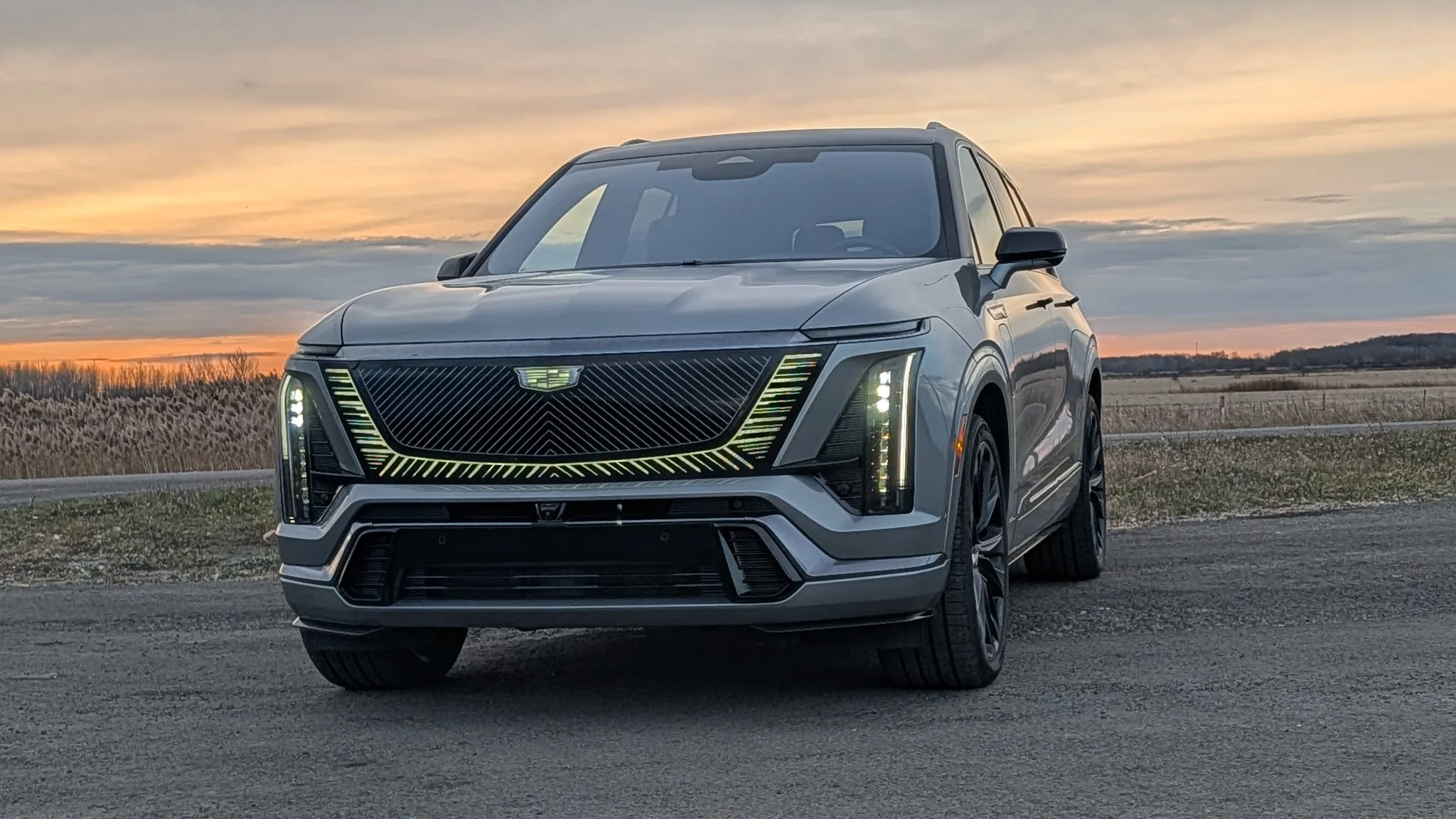
This is a $123,000 Cadillac, and it's not even an Escalade. It's a Vistiq. Some people call it the baby Escalade, and I don't agree with that at all. I've reviewed the Escalade IQ, and before this one I reviewed the Vistiq Sport, the less expensive version. After a week in this Platinum, I'll go further than "baby Escalade": I think the Vistiq is Cadillac's sweet spot in their entire electric lineup. Let me show you why.
SPECS
Vehicle: 2026 Cadillac Vistiq Platinum (as tested)
Price: Platinum from $117,499 CAD; as tested $123,033 CAD (the Vistiq lineup starts around $93,000 with the Sport)
Powertrain: dual-motor all-wheel drive, 615 hp, 650 lb-ft of torque
Battery: 102 kWh, 400-volt architecture
Range: 483 km (300 miles) rated; 408 km (254 miles) in my real-world highway test
Charging: DC fast charging up to 190 kW; AC up to 19.2 kW
0–100 km/h: about 3.7 seconds to 60 mph with Velocity Max engaged
Towing: 5,000 lb
Cargo: 15 cu ft behind the third row
Seating: three rows, 6 or 7 seats depending on configuration
Easier to Live With Than the Escalade IQ
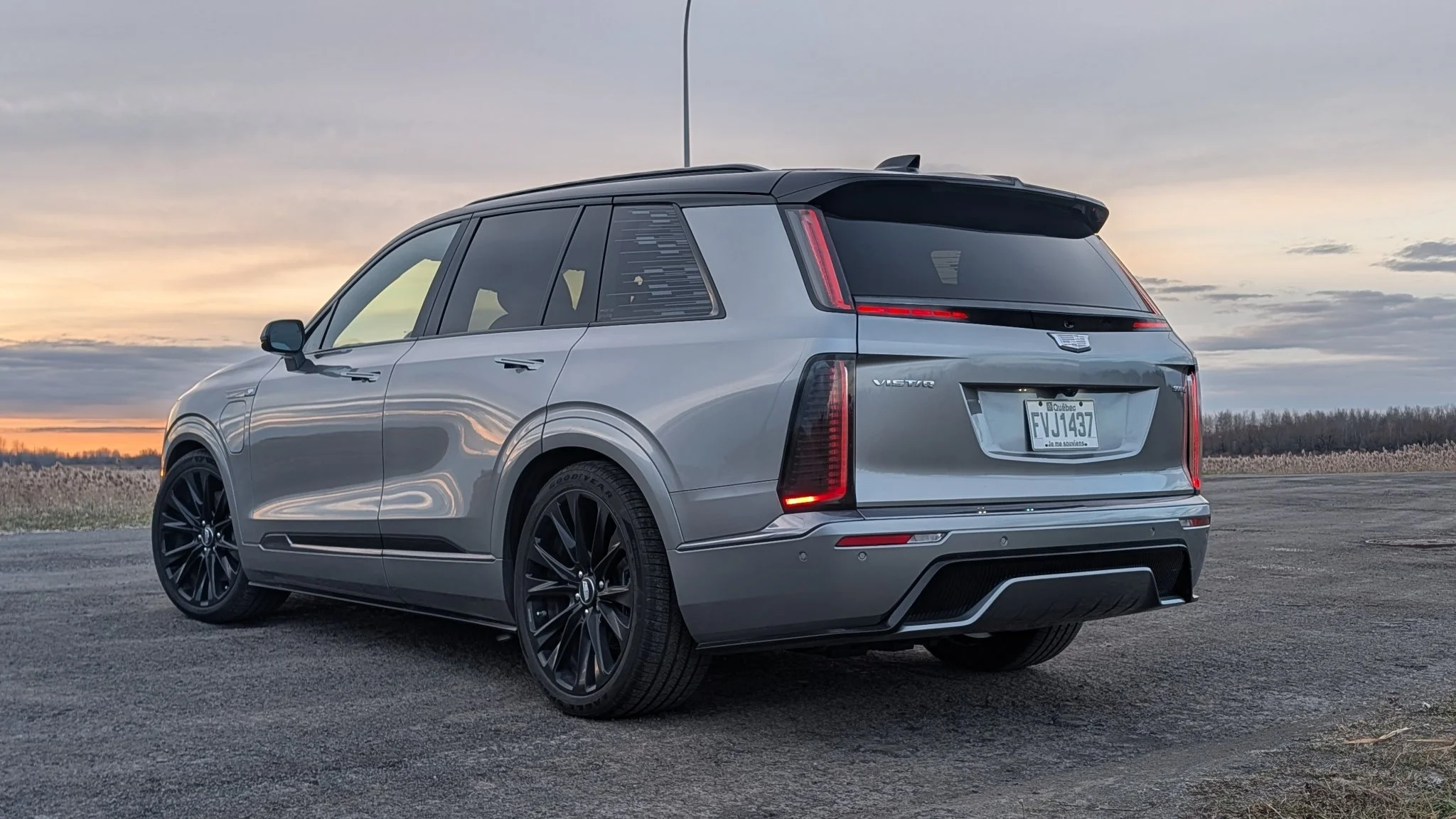
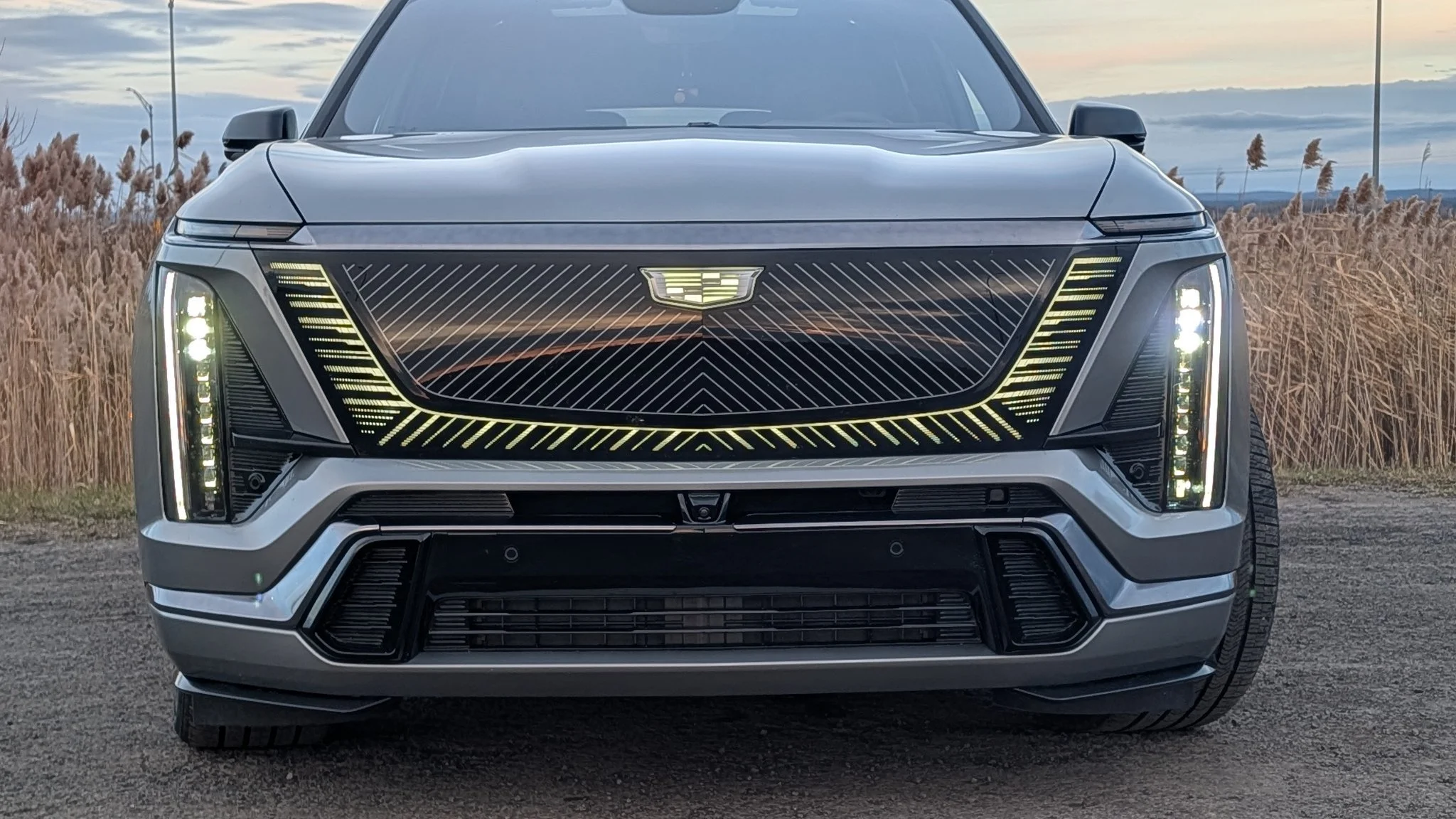
Right away, driving the Vistiq, it's clear it is nowhere near as cumbersome as the Escalade IQ. It sits lower to the ground, it's more maneuverable, and it's just plain easy to drive. Part of that is size: the Vistiq has the Cadillac face, same family, same attitude, the lighting signatures across the front and the back, and it looks expensive because it is. But it's 18.7 inches shorter than the Escalade IQ. That's the whole game here. It's big enough to be a proper three-row SUV, but not so big that it won't fit in your parking spot.
This Platinum comes with air suspension, and on the rough Quebec mountain roads around my place, that comes in handy. Is it a must? No. I drove the Sport trim without the air suspension on these same roads and had no issues. The ride was not rough by any means. Same story with the rear steering. It does help when you're turning around in a parking lot, and let's face it, that's where you'll use it most. But the Vistiq is already a lot shorter than the Escalade IQ, and I had no issues parking the Sport in underground parking. The rear steering makes it a little easier. It's a nice-to-have, not a must.
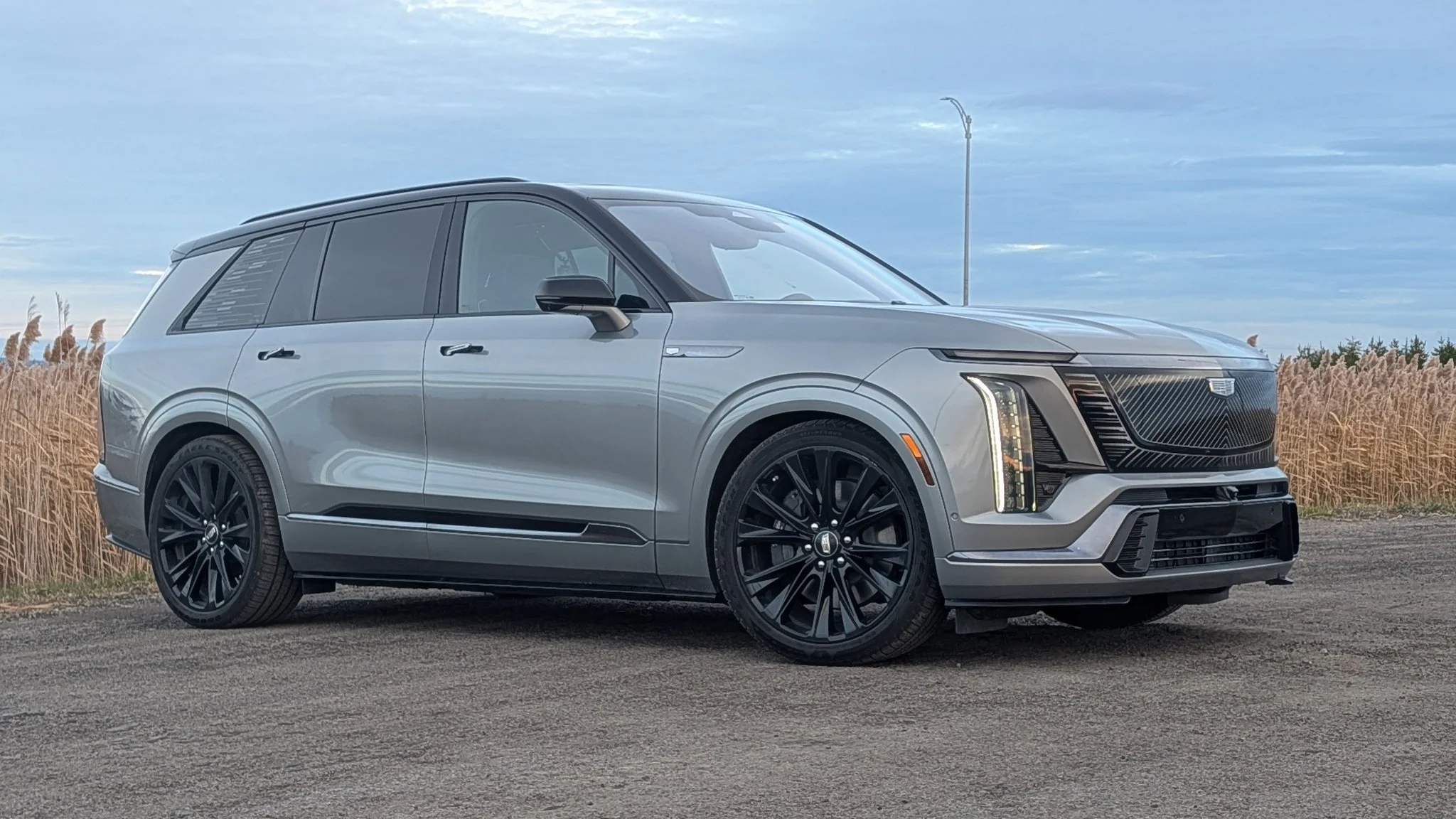
On the power front, 615 horsepower and 650 lb-ft of torque is definitely more than enough. There's a V button on the steering wheel that engages the Velocity Max mode, and whether I'm in Touring or Sport, this thing goes. A three-row SUV has no business moving at this rate of speed, but you have it at your disposal.
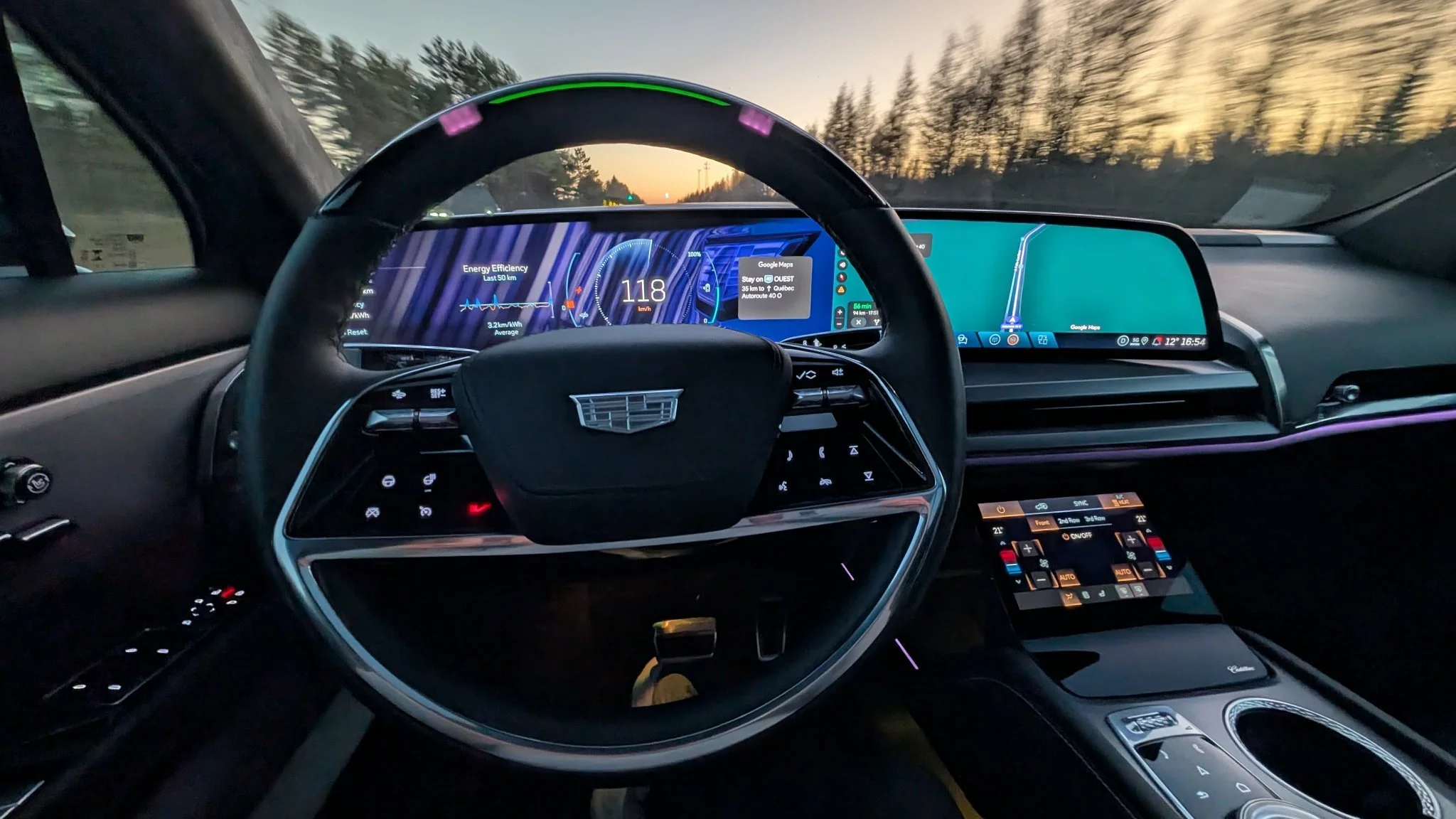
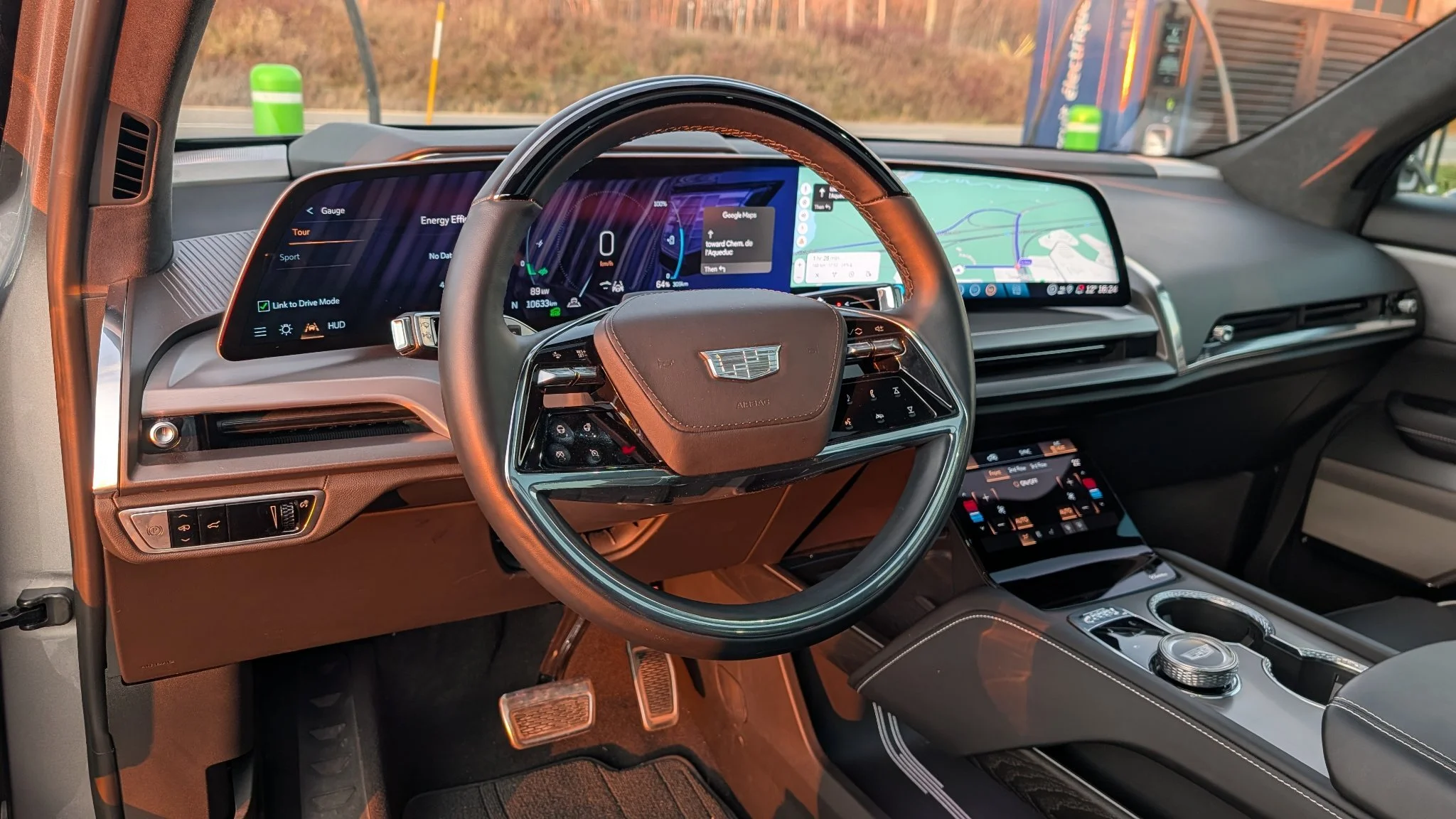
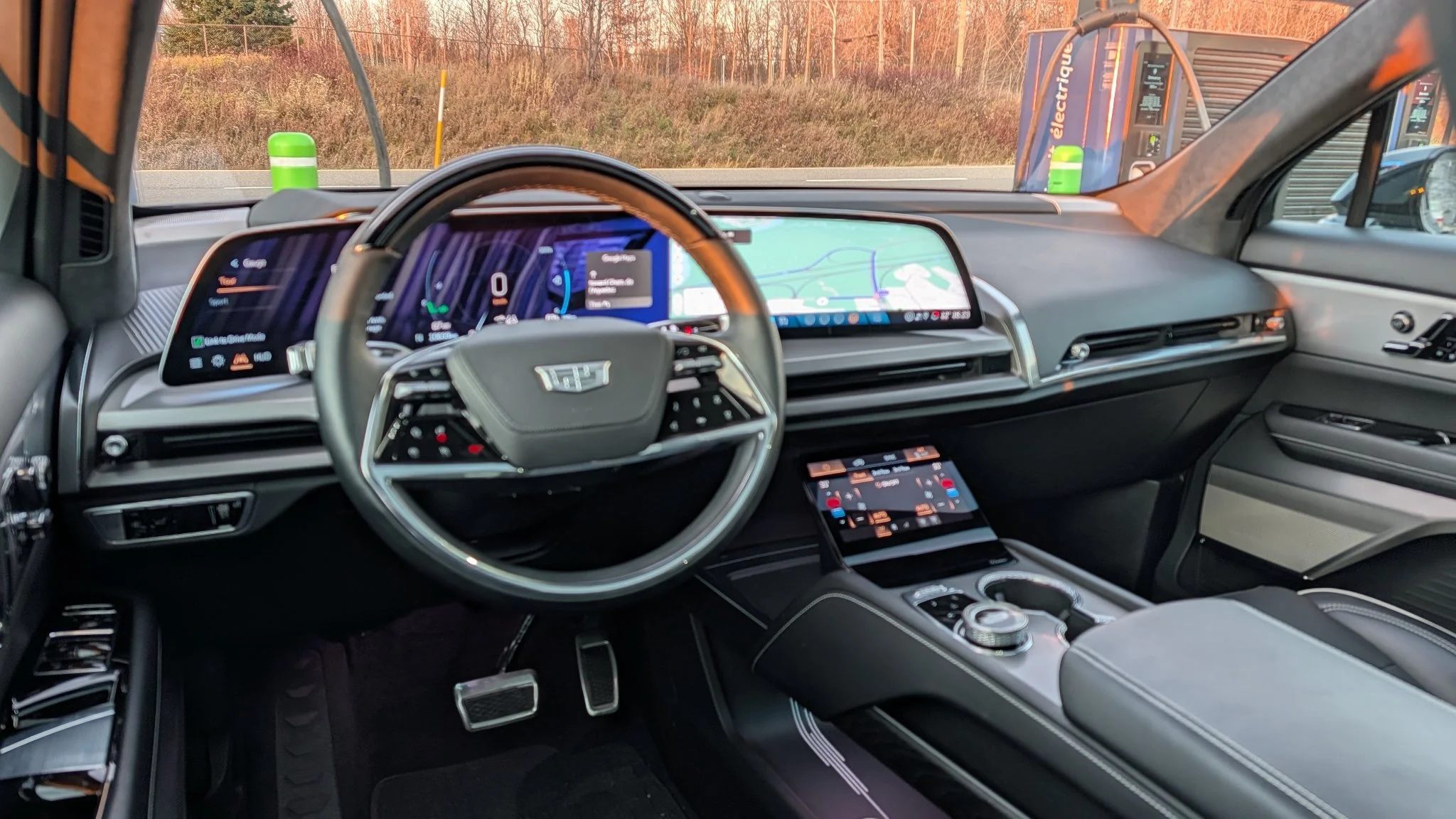
Two smaller notes from the driver's seat. I'm not a big fan of the button situation on the steering wheel; I prefer traditional buttons, although they all work just fine. And here's one only Canadians will catch: the steering wheel is heated, but the nice metallic ring around it does not warm up. On a minus 5 morning, that ring stays cold, and when your hands roll onto it in a curve, it gives you a little wake-up call.
Range: What I Actually Got
I ran a bit of a range test bringing this vehicle home, about 90 percent highway over more than 300 km. My efficiency worked out to 4.0 km per kilowatt-hour, which means roughly 408 km (254 miles) on the 102 kWh battery. That's lower than the advertised 483 km (300 miles), but keep two things in mind: the advertised number is a combined rating, not strictly highway, and it was 6 to 8 degrees Celsius that day, so the cold was in full effect. Four hundred and eight kilometres at highway speed, in the cold, is actually very decent. Yes, the Escalade IQ has a much larger battery. But this is pretty darn good too.
On the Highway, It Shines
The highway is where the Vistiq shines. The built-in Google Maps plots your route and finds your chargers for you. The active noise cancellation works in all three rows, and the cabin is quiet and serene. And then there's Super Cruise. At the touch of a button you let go of the wheel and the car drives itself. It will do its own lane changes, but I prefer to keep that for myself: signal, and it changes lanes. The green light on top of the steering wheel makes it very obvious when the system is active, and it kept working just fine while I was wearing my sunglasses.
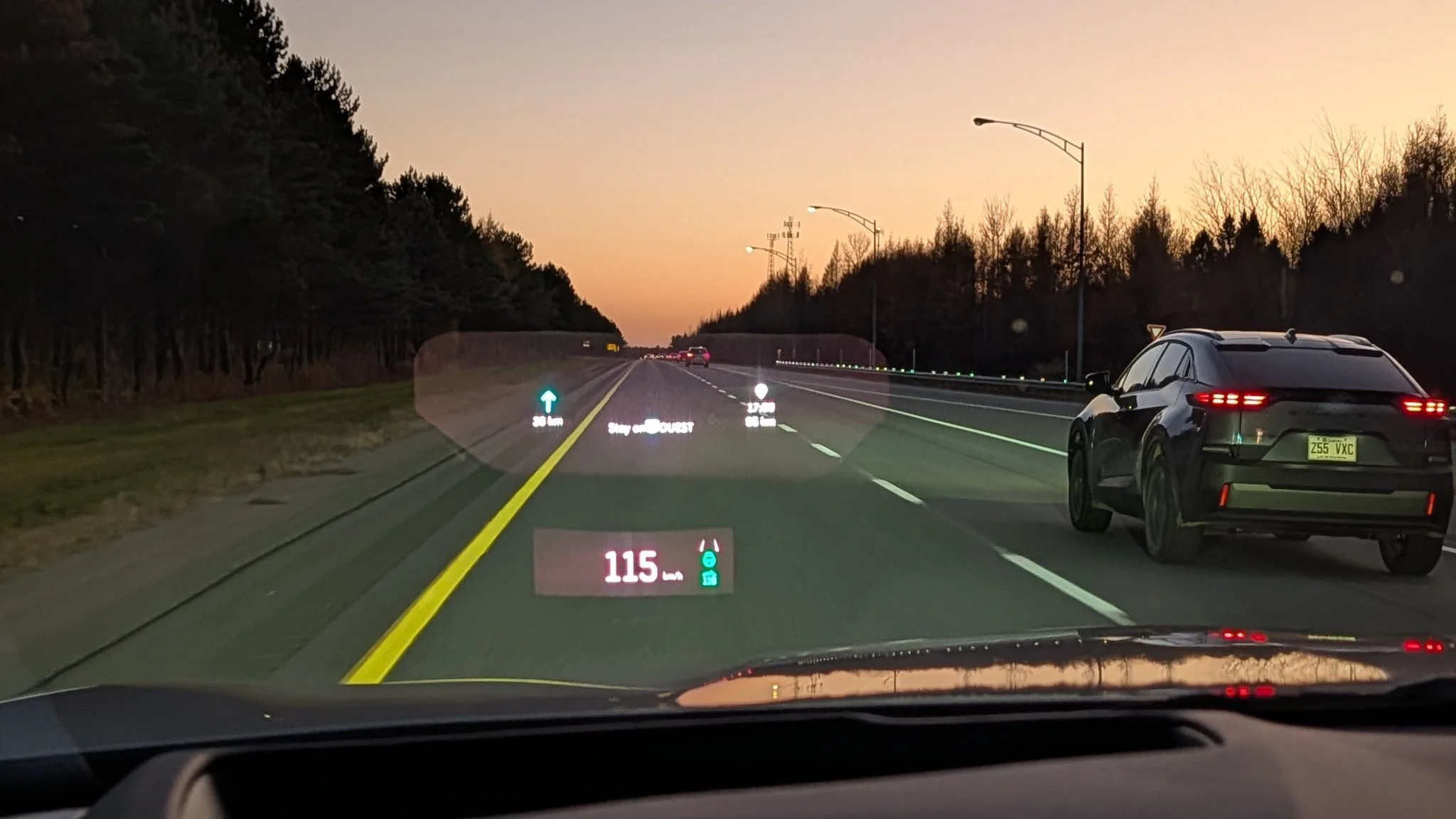
The head-up display is massive, in a good way. You get your speed and your Super Cruise status, and above that, your directions, your map, and the distance to your next turn, all easy to read without hiding your view of the road. All in, it's a serene, pleasant, stress-free drive.
One thing I wish it had: a blind spot camera that comes on with the turn signal. The competition offers it, this doesn't, and it would make an already stress-free drive even easier.
And a word on the so-called night vision. As a military veteran, I can tell you this is not night vision. Night vision amplifies light; this is thermal imaging, white-hot, where everything hot shows up white. I actually prefer it. On the windy mountain roads where I live, wildlife shows up clearly on it, and that makes it a genuinely useful tool.
Inside: Three Rows, Honest Space
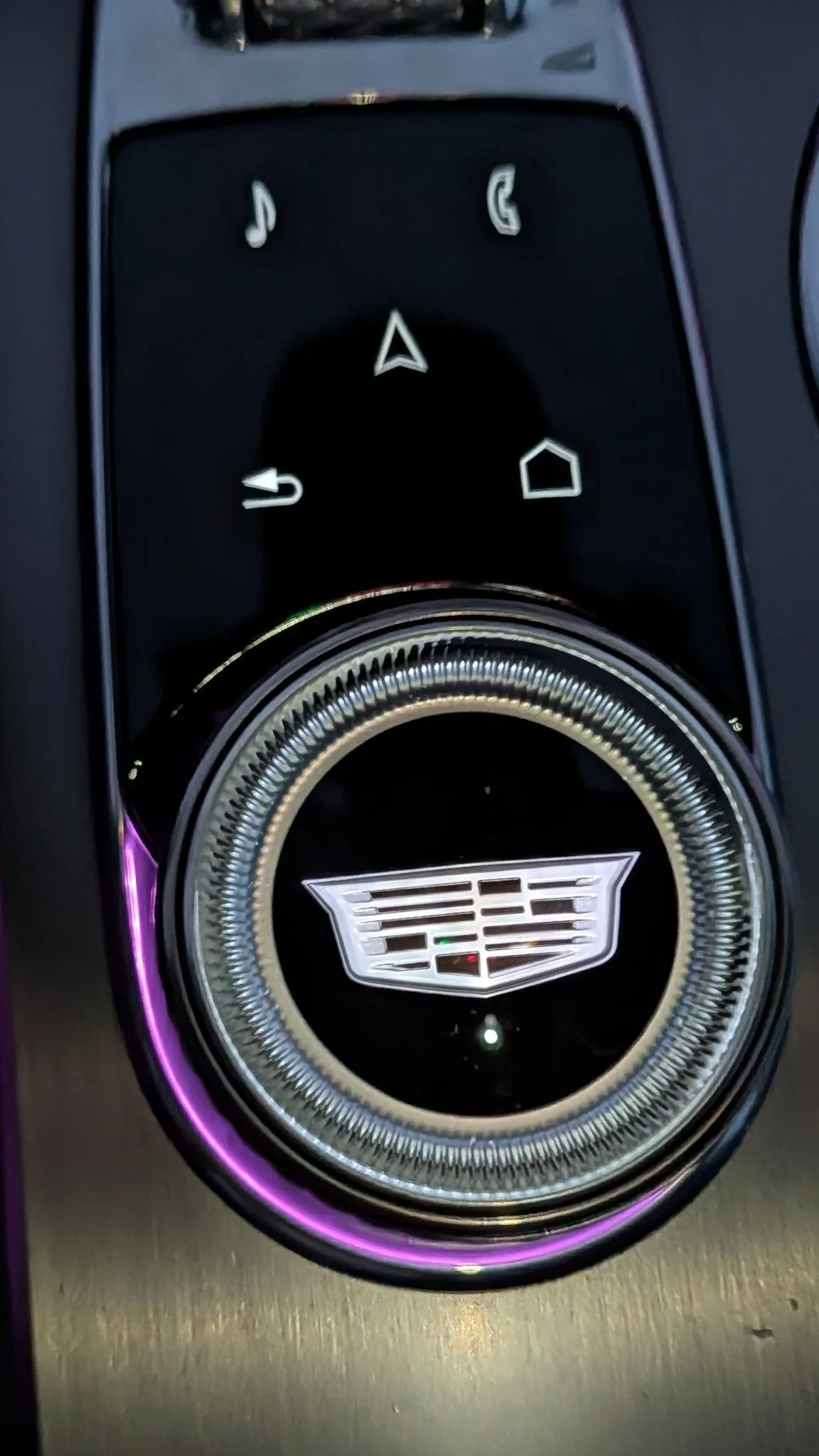
You're greeted by a 33-inch display. It's sharp, it's snappy, it works. The 23-speaker AKG sound system with Dolby sounds, I'll say it, better than the Escalade's, because this is a smaller cabin. The seats are heated, ventilated, and massaging, with all-digital controls.
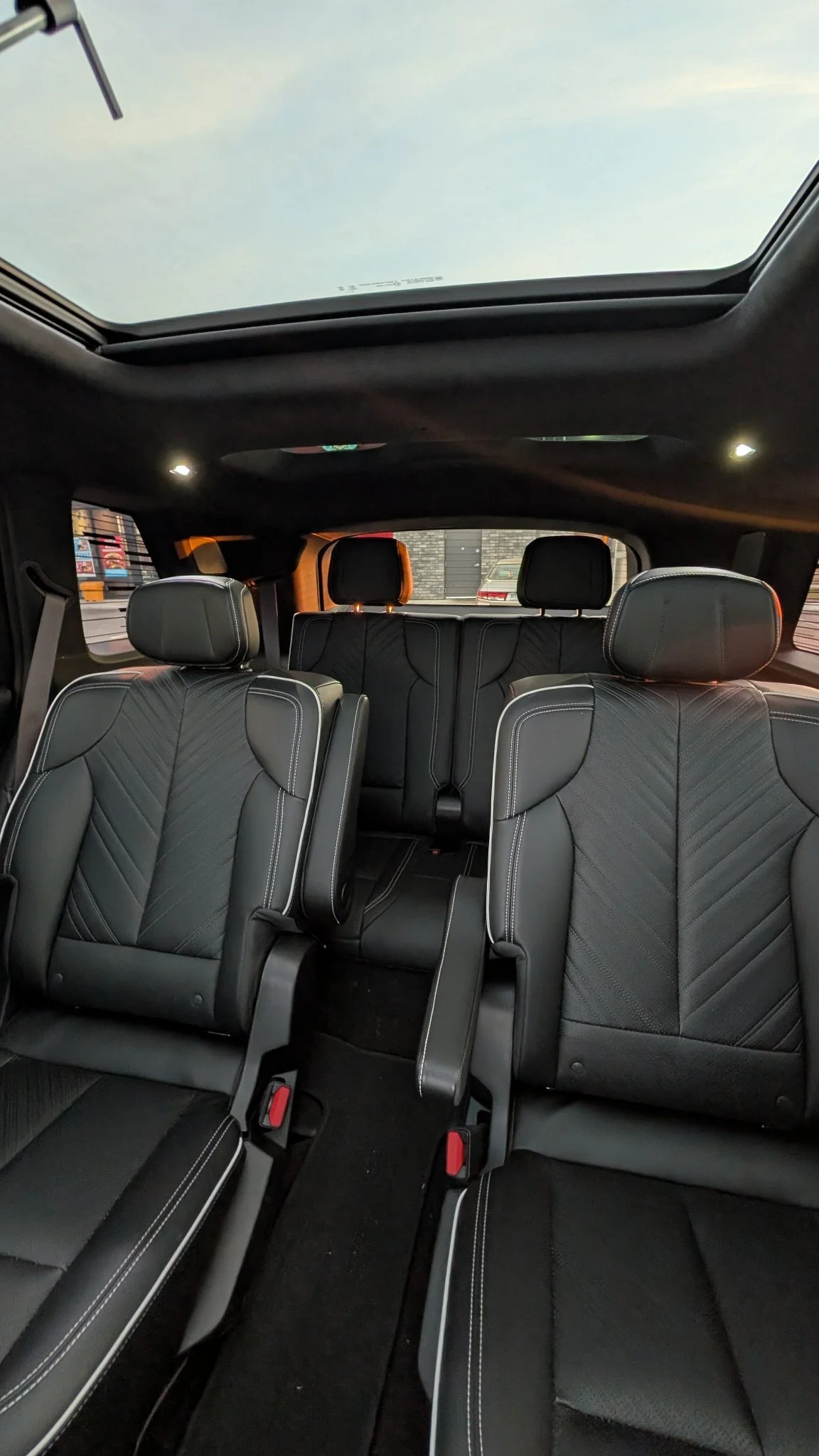
The second row is adult space: seats that recline, your own climate controls on the screen, armrests, maximum comfort. The third row is a different story. I'm 5 foot 9, I climbed back there, and it's tight. Call it a kids' zone, or a very-short-trip area. It is usable, and I do appreciate the extra sunroof back there.
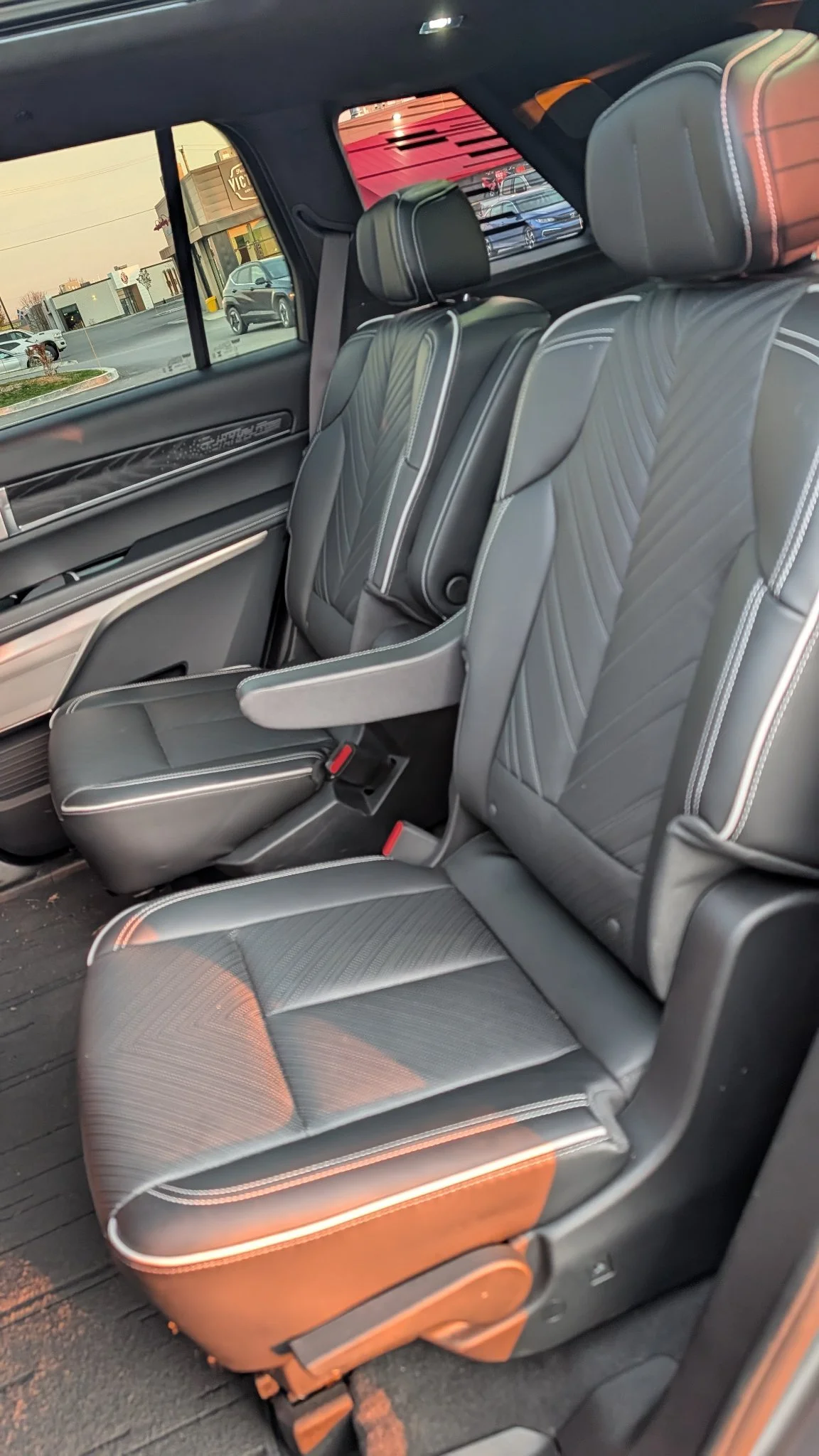
Then there's the real test my family cares about: the hockey bag test. Behind the third row, the Vistiq gives you 15 cubic feet of space; the Escalade IQ gives you 24. That's a real difference, and if the bag doesn't fit, the Escalade IQ is the better bet. In this case, it fit. On my loaner, one note: the third row's power fold was disabled under a recall, which GM confirmed to me during the loan. Worth knowing if you're shopping one of the early builds.
Charging: 400 Volts, But a Faster Rate
This is a 102 kWh battery on a 400-volt architecture, like the Optiq and the Lyriq. It is not an 800-volt setup like the Escalade IQ or the Silverado EV. But here's the part I appreciate: the Optiq and Lyriq are capped at 150 kW of DC fast charging, and this one goes to 190 kW. It doesn't have a humongous battery, but it charges at a faster rate.
I put that to work during my week. On a preconditioned battery at a Circuit Électrique station in Donnacona, it took 160 kW the moment I plugged in, held 139 kW at 36 percent, and was still pulling 80 kW past 50 percent. At Trois-Rivières, a 22-minute session delivered 40.5 kWh at an average of about 111 kW. Do the math on that average and a 10 to 80 percent charge lands around 39 minutes. For a three-row family SUV on a road trip, that's workable.
The Math Against the Escalade IQ
The Escalade IQ starts at $161,000. The Vistiq Sport I reviewed before this starts around $93,000. This Platinum is $123,000, which is steep, but look at what the Escalade's extra money actually costs you beyond the price: an extra 18 inches or so in length, and an extra 2,800 pounds in weight, for a total of about 9,100 pounds. What you get for that, and roughly $65,000 more, is more range, more cargo, a third row an adult can actually use, and more towing. That's a pretty good deal if you need those things. Most families don't.
And remember what this Platinum's premium buys: the air suspension and the four-wheel steering are extras. They're nice to have. Some people genuinely need them for mobility or accessibility reasons, and those are real things; if that's you, have at it. But if it isn't, you are not going to miss them if you don't buy them to start with. The Sport proved that to me on the same roads.
The Outsider's Take
The Vistiq is the sweet spot in Cadillac's whole electric lineup. It looks cool. It looks expensive, and it is. And it has all the attributes the Escalade has; the Escalade just has a little bit more of them. I'll go one step further: the Vistiq Sport, not this Platinum, is the one I would choose. When I reviewed it, I was perfectly happy with it, and after the same amount of time, a full week, in this Platinum, I'm not more impressed with this one than I was with the Sport. So the take is simple. Unless you absolutely need those extras, the sweet spot is the Vistiq, and more so the Vistiq Sport.
My name is Patrick, I'm the Outsider. My family films with me: Pana behind the camera, and my son helping out with production. Our motto is mission before self: honest reviews, no nonsense. I'll see you in the next one.
