

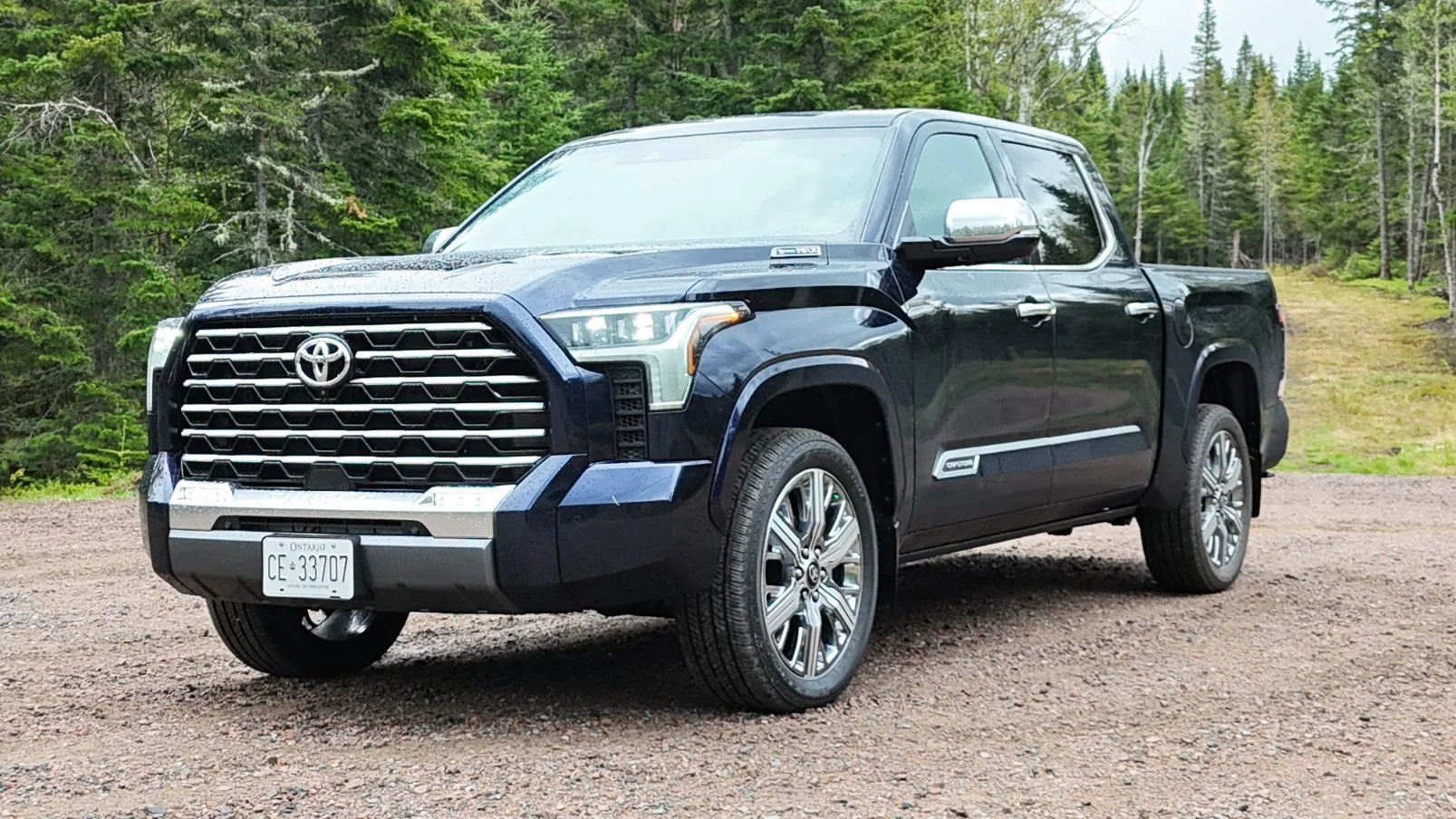
The Capstone is the Tundra's luxury trim, and it only comes one way: i-FORCE MAX hybrid, all the toys, close to $100,000 Canadian. That's a lot of money for a Toyota pickup. So the question I set out to answer over 900 km (559 miles) with this truck is a simple one: does it earn it? Mostly, yes — and where it falls short, Toyota charges you less for the privilege than anyone else does. Here's the whole picture.
A hybrid built for power, not for the pump
The i-FORCE MAX pairs a twin-turbo 3.4L V6 with an electric motor for 437 horsepower and 583 lb-ft of torque, through a 10-speed automatic. This hybrid system is geared for power, not fuel economy, and you feel that the second you put your foot down: there's no turbo lag, because the electric motor fills every gap while the turbos spool. It just goes, smoothly and quietly, more like an EV than a full-size truck.
It also corners like one. There's no body roll to speak of, and the weight feels low and planted. It's stable enough — and quiet enough — that you have to watch your speedometer. More than once I looked down and found myself well over the limit without the truck feeling like it was even trying.
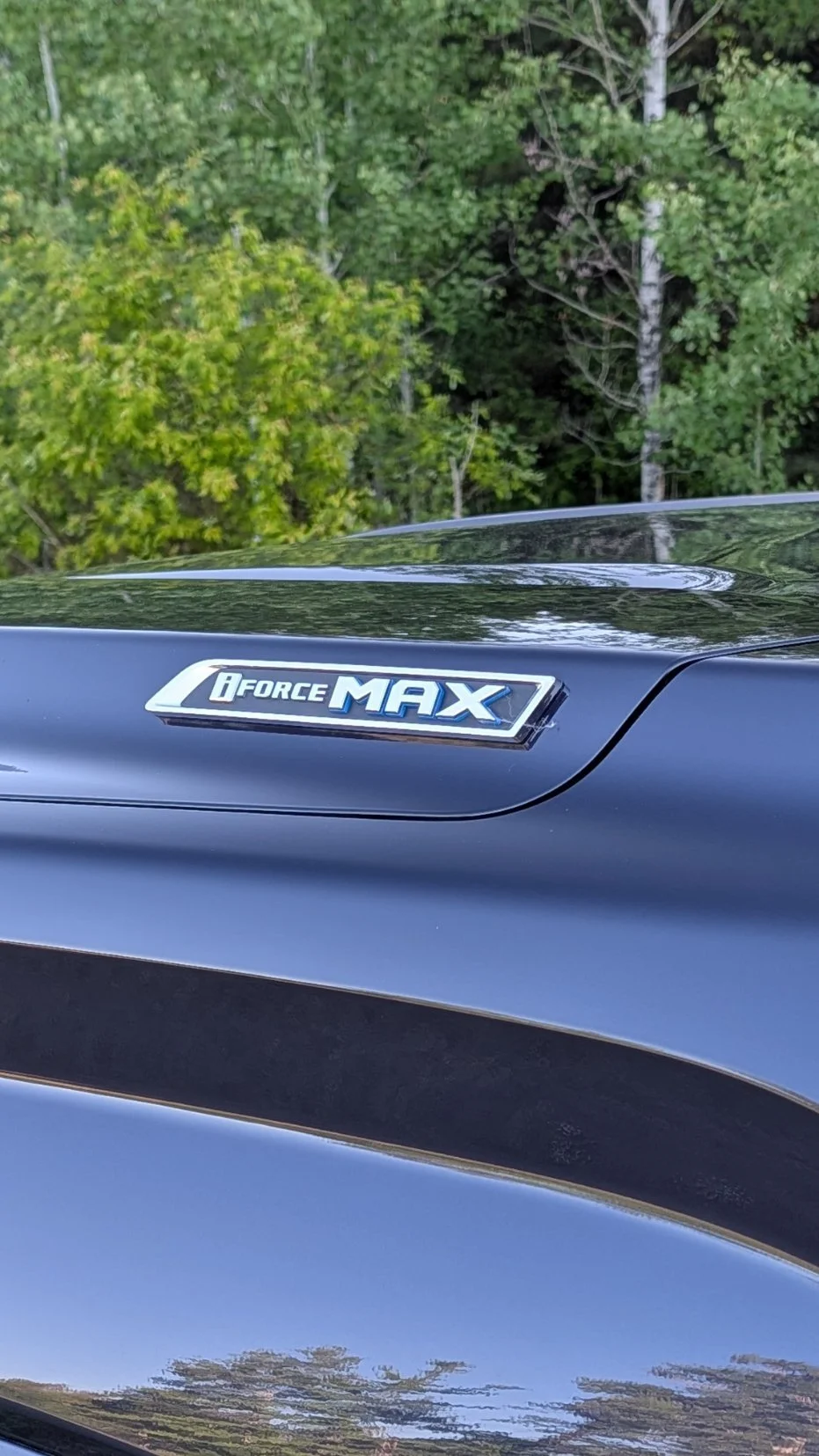
My fuel economy over the week: 12.9 L/100 km (18.2 mpg US) over 900 km (559 miles). The rated figure is 11.7 L/100 km (20.1 mpg US) combined. In my defence, I drove it like I stole it, because it's genuinely fun. Driven like a normal human being, expect to land closer to the rating — but understand what this hybrid is for. It's a power adder that happens to save a little fuel, not the other way around.
No leaf springs — and you'll notice
Here's a spec-sheet detail that changes the whole truck. Toyota doesn't use old-school leaf springs in the back of this Tundra. It's a five-link rear suspension with self-leveling air suspension, plus adaptive damping at all four corners. Railroad tracks, broken country roads, corners — it just absorbs and settles. The self-leveling matters if you tow or haul: load the bed and the truck levels itself instead of sagging.
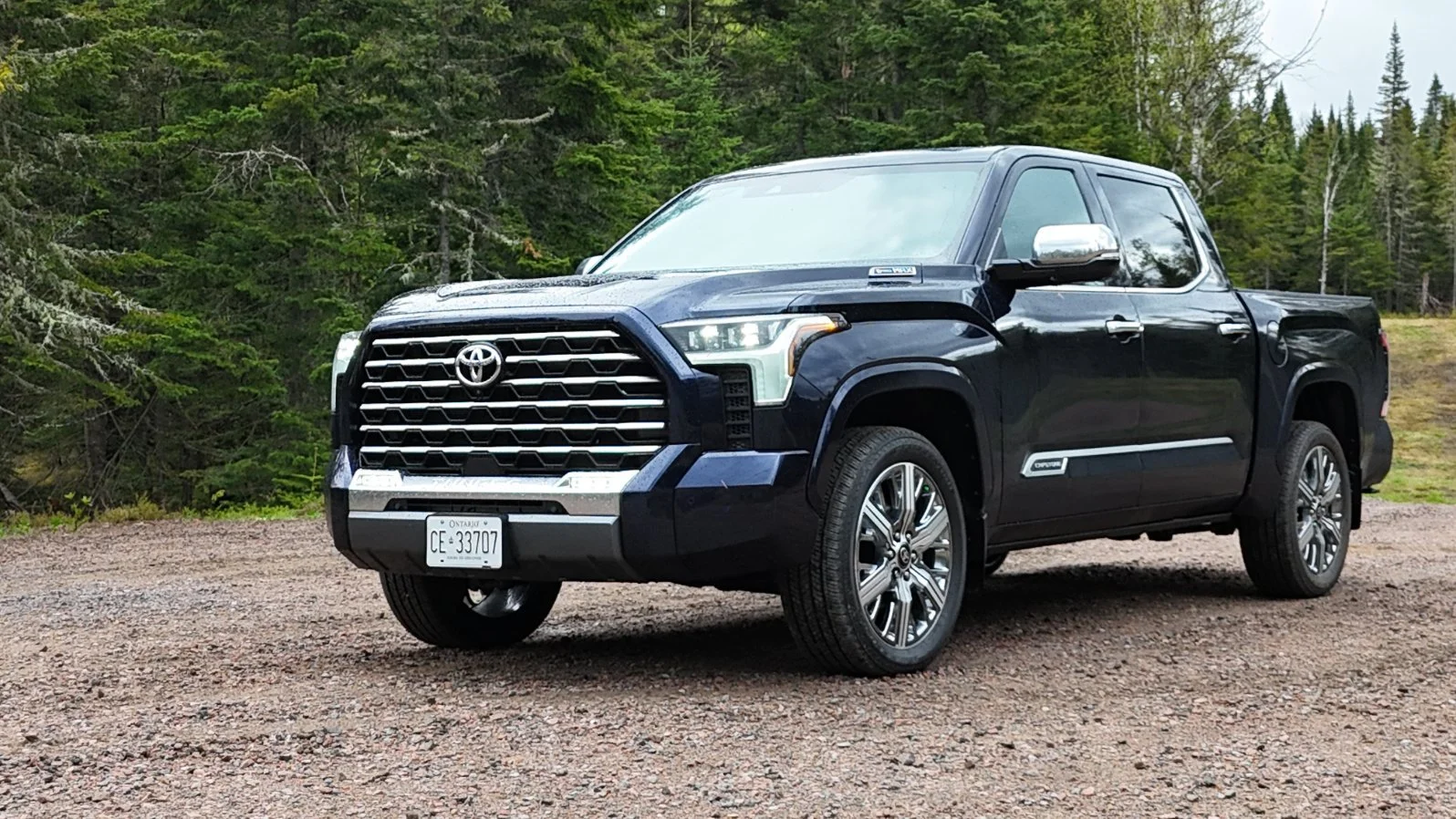
The overall footprint is familiar full-size territory: the CrewMax with the 5.5-foot (66-inch) bed runs about 234 inches long overall — a couple of inches longer than an F-150 SuperCrew with the short bed, so no surprises in a parking lot.
Inside: real luxury, with asterisks
The Capstone treatment is convincing. Two-tone perforated leather, heated and ventilated seats front and rear, a panoramic sunroof, a JBL sound system with a subwoofer that fills the cabin properly, and a rear sunshade you almost never see in a pickup. The back seat has about 41 inches of legroom — a lot, by any standard.
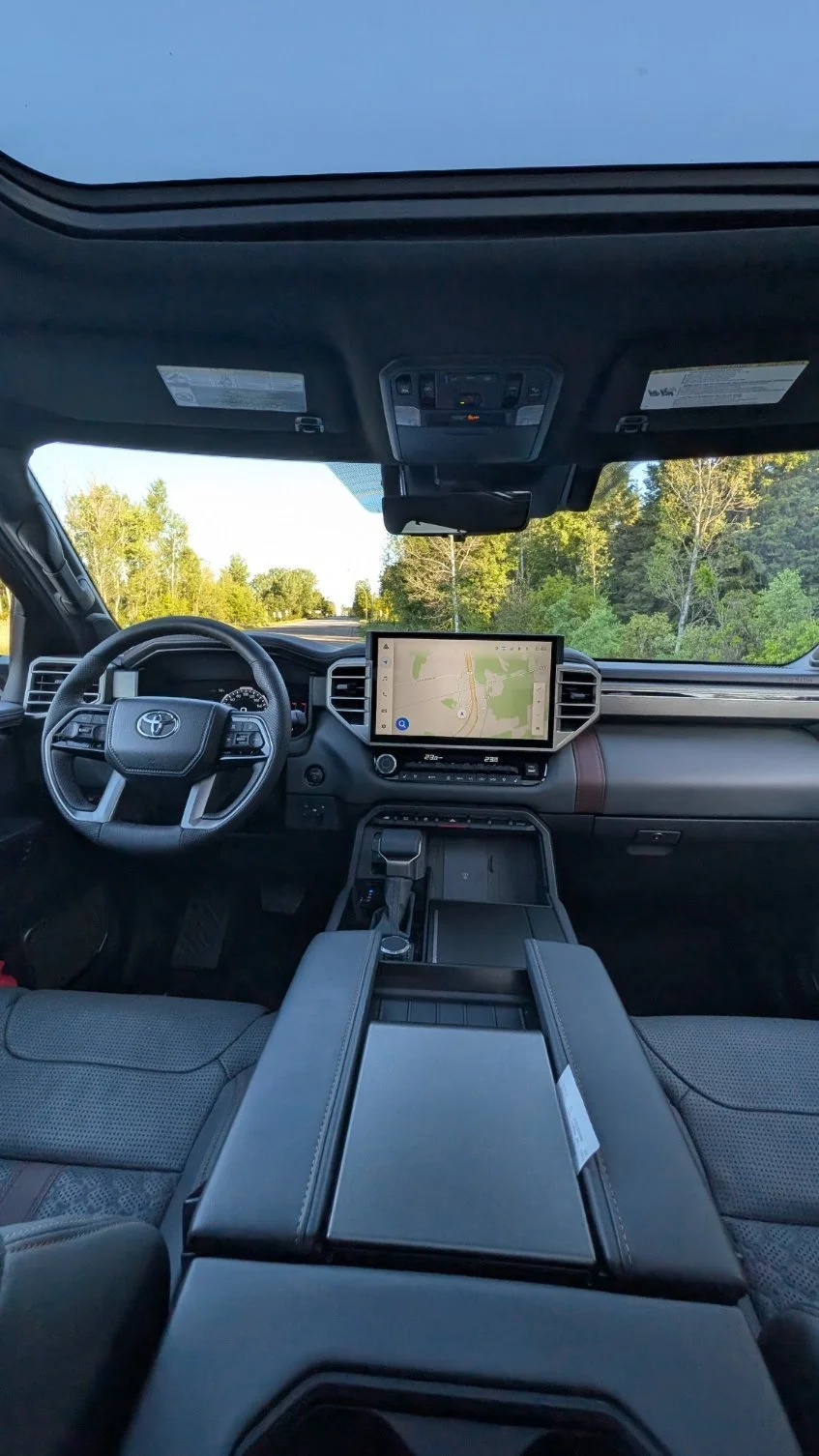
Two asterisks. First, headroom: I'm 5'9" and I'm comfortable, but if you're over 6 feet, try before you buy. The panoramic sunroof eats into it, and I'd estimate you'd gain roughly an inch and a half without it. Second, the hybrid takes its storage tax under the rear seat: the battery gear lives there, the floor isn't flat, there's a noticeable hump, and the rear seats don't fold flat. That's the trade for the extra power.
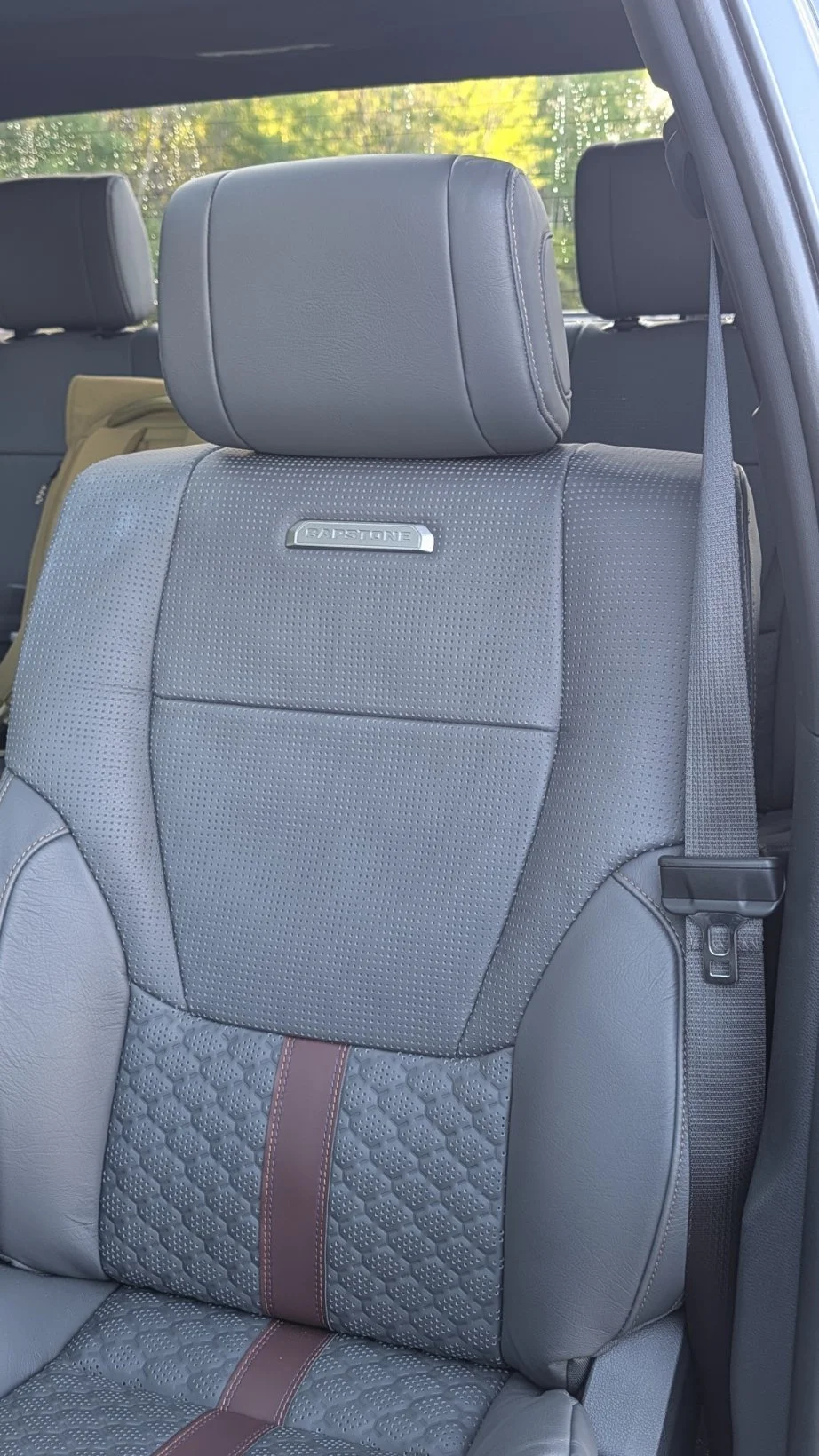
Up front, the nits are smaller but real. The main console storage isn't felted or suede-lined the way luxury trucks usually are — that's where your change lives, and it rattles around on hard plastic. The coin organizer has a slot for a loonie but not a toonie, which in Canada is just funny. And the door bottle holders are too tight: a sports bottle has to be jammed into the second spot and won't fit the first at all. Meanwhile the centre cupholders will take a big Stanley without blinking, and the wireless charger works without cooking your phone. Trucks are inconsistent creatures.
Screens: the weak spot
The fully digital gauge cluster works, but in typical Toyota fashion the graphics aren't the crispest — they have a bit of a cartoon vibe. The infotainment layout is bland, with no icon row the way a lot of manufacturers do it now. It doesn't matter much if you live in Android Auto or Apple CarPlay (both wireless here) the way I do, but the native system could be better. My suggestion stands: this truck would suit Google Built-In.
What is excellent is the camera system — and Toyota gives you a dedicated camera button, which every truck should have. The 360-degree view is crisp, there are angles for everything, and the bed view with the trailer hitch line makes hooking up a one-person job. Credit where it's due, too: Toyota kept simple physical buttons for the climate and seat controls instead of burying them in the screen. In a luxury truck, that restraint is a feature.
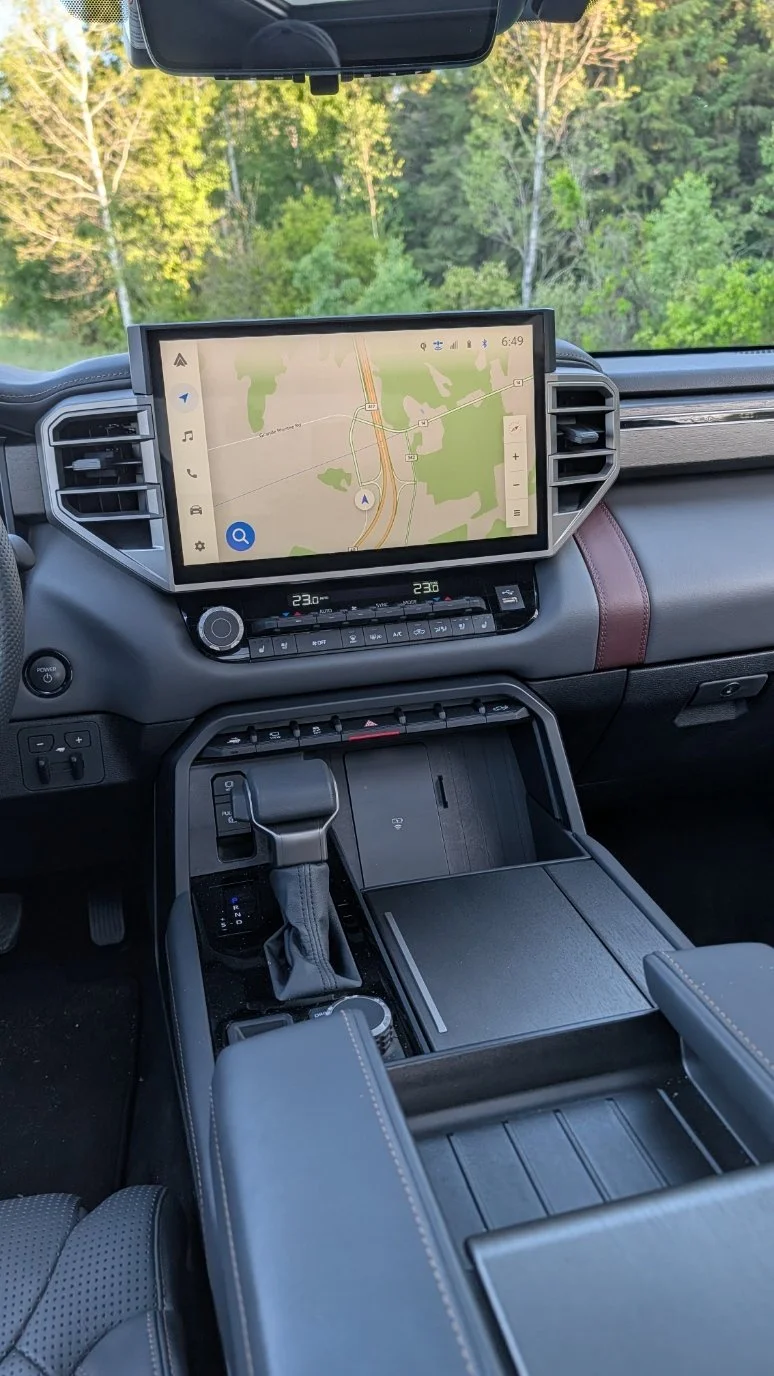
One weird wart: the Wi-Fi hotspot module sticks out of the dash like an afterthought, Wi-Fi symbol and all. On a truck this polished, it looks unfinished.
The tailgate trick nobody else has
Out back is where the Tundra does something genuinely unique. A button on the tail light drops the power tailgate and pops out the bed step — and, unlike everyone else, it also brings both of them back up. You can do it from inside the cabin, too. Leave your tailgate down, start reversing, realize your camera is pointed at the asphalt? One press and it's all closed, without getting out.
Nobody else does the full up-and-down trick. GM's MultiPro and Ford's ladder step come down fine, and Ram's step is spring-loaded — you have to kick it back in. Toyota's is a button, both ways. That sounds small until your mobility isn't what it used to be and climbing into a truck bed is a project. Then it's not small at all.
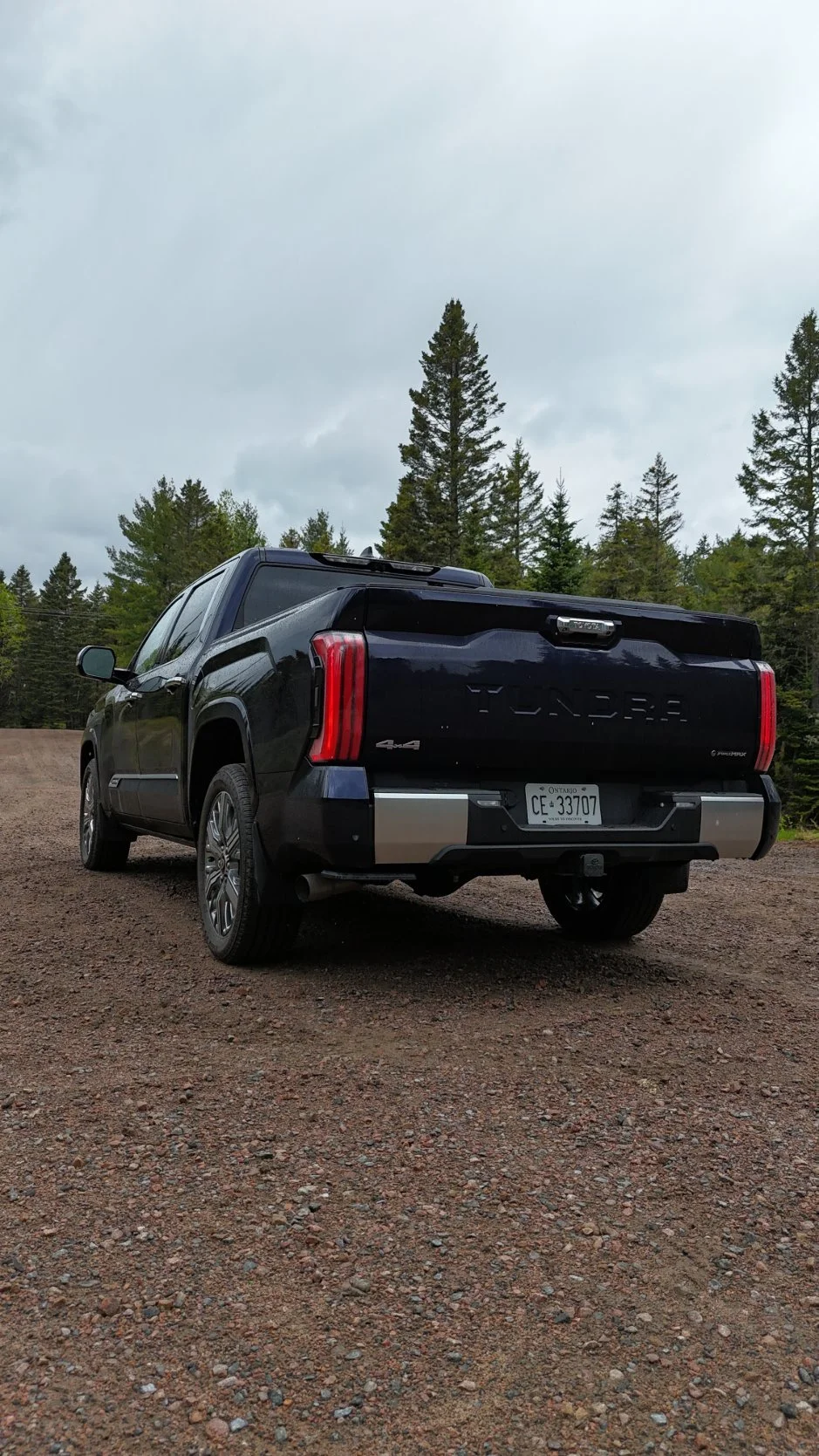
The bed itself is a composite that looks like a spray-in liner — it isn't one, and you don't need one. It comes that way standard, it won't rust, and you never pay extra for a liner or a modification. Power running boards round out the easy-access package.
The work numbers are honest, not class-leading
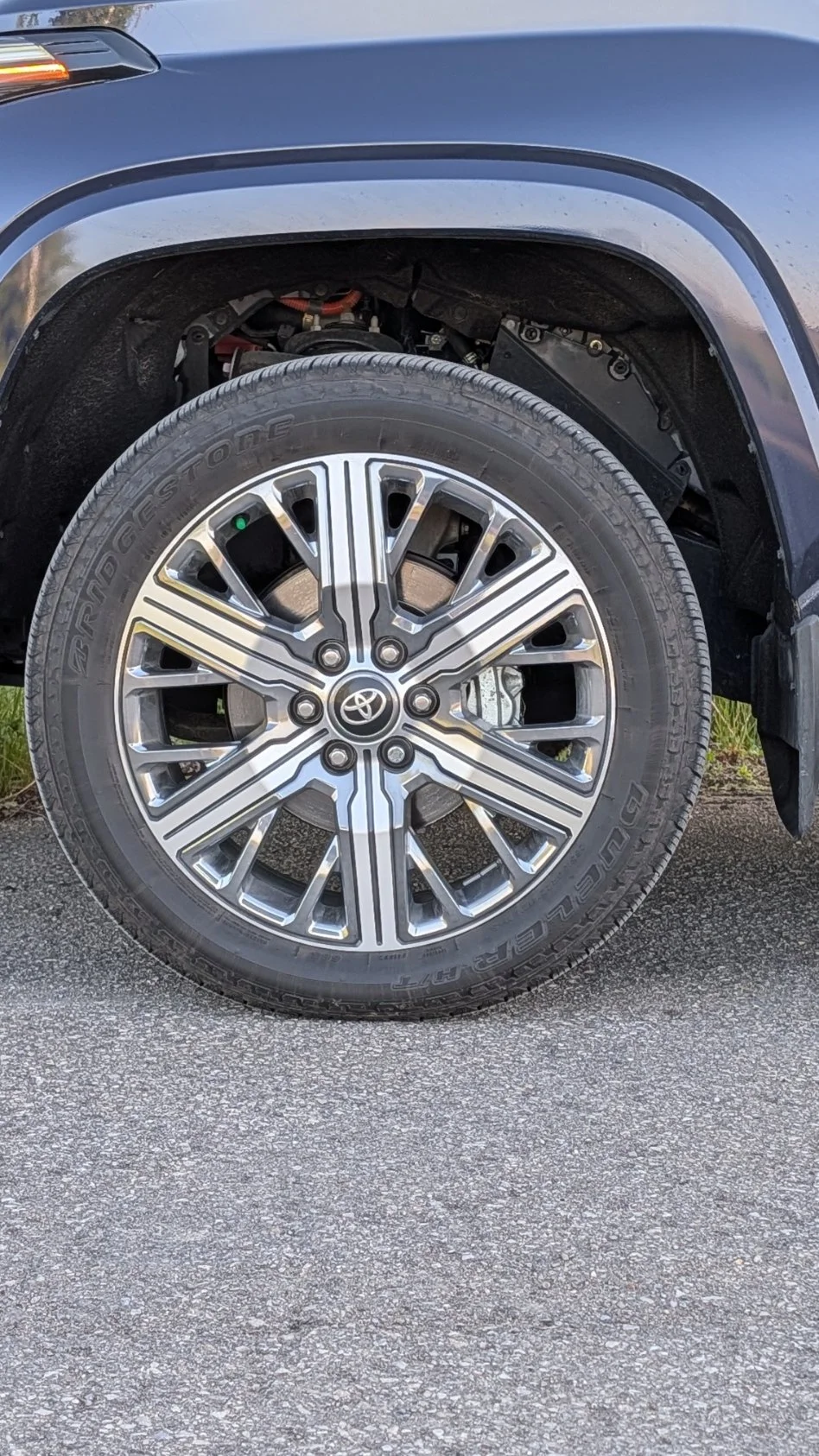
Payload is about 1,600 lb. Towing on this Capstone is about 10,000 lb, and other i-FORCE MAX trims go up to roughly 11,000 lb. That's not best in class, and I won't dress it up — but 10,000 lb covers most of what people actually tow, and the self-leveling air suspension helps it tow level. The seats, by the way, are on the firm side, which I usually don't love. With my back and knees, I found them supportive instead — four hours straight on the return drive, no complaints.
The missing feature — and what it saves you
Now the omission, because there is one and it matters. The Capstone does not offer Level 2 hands-free driving assist. You get adaptive cruise, lane centering and lane keeping — one hand on the wheel and it drives beautifully — but at no point can you press a button and let the truck drive itself down the highway the way a Ram Tungsten or a top-trim GM or Ford will. The Tundra is the only luxury truck that doesn't offer it.
Here's the thing, though: that omission is in the price. This Capstone, as tested, is about $97,000 Canadian (around $87,000 in the US). The competitors with the hands-free systems run $110,000 to $120,000 Canadian — the Ram Tungsten is the cheapest of them at about $110,000. So the real question isn't whether the Tundra is missing something. It is. The question is whether hands-free driving is worth $13,000 to $20,000 to you. If you'd rather stay hands-on and keep the money, the Tundra is the only game in town.
SPECS — 2026 Toyota Tundra Capstone i-FORCE MAX (as tested)
Engine: 3.4L twin-turbo V6 hybrid (i-FORCE MAX), electric motor, 10-speed automatic
Output: 437 hp / 583 lb-ft
Drivetrain: 4x4 CrewMax, 5.5 ft (66 in) bed; about 234 in long overall (a couple of inches longer than an F-150 SuperCrew short bed)
Suspension: five-link rear with self-leveling air suspension; adaptive damping at all four corners (no leaf springs)
Fuel economy: rated 11.7 L/100 km (20.1 mpg US) combined; observed 12.9 L/100 km (18.2 mpg US) over 900 km (559 miles), driven hard
Towing: about 10,000 lb (Capstone); up to about 11,000 lb on other i-FORCE MAX trims
Payload: about 1,600 lb
Rear legroom: about 41 inches
Notable kit: heated and ventilated front and rear seats, panoramic sunroof, JBL audio, 360-degree camera with bed view, power tailgate and bed step (power up and down, controllable from the cabin), power running boards, full-width power rear window
Not offered: Level 2 hands-free driving assist (adaptive cruise and lane centering only)
Price as tested: about $97,000 CAD (about $87,000 US)
The Outsider's Take
I like this truck a lot, and most of what I like is small, honest engineering: a suspension that doesn't use leaf springs and rides like it costs more than it does, a tailgate and step that come back up at the touch of a button, a bed that never needs a liner, cameras that make a big truck easy to place. The hybrid isn't there to save the planet; it's there to make 583 lb-ft feel effortless, and it does.
The cons are real but they're the kind you can price. The infotainment and cluster graphics could be crisper, the storage details are hit and miss, taller drivers should check the headroom, and there's no hands-free driving at any price. In exchange, you pay $13,000 to $20,000 less than the luxury trucks that have it. That's a trade a lot of people should take seriously.
Full honesty: the Tundra that pulls my heartstrings is the TRD Pro — it's just not in the press fleet right now. But if your mission is a luxury truck that tows 10,000 lb, rides like a sedan and doesn't charge you for a robot chauffeur you may never use, you can't really go wrong with the Capstone.
Patrick Cayer is a retired Canadian Armed Forces member (19 years of service) who reviews vehicles the way he ran missions: mission before self, no jargon, no fluff.
Photos: Patrick Cayer / Outsider Reviews
