

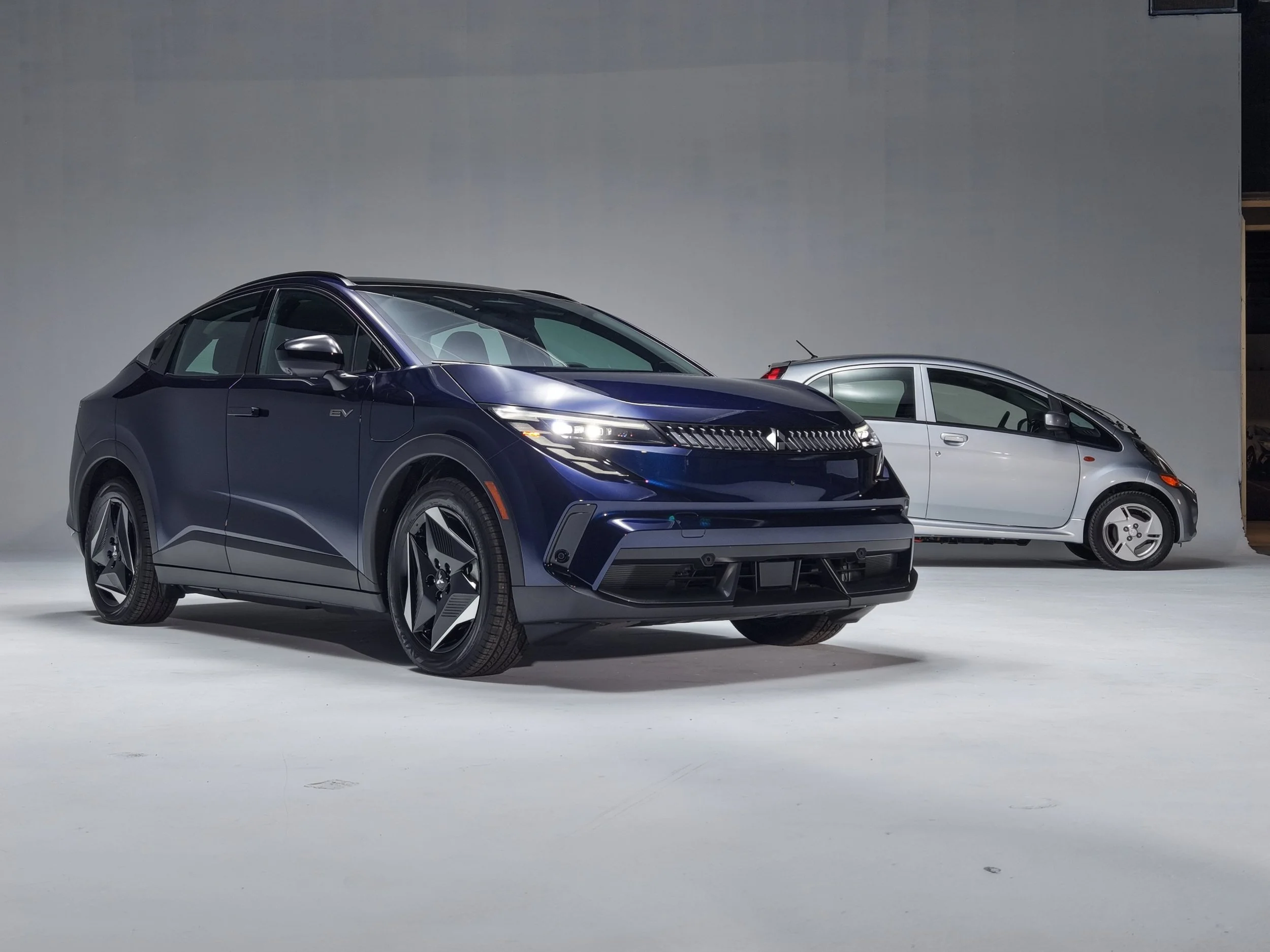
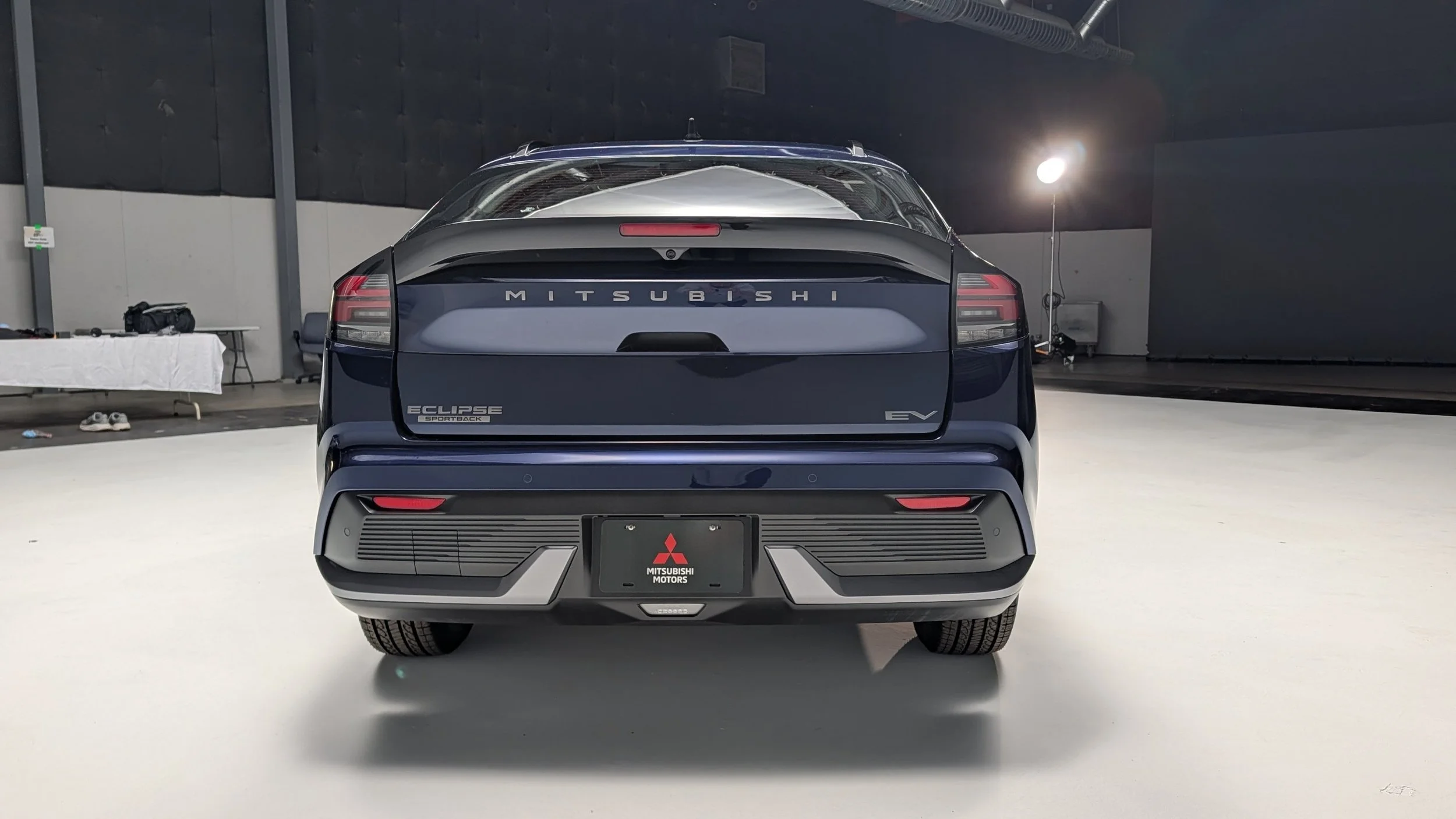
Mitsubishi is not pretending, and neither am I. This is the 2027 Eclipse Sportback EV — and underneath, it's the new Nissan Leaf. Same platform, same battery, same motor, built for Mitsubishi by Nissan under the Renault-Nissan-Mitsubishi Alliance. Mitsubishi changed the face, the lights, the wheels and the badges, and sent it to its own showrooms.
That arrangement usually produces a punchline: the rebadged car costs more and gives you less. This one costs $1,000 more than the Leaf SV+ it's based on, and it even rates 9 km (6 miles) less range. So why would you buy the Mitsubishi? One page of paperwork. By the end of this article, you'll have the math.
SPECS — 2027 Mitsubishi Eclipse Sportback EV (Canada)
- Motor: single front motor, 214 hp / 261 lb-ft, front-wheel drive, single-speed
- Battery: 75 kWh lithium-ion, liquid-cooled — the only battery offered in Canada
- Range: 454 km (282 miles) rated
- Energy consumption: 2.1 Le/100 km combined (≈112 MPGe) — city 1.9 (≈124 MPGe), highway 2.3 (≈102 MPGe)
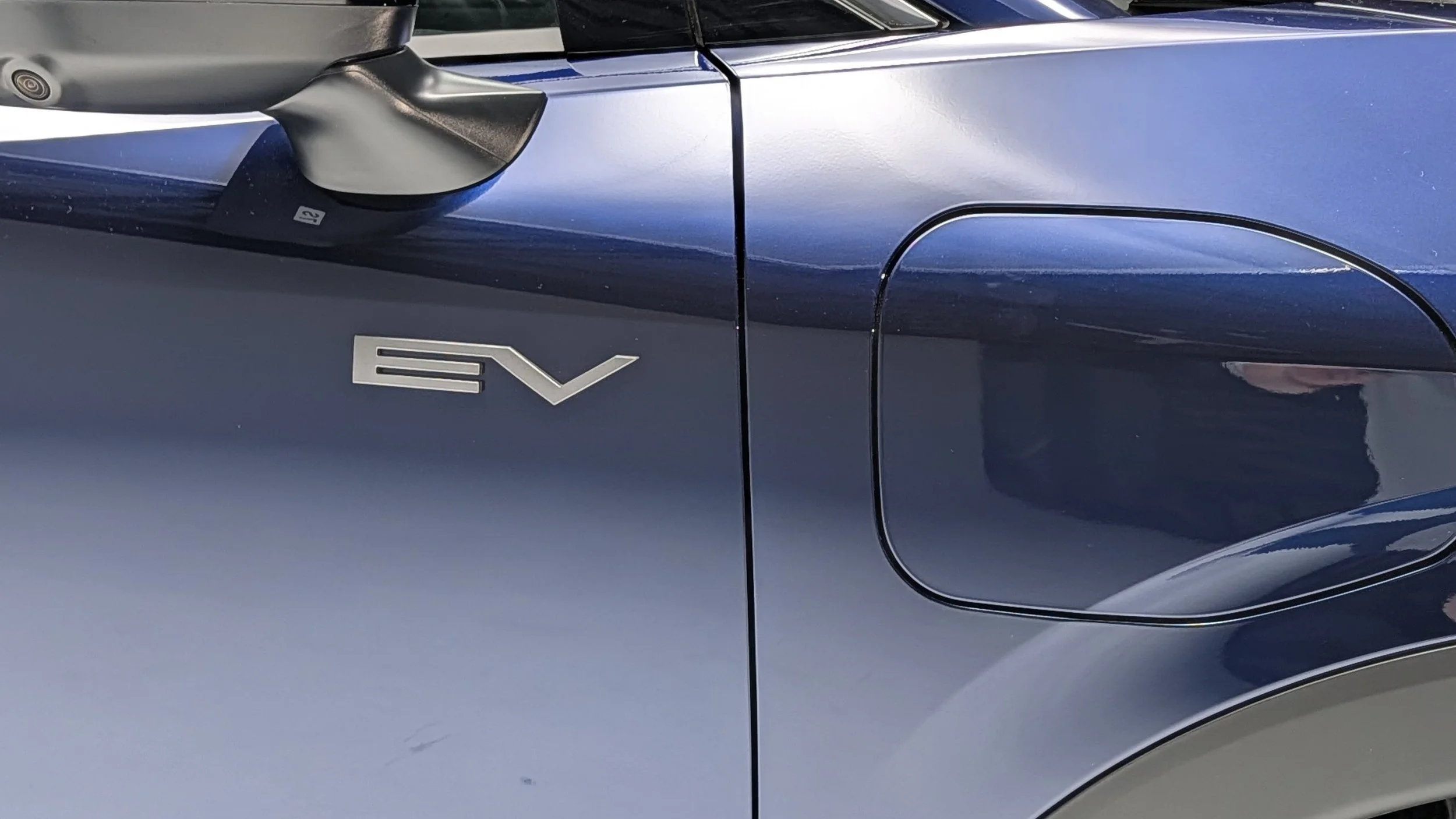
- Charging: two ports — J1772 for AC (7.2 kW onboard charger) on the left, NACS for DC fast charging up to 150 kW on the right; 10–80% in about 35 minutes; portable Level 1/Level 2 cable included
- Size: 173.8 in long, 105.9 in wheelbase, 61.3 in tall — about an inch shorter than a Volkswagen Taos, and roughly 11 in shorter than a Honda CR-V
- Cargo: 20.0 cu ft behind the rear seats, 55.5 cu ft seats folded
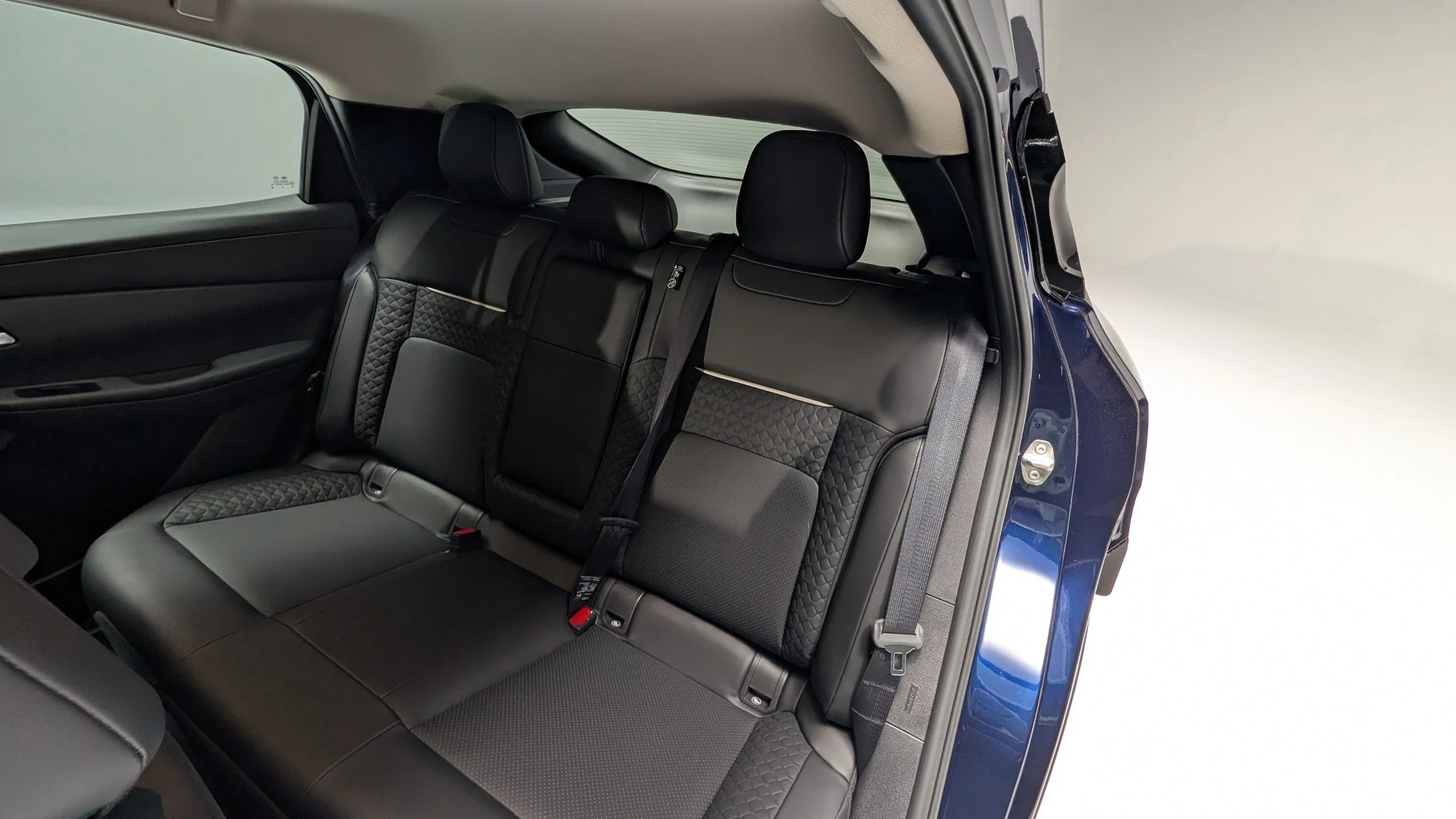
- Rear legroom: 31.8 in — tight, and worth knowing before you buy
- Trims: one trim, from $48,998; Technology Package version $54,098 (fixed panoramic roof with e-dimming sunshade, Bose 10-speaker audio, hands-free power liftgate, black roof rails)
- Standard kit (Canada): heated front AND rear seats, heated steering wheel, heat pump, battery warming system, dual 14.3-in displays, Google built-in, wireless CarPlay/Android Auto, wireless phone charger, 3D surround-view camera, Mi-Pilot Assist
WHAT’S DIFFERENT FROM THE LEAF
Mechanically and on equipment, almost nothing — and in Canada that includes the cold-weather kit. The Canadian Leaf SV+ also gets heated rear seats, a heated wheel, a heat pump and the big screens as standard, so Mitsubishi isn't quietly loading its car with extras the Nissan charges for. The honest difference list is short: Mitsubishi's own front and rear fascias, grille, lighting signatures, D-pillars and exclusive 18-in wheels; interior trim patterns and colours (the dash and seats are the same shapes); Mitsubishi Connect instead of NissanConnect; and one-trim-plus-a-package packaging instead of Nissan's three-trim ladder.
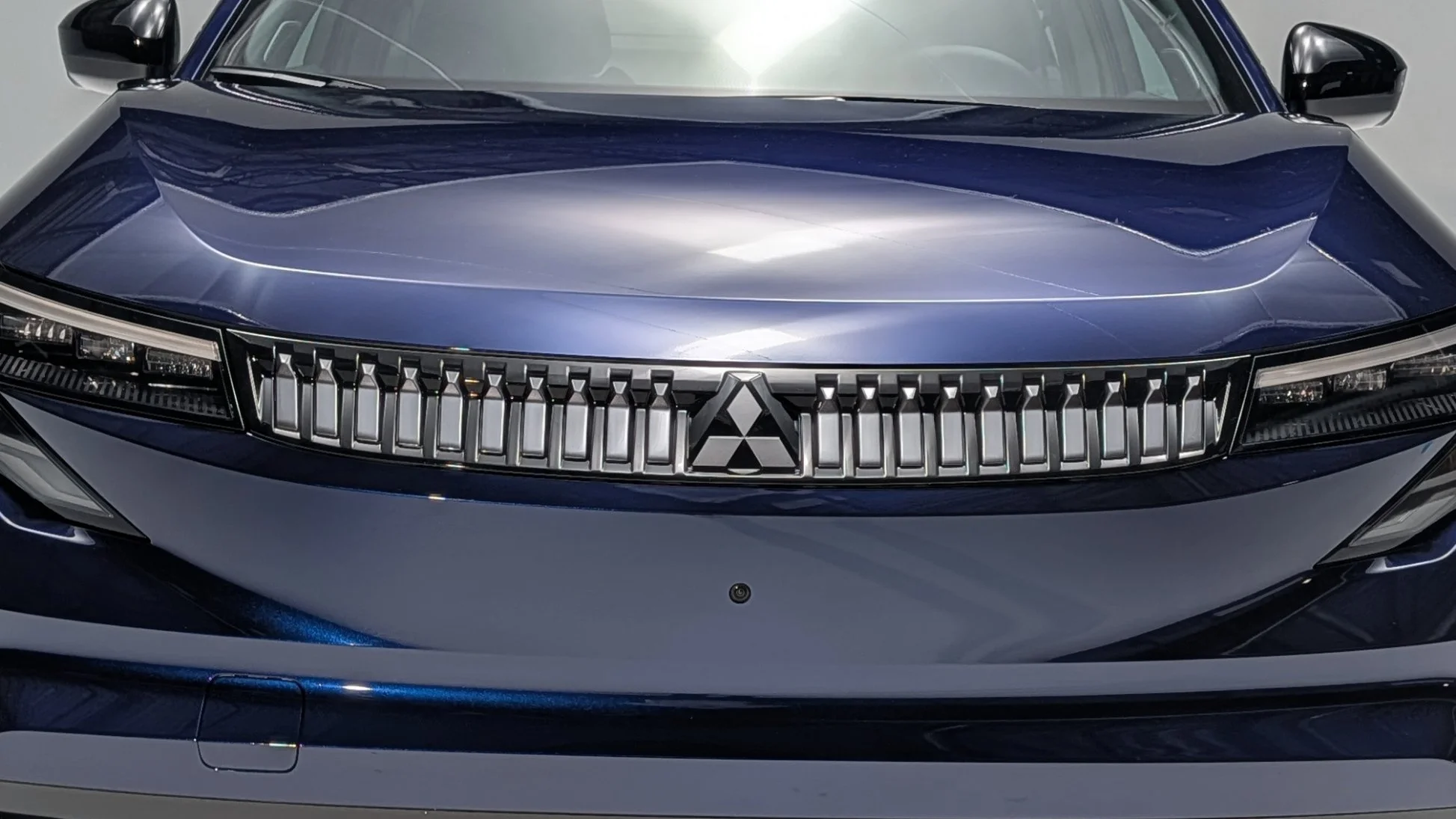
The range gap deserves one precise sentence, because the NRCan numbers locate it: city and combined consumption are identical (1.9 and 2.1 Le/100 km). The only difference is the highway rating — 2.3 Le/100 km for the Mitsubishi vs 2.2 for the Leaf. A gap that shows up only at highway speed is an aerodynamics story, and the prime suspect is the one part Mitsubishi actually redesigned: the face of the car. Nine kilometres (6 miles) on a 463 km (288 miles) rating is 2% — on paper, it is negligible.
TWO PORTS, NO ADAPTERS
One car, two charge ports — and there's a reason. J1772 on the left for home: a 7.2 kW onboard charger, roughly 11.5 hours from 10 percent to full on a 240-volt setup. NACS on the right for the road: up to 150 kW, 10 to 80 percent in about 35 minutes. Home on one side, road trips on the other — and no adapters needed for either routine. A portable Level 1 and Level 2 cable is included in the car.
INSIDE
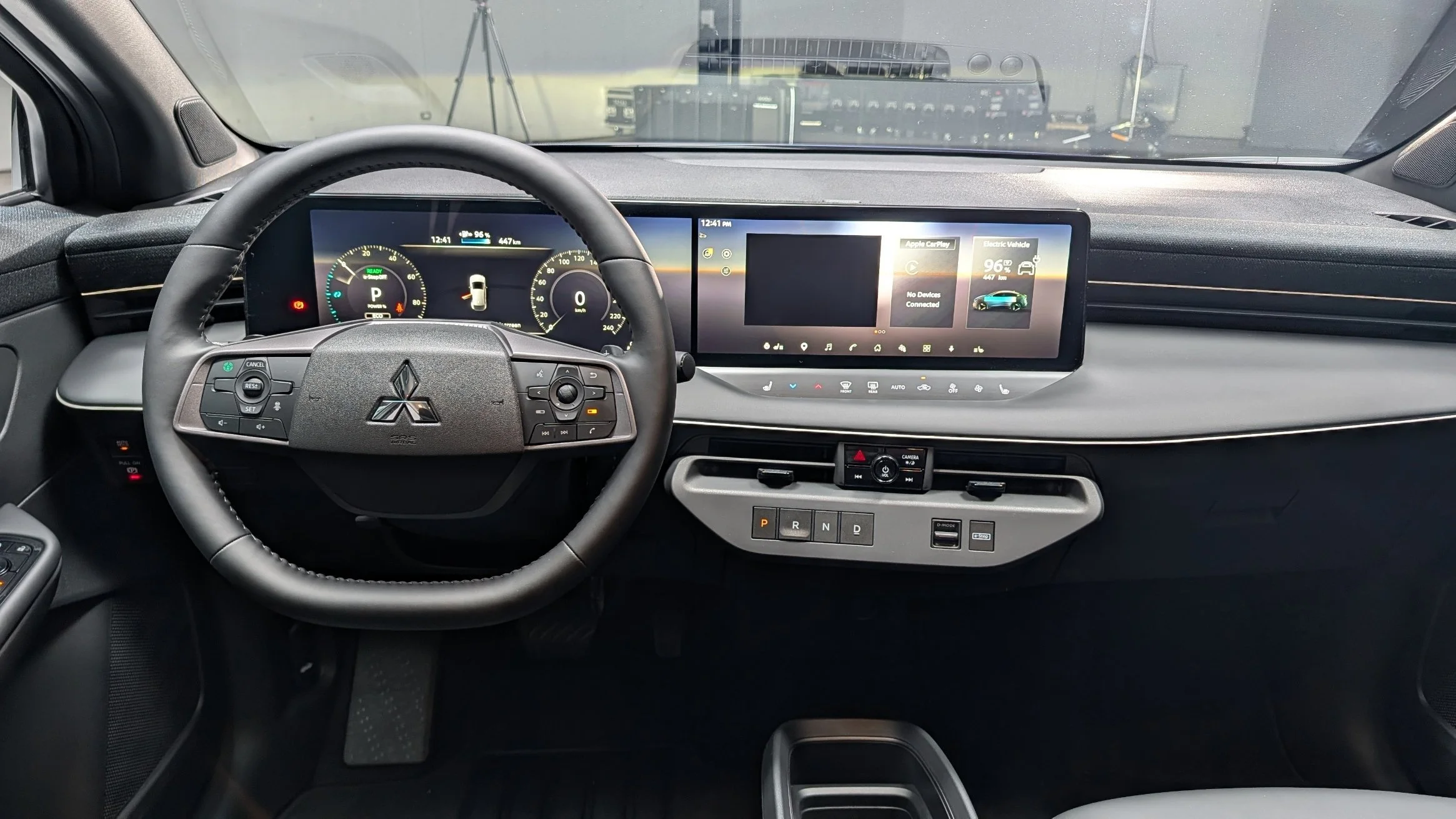
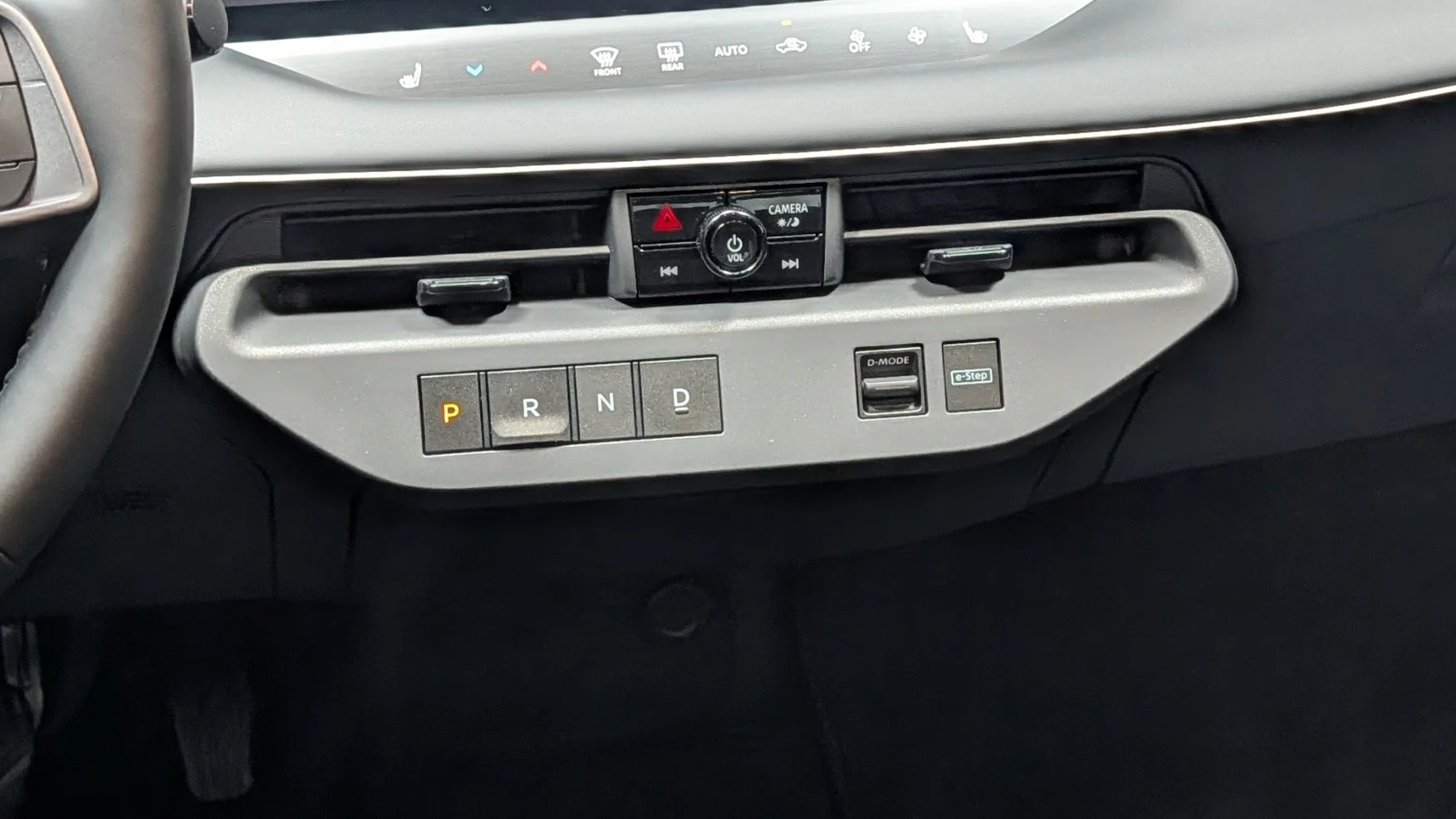
It's the Leaf's cabin with Mitsubishi trim: two 14.3-inch screens, Google built in, wireless CarPlay and Android Auto, and a dash-mounted push-button shifter that frees up the console. Synthetic leather, an 8-way power driver's seat — and, standard in Canada, heated seats front and rear and a heated steering wheel. Mitsubishi didn't cheap out on winter: heated front seats, heated rear seats, a heated steering wheel, a heat pump, and a battery warming system are all standard. In this country that's not luxury. That's table stakes, and this car has it.
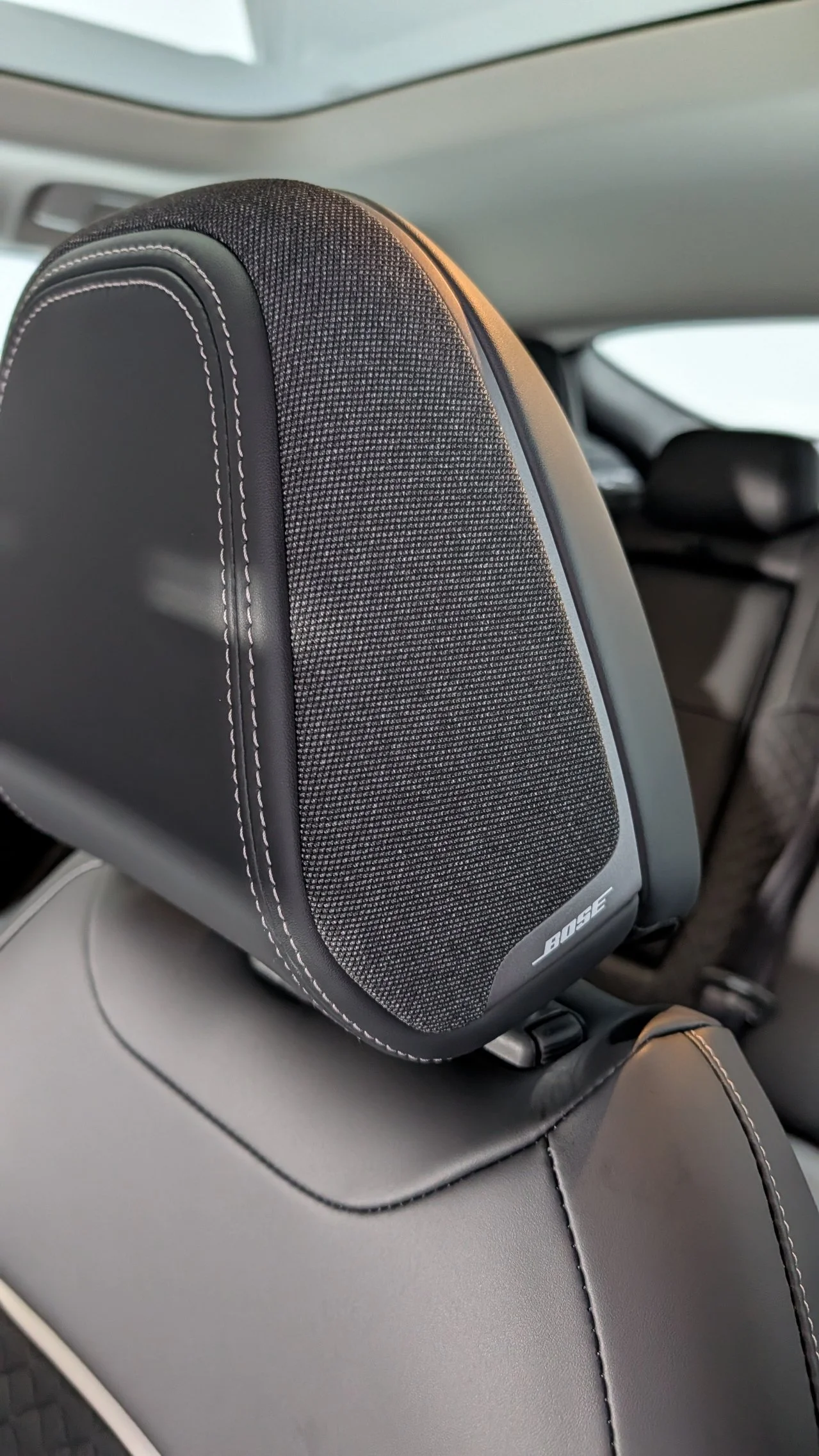
The Technology Package's party trick is the roof: no shade, no cover — press a button and the glass dims itself. The $5,100 package also gets you Bose audio, with speakers built into the front headrests, and a hands-free power liftgate.
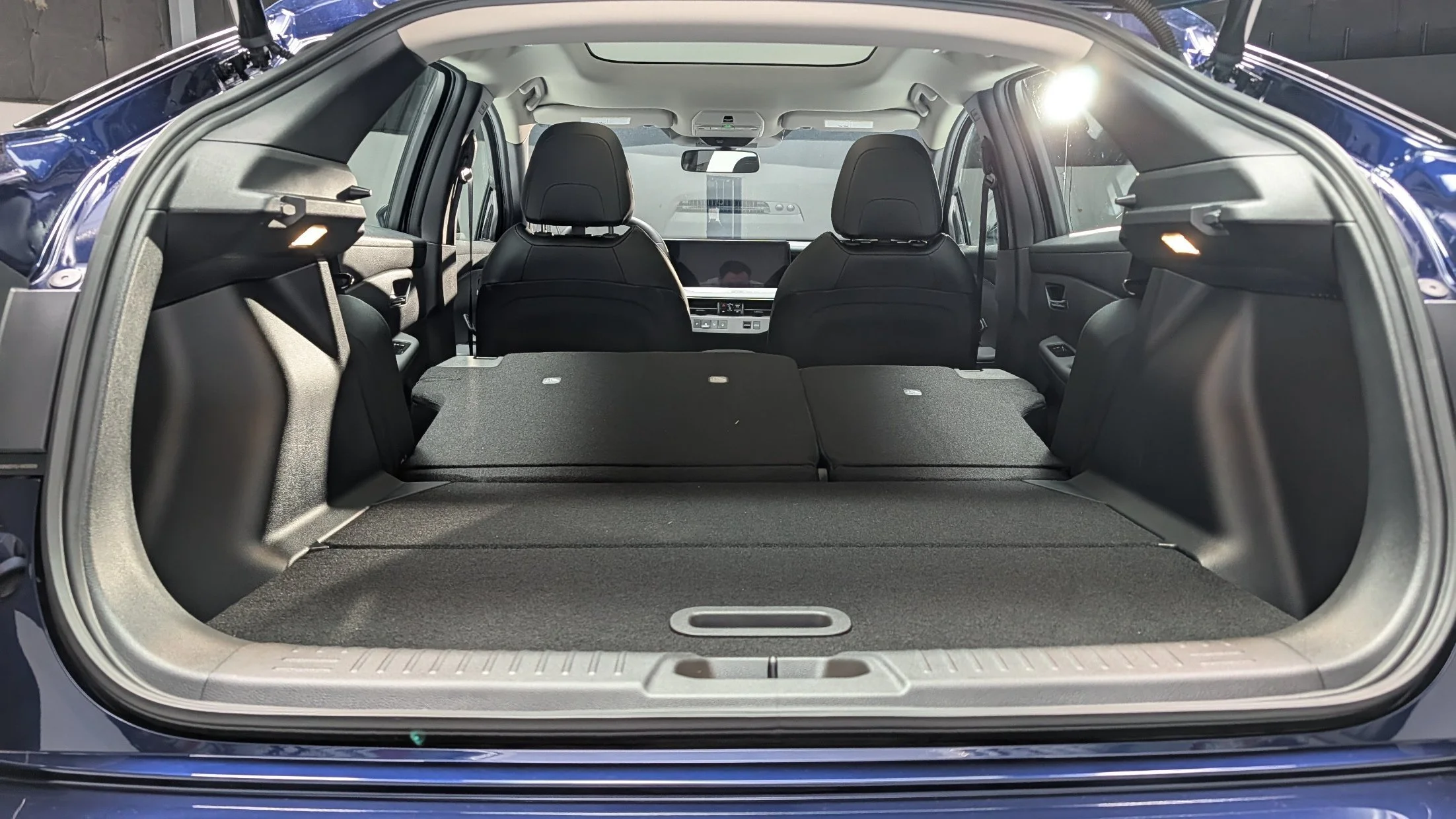
Cargo space: 20.0 cubic feet behind the rear seats — and 55.5 cubic feet with the seats folded. Both numbers, because that's the space you actually live with.
ON THE ROAD
Everything about driving this vehicle is exactly like a Leaf — and that's a good thing. It does not drive any sportier than the Nissan. Only the looks are slightly sporty, and even then, not as noticeably as Mitsubishi would like to think. The wheel design is great, the tech is all there — including all the heating equipment — and the cabin is very quiet. Extremely quiet.
The suspension is the VIP here. It's the main event, because it is so perfectly well tuned. This suspension beats the Chevrolet Bolt's suspension — and it obviously doesn't beat the Leaf's, because it's the same. That's the same thing I said about the Nissan Leaf, and it holds here word for word.
Two honest notes from the driver's seat. The shifter is not my favourite — I'm not a piano-key type of shifter guy, and that's definitely not something I like — but I do like how it frees up everything on the console. And the location of the wireless charger is perfect.
THE WARRANTY — THE WHOLE STORY
Coverage — 2026 Nissan Leaf SV+ vs 2027 Mitsubishi Eclipse Sportback EV
Basic / new vehicle: 3 years / 60,000 km vs 5 years / 100,000 km
Powertrain / EV system: 5 years / 100,000 km vs 10 years / 160,000 km
Traction battery: 8 years / 160,000 km vs 10 years / 160,000 km
Roadside assistance: 3 years / unlimited km vs 5 years / unlimited km
Here's where the Mitsubishi stops being a punchline. Basic coverage: 5 years or 100,000 km, against 3 years and 60,000 km on the Leaf. Powertrain: 10 years, 160,000 km. The battery: 10 years, 160,000 km — 2 full years longer than Nissan's. Roadside assistance: 5 years, unlimited kilometres.
Now the part that decides the argument. What would it cost to buy the Leaf up to roughly the Mitsubishi's coverage with a Nissan extended plan?
Two facts, both checkable:
1. The price of trying is already more than the price gap. Nissan does not publish extended-warranty pricing — you get a number from a dealer's finance office. A Canadian Nissan dealer's own published guide puts typical Security+Plus pricing in Canada at $1,500 to $3,000, depending on model and term. The low end of that range is $500 more than the entire $1,000 sticker difference between these two cars.
2. You can't actually get there anyway. Nissan Canada's own Added Security Plan brochure caps its plans at 84 months (7 years) or 180,000 km. Dealer material for the longest Security+Plus plans says up to 8 years / 200,000 km. Either way, the ceiling is two to three years short of Mitsubishi's 10 years — and an extended service contract is not factory warranty: it comes with per-visit deductibles on many plans, a covered-components list and exclusions, and it does not stretch the Leaf's factory 8-year battery coverage to 10.
So the math is not "the Mitsubishi charges $1,000 for a warranty worth $1,500." It's stronger than that: the $1,000 buys coverage that is not for sale on the Nissan at any price. If long-term ownership costs keep you up at night — and on an EV, the expensive failures are the motor, the inverter, the onboard charger and the pack — the Eclipse's standard paperwork is the better deal of the two, full stop.
The honest counterpoints: Mitsubishi has 99 dealers in Canada, a fraction of Nissan's network, so "covered" and "convenient" are different questions depending on where you live. And two Eclipse numbers are still unpublished — Mitsubishi's own spec sheet lists curb weight as "TBC," and whether the 10-year battery term carries a capacity-loss threshold hasn't been confirmed.
PRICING (Canada, before freight/fees)
- Eclipse Sportback EV: $48,998 — with Technology Package: $54,098
- Nissan Leaf SV+: $47,998 — S+ (75 kWh, 488 km / 303 miles): ~$44,998 — Platinum+: higher, 417 km (259 miles)
- The Eclipse is priced to qualify for the federal EV rebate of up to $5,000
THE OUTSIDER’S TAKE
To me, the warranty is a big, big deal — it's the whole ballgame on this car. A thousand dollars more than the Leaf, and the extended coverage you'd have to buy at Nissan costs more than that gap and still runs out years earlier. The 9 km (6 miles) of rated range? Negligible. If you plan to keep an EV past the point where the factory coverage usually quits, the Mitsubishi twin is the one wearing the better armour. Not the newest idea in the world — possibly the smartest paperwork in the segment.
Disclosure: Mitsubishi Motor Sales of Canada invited Outsider Reviews to drive the Eclipse Sportback EV at its media event in Montreal. Nobody at Mitsubishi saw this article or the video before publication.
